Back To Blog
 Blind Box Product Selection Guide: How to Find Hot Categories and Reliable Suppliers
The blind box market has experienced explosive growth over the past few years, expanding from initial designer toys to beauty, stationery, food, and more. For cross-border e-commerce sellers and brand owners, selecting the right blind box product line and finding reliable suppliers is critical to business success. This guide systematically breaks down the core methodology of blind box product selection, helping you avoid common pitfalls and quickly build a high-repeat-purchase product portfolio.
1. Blind Box Market Trends: Which Categories Are Worth Watching?
Before entering the product selection phase, you must first understand current market hotspots. Based on 2025-2026 industry data, the following three sub-sectors show strong growth momentum:
1.1 Licensed IP Blind Boxes
Blind boxes featuring mature IPs (such as Sanrio, Disney, Pokémon) have a natural user base and emotional premium. The core advantages of these products include:
- Lower Marketing Costs: IPs come with built-in traffic and high social media virality
- Higher Unit Prices: Licensed products can command 30%-50% premium pricing
- Enhanced User Stickiness: Series-based products drive repeat purchases
Risk Alert: You must strictly verify supplier IP licensing credentials to avoid infringement disputes. The verification process is detailed later in this guide.
1.2 Functional Blind Boxes
Unlike purely decorative figurines, functional blind boxes combine practical value with collectible fun. Typical categories include:
| Category | Typical Products | Target Audience |
|---|---|---|
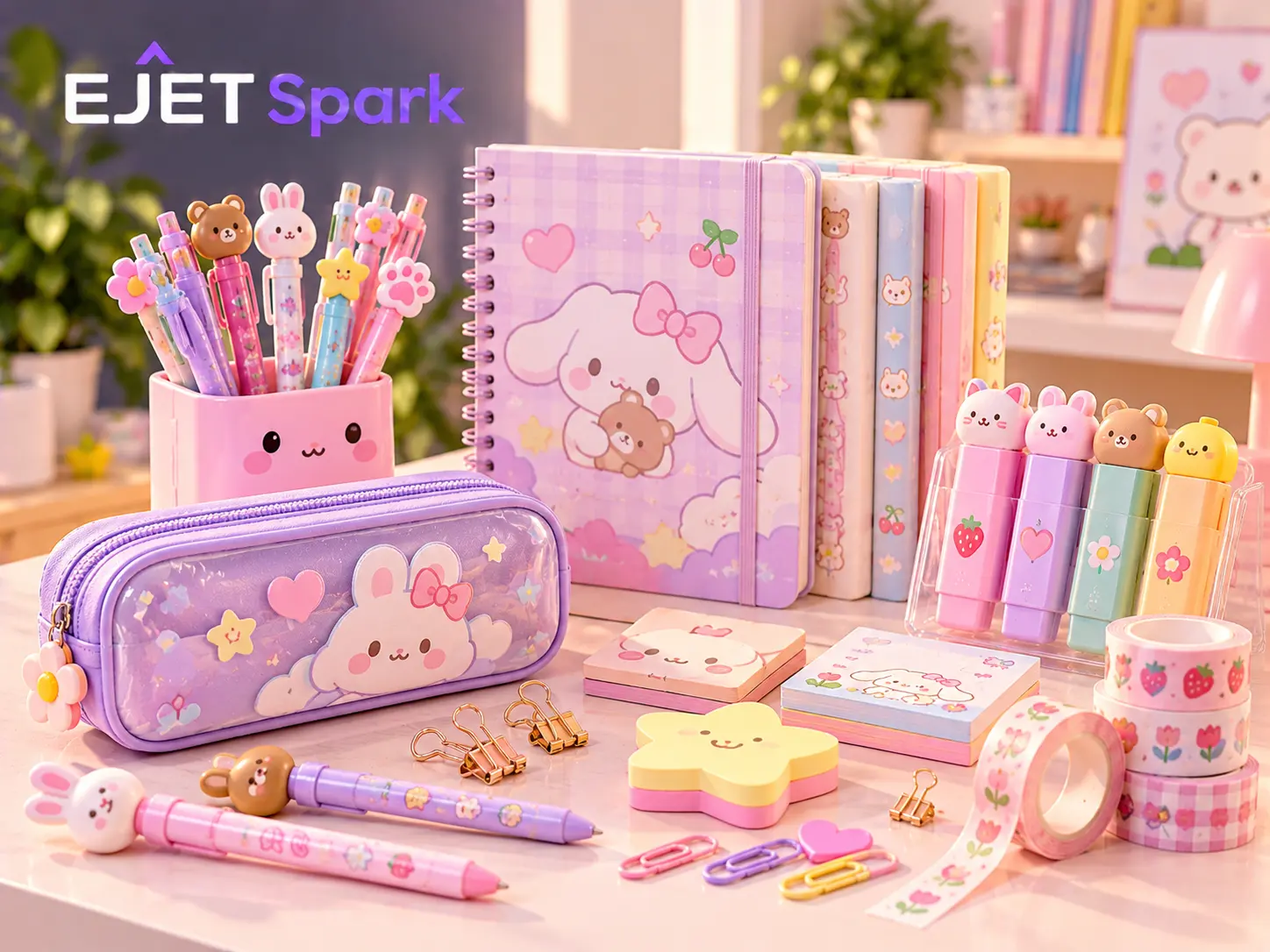
| Stationery Blind Boxes | Creative sticky notes, shaped pens, stamp sets | Students, office workers |
| Beauty Blind Boxes | Lipstick, eyeshadow palettes, perfume samples | Women aged 18-35 |
| Tech Accessory Blind Boxes | Phone cases, cables, stands | Young tech enthusiasts |
The advantage of these products is that they reduce the psychological disappointment of "pulling an unwanted style," as each variant has practical value.
1.3 Independent Artist Original Series
Compared to the high licensing fees of major IPs, collaborating with independent artists to develop original blind boxes is a differentiation strategy. These products are suitable for:
- Core collectors seeking design and uniqueness
- Startups with limited budgets aiming to establish brand tone
- Scenarios validating market demand through crowdfunding or pre-sales
2. Supplier Selection: How to Find Reliable Blind Box Manufacturers?
China's blind box supply chain is primarily concentrated in Guangzhou (Panyu/Huadu) and Yiwu, each with distinct characteristics:
Guangzhou Region: Deep Customization & High-Quality Delivery
Guangzhou has a complete designer toy industry chain, from prototype design and mold development to painting processes. Suitable for:
- Deep Customization Needs: Original IP development, complex painting techniques
- High Quality Requirements: Compliance certifications for EU/US markets
- Mid-to-Long-Term Partnerships: Stable supply chain supporting iterative development
Yiwu Region: Fast Turnaround & Flexible MOQ
Yiwu is renowned for small commodity distribution and supply chain flexibility. Its advantages include:
- Low MOQ: Some factories accept 500-piece orders
- Fast Delivery: Standard items ship in 15-20 days
- Stock Variety: Ideal for testing market feedback
Practical Advice: For first-time partnerships, start with small-batch orders in Yiwu to test market acceptance, then move to Guangzhou factories for deep customization and scale production.
5 Core Dimensions for Supplier Evaluation
| Evaluation Dimension | Key Indicators | Verification Method |
|---|---|---|
| Production Credentials | ISO 9001 certification, export licenses | Check original certificates + customs data verification |
| IP Licensing Capability | License agreements, brand-approved vendor lists | Contact IP owner official channels for verification |
| QC System | AQL standards, third-party inspection reports | Request SGS/BV test reports |
| Supply Chain Stability | Raw material inventory, backup suppliers | On-site inspection + inquire about peak season capacity |
| After-Sales Response | Quality issue resolution time, return/exchange policy | Review contract terms + ask past clients |
3. IP License Verification: Practical Checklist to Avoid Infringement
IP infringement disputes are rampant in the blind box market. Selling unlicensed products can result in:
- Platform Takedowns: Amazon, eBay, and other platforms have zero tolerance for IP infringement
- Legal Lawsuits: Brand owners can claim damages reaching hundreds of thousands of dollars
- Cargo Seizure: Customs may destroy entire shipments during inspection
4-Step Verification Method
Step 1: Request Original License Documents
Require suppliers to provide:
① Scanned license agreement (must include official seals, authorization period, authorized regions)
② Licensor's business license (verify consistency with IP owner company)
③ Trademark registration certificate (confirm licensor actually owns the IP)
Step 2: Cross-Verify Through Official Channels
• Visit the IP owner's official website to check "authorized distributors" or "partner" lists
• Contact brand owner directly via official email or customer service to verify supplier credentials
• Check trademark status on national intellectual property office websites
Step 3: Inspect Product Detail Compliance
Authentic licensed products typically include:
• Anti-counterfeit labels (QR codes traceable to brand owner systems)
• ©️ marks and licensing statements (e.g., "Licensed by XXX")
• Product coding systems (matching brand owner databases)
Step 4: Written Confirmation of Infringement Liability
Clearly state in the procurement contract:
"If Party B (supplier) provides products involving IP infringement causing losses to Party A (buyer), Party B shall bear all legal liabilities and economic compensation."
4. MOQ Negotiation & Cost Control: How Beginners Can Reduce First-Order Risk
Blind box products typically have high MOQs (Minimum Order Quantities), which poses a barrier for sellers entering the market for the first time. The following strategies effectively reduce risk:
1. Choose Products Using Factory's Existing Molds
Custom designs require new molds, with MOQs often reaching 3,000-5,000 pieces. Using factory's existing molds, requiring only paint or packaging changes, can lower MOQ to 500-1,000 pieces and reduce development time by 50%.
2. Mix SKUs to Distribute MOQ
Negotiate with suppliers to mix multiple styles in one order, for example:
- Style A: 300 pieces
- Style B: 300 pieces
- Style C: 400 pieces
- Total reaches 1,000-piece MOQ
This approach lets you test market feedback on different styles while avoiding single-SKU inventory buildup.
3. Leverage "Tail Orders" and "Stock Items"
Some factories have leftover inventory from canceled orders or previous seasons. These products typically offer:
- No MOQ Restrictions: Purchase based on actual needs
- Lower Prices: Discounts of 20%-40%
- Immediate Delivery: No production lead time
Note: Carefully inspect the packaging integrity and product condition of stock items to avoid impacting end-user sales.
5. Quality Standards: Export-Grade Certification Checklist for Blind Boxes
As toy products, blind boxes face strict safety and environmental requirements in different countries. Below are compliance certifications for major markets:
| Target Market | Required Certifications | Core Test Items |
|---|---|---|
| European Union | EN71 certification, CE mark, REACH | Physical-mechanical properties, flammability, chemical composition |
| United States | ASTM F963, CPSIA, California Prop 65 | Lead content, phthalates, choking hazards |
| Japan | ST mark, Food Sanitation Law | Sharp edges, harmful substance migration |
| Australia | AS/NZS ISO 8124 | Small parts testing, sound level testing |
Practical Advice: Explicitly require suppliers to provide third-party inspection reports (SGS, BV, Intertek, etc.) in procurement contracts, and conduct sampling verification before shipment.
6. Hidden Figure Strategy: Balancing Scarcity and User Experience
Hidden figures (chase figures) are the core selling point of blind boxes, but improper ratio settings can lead to customer churn. Here are industry-standard distribution models:
Standard Distribution Model
- Regular Figures: 60%-70% (e.g., 8-9 styles out of 12)
- Rare Figures: 20%-30% (e.g., 2-3 styles)
- Hidden Figures: 1:72 or 1:144 (one per case)
Regional Adjustment Recommendations:
- US/EU Markets: Hidden figure ratio can be increased to 1:96, as higher unit prices lead to stronger user acceptance
- Southeast Asian Markets: Recommend 1:48 or lower to enhance satisfaction and drive repeat purchases
- Chinese Market: Leading players (like POP MART) use 1:144, which has become user psychological expectation
⚠️ Pitfall Warning: Never exaggerate hidden figure value in marketing or promise "guaranteed wins" — this violates anti-fraud regulations in many countries. Always clearly label packaging with "Random shipment, style selection not supported."
7. Summary: 5 Core Takeaways for Blind Box Product Selection
Blind box product selection is a systematic process requiring balance among market insights, supply chain management, and compliance risk control. Here's a recap of this guide's core points:
- Market-First: Choose categories with established IP backing or strong functionality to reduce user education costs
- Tiered Suppliers: Test markets in Yiwu, scale depth in Guangzhou — switch flexibly based on business stage
- License Verification: The 4-step verification method (documents + official channels + product details + contract backup) is non-negotiable
- MOQ Optimization: Use existing molds + mixed SKUs + tail order strategies to minimize first-order risk
- Compliance First: Export certifications aren't costs — they're insurance against massive losses
While the blind box market is highly competitive, sellers who understand supply chain management and user psychology still find abundant structural opportunities. The keys are: don't follow trends blindly, don't chase cheap prices, don't ignore compliance.
If you're searching for reliable blind box suppliers or need end-to-end services from product development to quality inspection and shipment, the Spark team can provide professional sourcing agency services. We have long-term partner factories in both Guangzhou and Yiwu, and can assist with IP license verification, sample evaluation, QC supervision, and other critical steps — allowing you to focus on market expansion and brand building.
Frequently Asked Questions (FAQ)
❓ What is the typical MOQ for blind box products?
Standard blind box series typically have MOQs between 500-1,000 pieces, while custom designs may require 3,000-5,000 pieces. For first purchases, choosing products using factory's existing molds can significantly reduce MOQ and development costs.
❓ How do I verify if a supplier has legal IP licensing?
Require suppliers to provide: ① Scanned original license agreement ② Licensor's official website public information ③ Trademark query screenshots from national IP offices. For popular IPs like POP MART or Sanrio, directly contact brand owners to verify authorized distributor lists.
❓ What ratio should hidden figures be set at?
Industry standard is 1:144 (one hidden figure per 144 pieces) or 1:72. Too high rarity reduces user satisfaction, while too low impacts scarcity. Adjust flexibly based on target market purchasing power — US/EU markets can support 1:96.
❓ What's the difference between Yiwu and Guangzhou blind box suppliers?
Yiwu excels in small commodity distribution and fast turnaround, ideal for small-batch market testing. Guangzhou (especially Panyu/Huadu) has a complete figurine industry chain, suitable for brands requiring deep customization and high-quality delivery. Choose based on lead time, cost, and quality requirements.
❓ What compliance issues should I consider when exporting blind boxes?
Focus on: ① Toy safety standards (e.g., EU EN71, US ASTM F963) ② Material environmental certifications (REACH, California Prop 65) ③ Packaging labeling requirements (choking warnings, age recommendations). Choosing suppliers with ISO 9001 certification and export qualifications reduces customs clearance risks.
Need Blind Box Sourcing Services?
Spark provides full-cycle sourcing agency services from selection to shipment
Get in TouchHere are some related articles you may find interesting: