Back To Blog
 Shawl Scarf from China: Wholesale Sourcing Guide in 2027
A shawl scarf from China can be an attractive product for fashion retailers, boutique owners, wholesalers, and private-label brands.
Chinese suppliers offer a broad range of scarf styles, fabrics, colors, patterns, and customization options. However, choosing the right supplier requires more than comparing prices.
Buyers should evaluate fabric composition, workmanship, minimum order quantities, product consistency, and shipping costs.
Whether you plan to sell lightweight fashion scarves, winter shawls, elegant silk accessories, or custom-branded products, understanding the sourcing process can help you make better purchasing decisions.
This guide explains how to select materials, find reliable Chinese suppliers, customize products, check quality, and manage import costs.
What Is a Shawl Scarf?
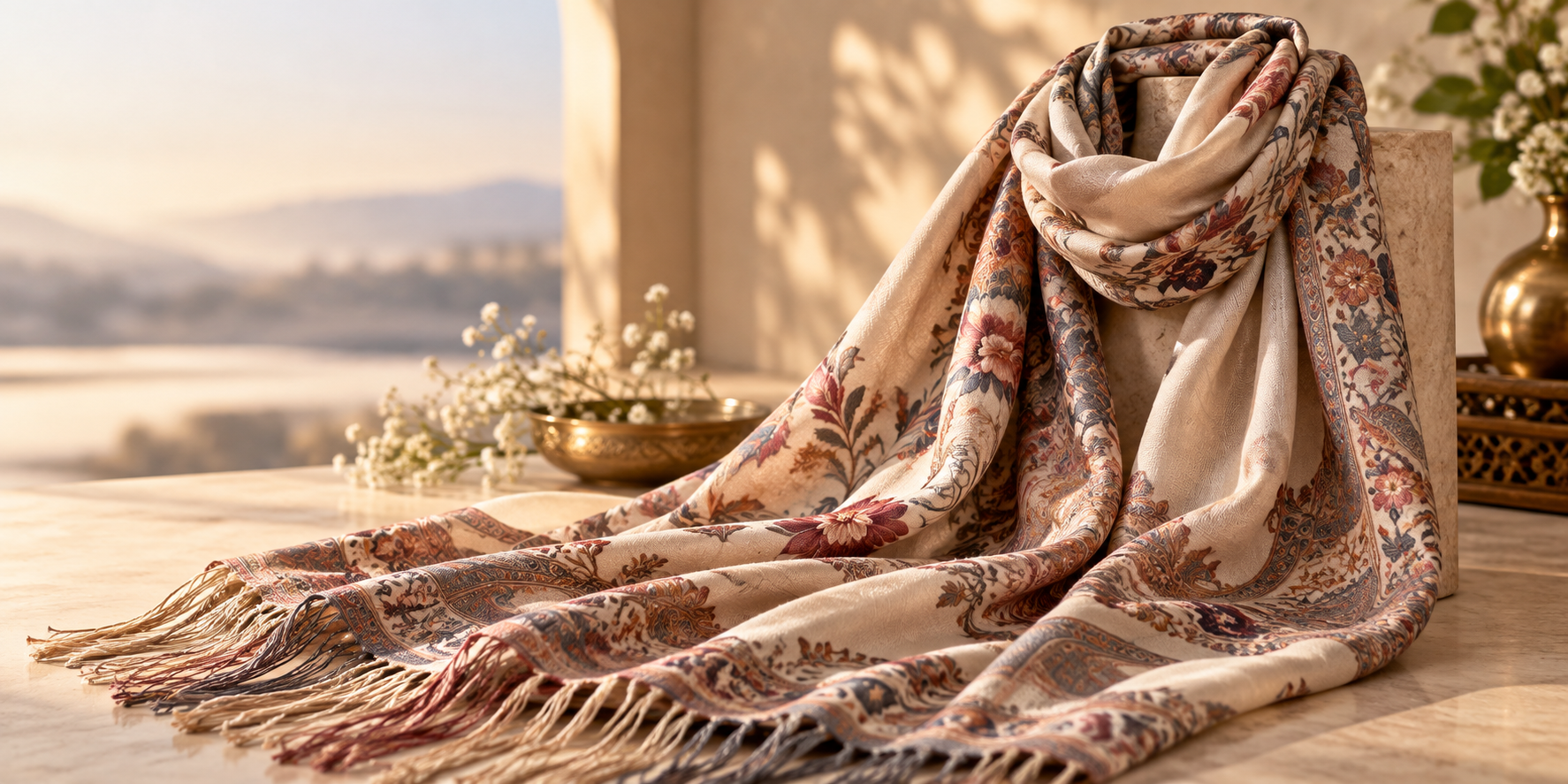
A shawl scarf is a textile accessory worn around the neck, shoulders, or head for warmth, styling, or modest coverage. It typically comes in rectangular, square, or triangular shapes. Depending on its material and design, it can serve as a lightweight fashion accessory or a warmer seasonal garment.
For wholesale buyers, shawl scarves are available in many materials and finishes. These include polyester, cotton, viscose, silk, wool, cashmere, and blended fabrics. Each option offers different characteristics, price points, and care requirements.
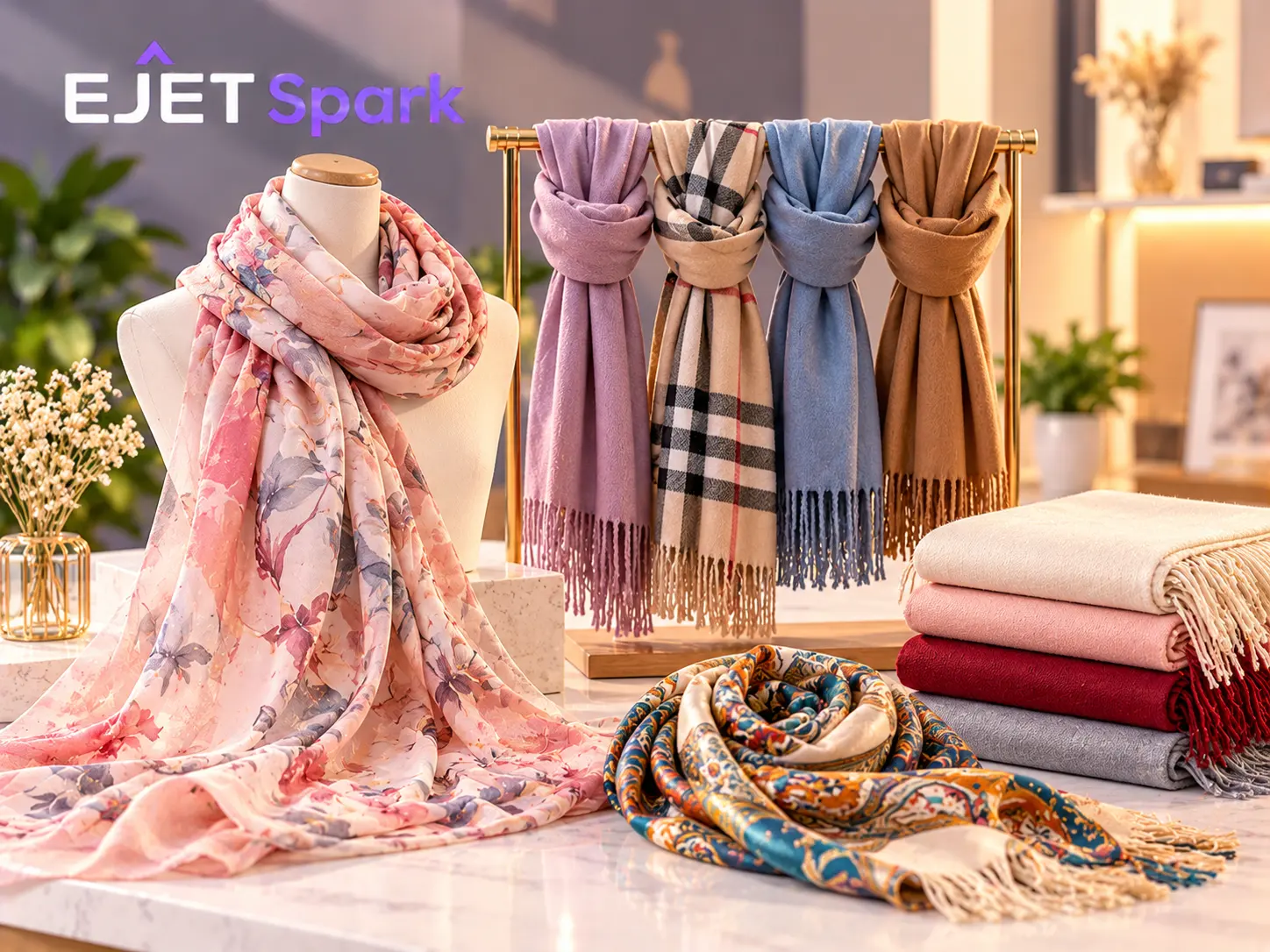
Common shawl scarf styles include:
Customization may include:
-
Fashion scarves: Lightweight accessories featuring seasonal colors, prints, and decorative patterns.
-
Winter shawls: Thicker products designed to provide additional warmth.
-
Silk scarves: Smooth, lightweight accessories for premium fashion collections.
-
Cotton shawls: Breathable options suitable for everyday wear.
-
Pashmina-style shawls: Soft, elegant accessories that may use different natural or synthetic fibers.
-
Printed shawl scarves: Products featuring floral, geometric, abstract, or custom artwork.
-
Large wrap scarves: Oversized accessories that can be draped over the shoulders.
Buyers should distinguish between a product's appearance and its actual fiber composition. For example, a cashmere-style scarf is not necessarily made from cashmere. Always confirm the material before placing a wholesale order.
Why Source Shawl Scarves from China?
China is an established sourcing destination for textile accessories, including scarves, shawls, and other fashion products. Buyers can compare manufacturers and trading companies offering different production capabilities, materials, and order quantities.
The main advantage is product flexibility. Depending on the supplier, buyers may choose existing designs or develop products with customized dimensions, colors, patterns, labels, and packaging.
1. Wide Selection of Materials and Designs
Chinese suppliers offer shawl scarves in different fabrics, thicknesses, textures, and finishes. This variety helps retailers build collections for different customer groups and seasons.
For example, a fashion boutique might source lightweight printed scarves for spring. A winter accessories retailer may prefer thicker woven shawls in neutral colors.
2. Customization and Private Label Options
Many manufacturers accept custom orders, although available services depend on their equipment, production capabilities, and minimum order requirements.
Customization may include:
-
Custom colors and dimensions
-
Printed patterns or woven designs
-
Brand labels and hangtags
-
Embroidered logos
-
Gift boxes or retail packaging
-
Exclusive artwork and coordinated collections
Private labeling can help businesses establish a recognizable brand. However, buyers should confirm artwork ownership, production permissions, and the cost of customized packaging before production begins.
3. Flexible Order Quantities
Some suppliers offer ready-made scarves in relatively small quantities. Others specialize in bulk production or customized orders.
This gives buyers different sourcing options. A small retailer can test an existing design before investing in a larger order. An established brand can discuss custom production for a planned seasonal collection.
Minimum order quantities (MOQs) vary by material, design, customization, and supplier. Therefore, request a written quotation rather than assuming every supplier offers the same terms.
4. Competitive Product Options
China's extensive textile supply chain allows buyers to compare products at different price points. Nevertheless, the lowest quoted price does not always represent the best overall value.
Fabric quality, finishing, packaging, inspection, transportation, duties, and taxes all affect the final cost. Compare products with equivalent specifications before selecting a supplier.
What Types of Shawl Scarves Can You Buy Wholesale?
The best product depends on your target market, selling season, budget, and brand positioning. The following table summarizes common options.
| Shawl scarf type | Common materials | Suitable markets |
|---|---|---|
| Lightweight fashion scarf | Polyester, viscose | Fashion boutiques and online stores |
| Cotton shawl | Cotton, cotton blends | Everyday accessories retailers |
| Silk scarf | Silk or specified silk blends | Premium fashion brands and gift shops |
| Winter shawl | Wool, acrylic, blended fibers | Seasonal retailers and winter collections |
| Pashmina-style scarf | Viscose, acrylic, wool, or other specified fibers | Fashion and gift retailers |
| Printed scarf | Polyester, cotton, viscose, silk | Private-label brands and promotional collections |
| Oversized wrap | Cotton, wool blends, acrylic | Boutiques and lifestyle retailers |
| Embroidered shawl | Fabric-specific materials | Occasionwear and specialty fashion stores |
These categories describe general product types, not guaranteed fabric specifications. Ask suppliers to confirm the exact fiber percentages and manufacturing method.
Where Can You Find Shawl Scarf Suppliers in China?
Buyers can search for Chinese shawl scarf suppliers through B2B marketplaces, textile manufacturers, sourcing agents, and trade fairs. Each channel has different advantages, so the right option depends on your experience and purchasing requirements.
1. Alibaba
Alibaba is a useful starting point for international buyers comparing Chinese manufacturers and trading companies. Listings may include ready-made scarves, custom designs, and private-label services.
When contacting suppliers, ask whether they manufacture the products themselves or source them from other factories. Review company information, transaction terms, sample policies, and product specifications before committing to an order.
2. 1688
1688 primarily serves China's domestic wholesale market. It can help experienced buyers explore local supplier listings and product options.
However, many listings and supplier communications are in Chinese. International buyers may need a sourcing agent or Chinese-speaking partner to confirm specifications, negotiate terms, arrange inspections, and coordinate shipping.
3. Made-in-China
Made-in-China connects international buyers with Chinese suppliers across multiple industries. It can be another channel for identifying textile-related manufacturers and evaluating their business information.
Check whether a listed company has relevant scarf production experience. A general textile supplier may not necessarily have the equipment or expertise required for your specific design.
4. Yiwu Wholesale Market
Yiwu is known for its extensive wholesale marketplace, particularly for small commodities and fashion accessories. Buyers may find scarf distributors, accessory wholesalers, and suppliers offering multiple styles.
Yiwu can be useful when comparing ready-made designs across different vendors. However, confirm whether a supplier manufactures products directly or purchases finished goods from another factory.
Practical recommendation: Shortlist several suppliers from suitable channels, then compare the same product specifications, sample quality, MOQ, and delivery terms. A marketplace listing alone does not prove that a supplier is reliable.
How to Source a Shawl Scarf from China: Step by Step
A structured sourcing process helps reduce misunderstandings, control costs, and improve consistency between samples and bulk production.
Step 1: Define Your Product Requirements
Start by creating a clear product specification. Include the intended use, target customer, dimensions, fabric, color, pattern, finishing, and packaging.
For example, a retailer might request a rectangular fashion scarf measuring 180 × 70 cm, made from a specified polyester-viscose blend, with a custom printed pattern and branded label.
This level of detail helps suppliers quote comparable products. It also reduces the risk of receiving a scarf that looks similar but differs in important ways.
Step 2: Select the Right Fabric
Fabric selection affects softness, drape, appearance, durability, care requirements, and cost.
Consider these common options:
-
Polyester: Often selected for printed designs, color variety, and accessible price points.
-
Cotton: Commonly chosen for breathable everyday accessories.
-
Viscose: Often valued for its soft feel and fluid drape.
-
Silk: Used for lightweight accessories positioned in premium markets.
-
Wool: Suitable for products designed to provide warmth.
-
Acrylic: Often used in soft, wool-like winter accessories.
-
Blended fabrics: Combine fibers to achieve particular characteristics and price targets.
No single material is best for every product. Request fabric details and samples, then assess the actual feel, appearance, and performance.
Step 3: Compare Suppliers and Request Samples
Contact shortlisted suppliers with the same specification sheet. Ask for unit pricing, MOQ, sample cost, production lead time, available colors, customization charges, and payment terms.
Order samples before approving bulk production. Examine dimensions, fabric composition, color accuracy, stitching, edge finishing, print quality, and overall appearance.
If the order is substantial, consider independent product testing or a factory audit. These steps can provide additional assurance, although their scope and effectiveness depend on the inspection arrangements.
Step 4: Confirm Customization and Packaging
For private-label shawl scarves, confirm the approved artwork, logo placement, label wording, packaging materials, and folding method.
Ask the supplier to provide a production sample or documented approval of the final design. Confirm whether custom packaging requires additional tooling, setup charges, or a higher MOQ.
Packaging also affects shipping costs. Oversized boxes may increase freight expenses even when the scarves themselves are lightweight.
Step 5: Agree on Quality Standards
Before production, document acceptable product dimensions, fabric composition, color tolerances, workmanship, and defect criteria.
For example, specify the permitted dimensional variation and the required appearance of hems, fringes, prints, and labels. Agree on how defects will be handled and whether inspection is required before shipment.
An approved sample provides a useful reference, but written specifications are essential for resolving disagreements.
Step 6: Calculate the Total Landed Cost
The supplier's unit price is only one part of the purchasing cost. Include packaging, inland transportation in China, international freight, insurance where applicable, customs duties, taxes, brokerage, and destination handling.
For example, a low-priced scarf may become less profitable if it requires expensive packaging or attracts substantial import charges. Calculate the expected cost per sellable unit before finalizing your order.
Step 7: Arrange Inspection and Shipping
Confirm the production schedule and shipping method before the goods are ready. Depending on your order size and deadline, options may include air freight, sea freight, or other available transport services.
For larger orders, consider a pre-shipment inspection to check quantity, dimensions, appearance, labeling, packaging, and agreed specifications. Resolve significant issues before authorizing shipment.
How Much Does a Wholesale Shawl Scarf from China Cost?
There is no universal wholesale price for a shawl scarf from China. Pricing depends on material, dimensions, construction, order quantity, customization, packaging, and supplier capabilities.
A basic ready-made polyester scarf will generally have a different cost structure from a custom-printed silk scarf or a heavier wool shawl. Buyers should therefore request quotations based on precise specifications.
| Cost factor | How it affects pricing |
|---|---|
| Fabric composition | Different fibers have different material costs |
| Dimensions and weight | Larger or heavier products may use more material |
| Manufacturing method | Weaving, knitting, printing, and embroidery have different costs |
| Order quantity | Larger orders may reduce unit costs, depending on the supplier |
| Customization | Artwork, labels, special colors, and packaging may add charges |
| Quality requirements | Additional testing and inspection can increase purchasing costs |
| Shipping and import fees | Freight, duties, taxes, and handling affect landed cost |
To compare offers accurately, request separate quotations for product cost, customization, packaging, and shipping. Also confirm whether quoted prices use EXW, FOB, or another Incoterm, and identify the named delivery location.
How Can You Check the Quality of Shawl Scarves?
Quality control is important because differences in fabric, color, dimensions, and finishing can affect customer satisfaction and returns.
Use the following checklist when evaluating samples or inspecting bulk orders:
Consider these common options:
-
Fabric composition: Verify that the material matches the approved specification.
-
Texture and drape: Check softness, thickness, flexibility, and overall appearance.
-
Dimensions: Measure the length and width against the agreed tolerances.
-
Color consistency: Compare the product with the approved color reference.
-
Stitching and edges: Look for loose threads, uneven hems, damaged fringes, and unfinished edges.
-
Print quality: Check for smudging, missing details, uneven placement, and visible color differences.
-
Colorfastness: Request appropriate testing when bleeding or fading could affect product performance.
-
Labeling: Confirm fiber information, origin, brand details, and care instructions as applicable.
-
Packaging: Check protection, folding, labeling, and carton quantities.
For textiles marketed as safer or certified, request the relevant test reports and verify their scope. For example, OEKO-TEX® STANDARD 100 covers testing for harmful substances in certified textile articles; it should not be treated as a guarantee of every aspect of product quality.
What Should You Know Before Importing Shawl Scarves?
Before placing an order, confirm the rules that apply in your destination market. Textile labeling requirements differ between countries and may depend on the product, material, and intended sale.
For the United States, the Federal Trade Commission explains that many textile products, including scarves, are subject to fiber-content and other labeling requirements. Country-of-origin and responsible-business identification requirements may also apply. Review the official FTC textile labeling guidance before preparing retail labels.
Also consider these practical precautions:
-
Verify the supplier's legal business identity and payment details.
-
Confirm the fiber composition rather than relying on marketing descriptions.
-
Obtain written specifications and approve a sample.
-
Agree on production deadlines, inspection arrangements, and remedies for defects.
-
Check import duties, taxes, documentation, and labeling rules.
-
Review intellectual property permissions for custom patterns and logos.
Do not assume that every supplier can meet every compliance requirement. Ask for relevant evidence and verify it independently when necessary.
Frequently Asked Questions About Shawl Scarves from China

1. Is China a good place to buy shawl scarves wholesale?
China can be a suitable sourcing destination because buyers can compare many scarf styles, materials, and customization options. However, supplier quality varies. Request samples, verify specifications, and compare total landed costs before placing an order.
2. What is the best fabric for a wholesale shawl scarf?
The best fabric depends on the intended use and target market. Polyester suits many printed fashion designs, cotton works well for everyday accessories, and silk supports premium collections. Wool and suitable blends are options for warmer winter shawls.
3. Can I order custom shawl scarves with my own logo?
Yes, many suppliers offer custom labels, printed patterns, embroidery, and branded packaging. Availability depends on the manufacturer, order quantity, and design complexity. Confirm setup fees, MOQ, artwork requirements, and sample approval procedures first.
4. What is the minimum order quantity for shawl scarves from China?
MOQ varies by supplier and product. Ready-made scarves may be available in smaller quantities, while custom fabrics, exclusive patterns, and private-label packaging may require larger orders. Request written MOQ details for each product configuration.
5. How can I find reliable shawl scarf manufacturers in China?
Search relevant B2B platforms, textile suppliers, and wholesale markets. Check business information, production experience, samples, references, and quality-control procedures. For significant orders, consider an independent factory audit and pre-shipment inspection.
6. What should I check before importing shawl scarves?
Confirm the exact fiber content, dimensions, quality standards, labels, packaging, and delivery terms. Calculate freight and import charges, then check the destination country's customs and textile-labeling requirements. Approve a representative sample before bulk production.
Conclusion: Source the Right Shawl Scarf from China
Sourcing a shawl scarf from China can give retailers, wholesalers, and private-label brands access to diverse materials, designs, and customization options. Success depends on choosing products that suit your market and working with suppliers who can meet clearly documented requirements.
Start by defining your target customer, selecting the right fabric, and comparing suppliers using consistent specifications. Then approve samples, establish quality standards, calculate landed costs, and verify import requirements.
For businesses sourcing shawl scarves alongside other fashion accessories, a structured procurement process helps control costs and reduce avoidable risks. Ejet.com can use this approach to help buyers make informed sourcing decisions and develop more dependable supplier relationships.
Here are some related articles you may find interesting: