Back To Blog
 Kitchenware Wholesale from China: Homeware, Drinkware, Storage, Fragrance & More
China is one of the world's most important sourcing destinations for wholesale kitchenware.
Buyers can source cookware, kitchen utensils, bakeware, food storage products, tableware, silicone tools, stainless-steel products, and commercial kitchen supplies from Chinese suppliers.
For importers, kitchenware wholesale from China offers access to a wide supplier base and several specialized manufacturing clusters. Yiwu is useful for small kitchen accessories and general merchandise.
Yongkang has a strong hardware and kitchenware manufacturing cluster. Chaozhou is important for ceramic tableware. Guangzhou is useful for wholesale trading and hospitality supplies.
However, buying kitchenware from China requires more than comparing unit prices. Many products come into direct contact with food.
Therefore, material specifications, food-contact compliance, product testing, packaging, quality control, and destination-country regulations must be considered before placing an order.
This guide explains how to source kitchenware wholesale from China, where to find suppliers, which products offer sourcing opportunities, and how to reduce common importing risks.
What Is Kitchenware Wholesale from China?
Kitchenware wholesale from China refers to purchasing kitchen-related products in commercial quantities from Chinese manufacturers, wholesalers, trading companies, or sourcing markets.
The category includes products such as:
| Kitchenware Category | Examples |
|---|---|
| Cookware | Pots, pans, woks, and frying pans |
| Stainless-Steel Cookware | Stainless-steel pots, pans, saucepans, and stockpots |
| Kitchen Utensils | Spatulas, ladles, spoons, peelers, and kitchen tools |
| Silicone Kitchenware | Silicone spatulas, baking mats, molds, and kitchen accessories |
| Tongs & Whisks | Cooking tongs, serving tongs, balloon whisks, and hand whisks |
| Cutting Tools | Cutting boards, kitchen knives, graters, and slicers |
| Measuring Tools | Measuring cups, measuring spoons, and kitchen scales |
| Food Storage | Food storage containers, airtight containers, lunch boxes, and jars |
| Bakeware | Baking trays, cake molds, baking dishes, and oven accessories |
| Ceramic Tableware | Ceramic plates, bowls, cups, mugs, and serving dishes |
| Glassware | Glass containers, drinking glasses, jars, and serving glassware |
| Serving Products | Serving trays, serving bowls, platters, and utensils |
| Kitchen Organizers | Spice racks, drawer organizers, utensil holders, and storage racks |
| Commercial Kitchen Supplies | Restaurant cookware, stainless-steel equipment, food-service tools, and storage products |
| Hotel & Restaurant Kitchenware | Hotel tableware, catering supplies, buffet products, and professional kitchen utensils |
Chinese kitchenware suppliers serve several types of buyers. These include supermarkets, restaurant suppliers, retailers, e-commerce businesses, hospitality companies, distributors, and private-label brands.
The most suitable sourcing method depends on your product, order quantity, customization requirements, and target market.
Why Source Kitchenware Wholesale from China?
China offers a broad manufacturing ecosystem for kitchenware. Different regions specialize in different materials and product categories.
For example, Zhejiang has major hardware and small-commodity clusters. Yongkang's industrial base includes kitchenware as one of its established hardware industries.
Meanwhile, Yiwu provides an enormous marketplace for small commodities. Its International Trade Market's Area 2 includes a dedicated third-floor section for kitchenware and sanitary ware.
The main advantages for international buyers include:
-
Wide product selection — Buyers can source thousands of kitchen products.
-
Manufacturing variety — Suppliers work with stainless steel, aluminum, silicone, plastic, glass, ceramics, wood, and other materials.
-
OEM and private label — Many manufacturers can customize colors, packaging, logos, and product designs.
-
Competitive wholesale pricing — Larger orders can provide better factory pricing.
-
Product specialization — Buyers can target specific manufacturing clusters.
-
Flexible sourcing — Businesses can combine factory purchasing with wholesale-market sourcing.
-
Export experience — Many Chinese suppliers already serve international markets.
However, lower factory pricing does not automatically mean lower landed cost. Freight, packaging, duties, inspections, breakage, and compliance can materially affect the final cost.
Where Can You Buy Kitchenware Wholesale in China?
There is no single best kitchenware market in China. The right sourcing location depends on the product you need.
| Sourcing location | Main strength | Best for |
|---|---|---|
| Yiwu, Zhejiang | Small commodities and kitchen accessories | Retailers and online sellers |
| Yongkang, Zhejiang | Hardware and kitchenware manufacturing | Cookware and metal products |
| Guangzhou, Guangdong | Wholesale trading and hospitality supplies | Commercial buyers |
| Chaozhou, Guangdong | Ceramics and tableware | Plates, bowls and ceramic products |
| Foshan, Guangdong | Manufacturing and commercial supply ecosystem | Kitchen and household products |
| Shunde, Guangdong | Appliance and manufacturing ecosystem | Kitchen equipment and appliances |
| Ningbo, Zhejiang | Export-oriented manufacturing | Kitchenware and household products |
The best choice depends on whether you need ready-stock products, factory-direct manufacturing, or customized goods.
1. Yiwu International Trade Market — Best for Kitchen Accessories
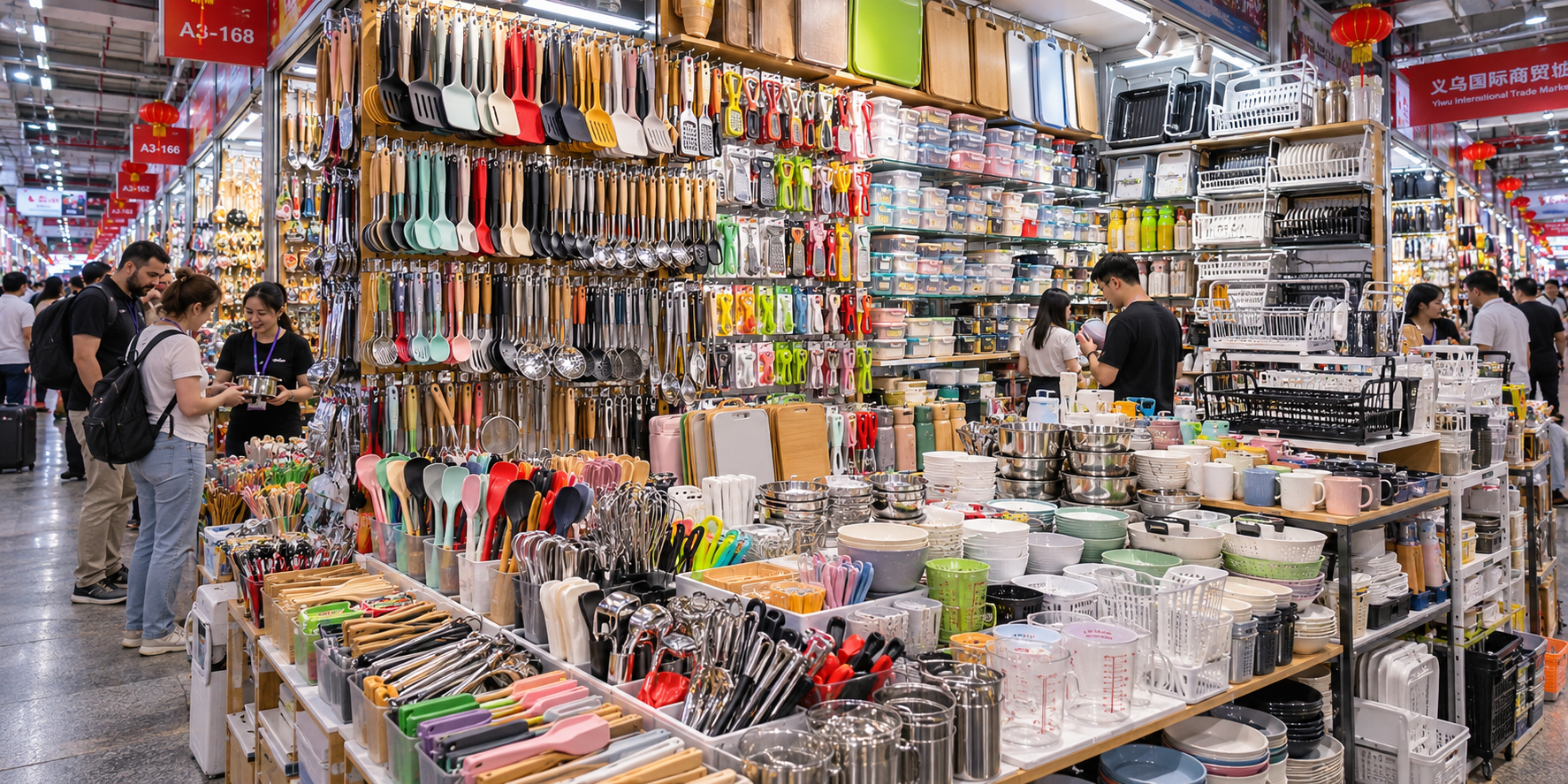
Yiwu is one of the strongest options for buyers seeking a broad range of small kitchen products.
The Yiwu International Trade Market is a major global small-commodity trading center. In 2026, the market reopened with nearly 80,000 booths and more than 2.1 million types of goods serving buyers in 233 countries and regions.
Area 2 is particularly relevant to kitchenware buyers. Its third floor includes kitchenware and sanitary ware alongside small home appliances and related products.
Typical products include:
-
Kitchen utensils
-
Peelers
-
Whisks
-
Tongs
-
Spatulas
-
Measuring tools
-
Storage containers
-
Kitchen organizers
-
Small household products
-
Serving accessories
Best for: Small retailers, e-commerce sellers, general merchandise importers, promotional-product businesses, and buyers building mixed-product orders.
Yiwu is especially useful when you need many different SKUs rather than one highly specialized product.
2. Yongkang — Best for Metal Kitchenware and Cookware
Yongkang, in Zhejiang Province, has a strong hardware manufacturing ecosystem. Its established industrial sectors include electrical appliances and kitchenware.
The region is particularly relevant to buyers seeking metal products and manufactured kitchen goods.
Potential products include:
-
Stainless-steel cookware
-
Pots and pans
-
Frying pans
-
Woks
-
Kitchen tools
-
Metal utensils
-
Kitchen accessories
-
Household hardware
Best for: Cookware brands, distributors, private-label companies, and importers looking for factory relationships.
For cookware, buyers should specify the material precisely. "Stainless steel" alone may not provide enough information. Request the steel grade, thickness, construction method, base structure, handle material, and applicable test documentation.
3. Guangzhou — Best for Wholesale and Commercial Kitchen Supplies
Guangzhou is a major trading center in southern China. It is also useful for buyers sourcing hospitality and commercial kitchen products.
Specialized hospitality markets in the city can provide products for restaurants, hotels, catering companies, and food-service businesses.
Commercial buyers can source:
Potential products include:
-
Stockpots
-
Frying pans
-
Stainless-steel utensils
-
Serving trays
-
Kitchen tools
-
Restaurant tableware
-
Food-service equipment
-
Storage products
-
Hotel supplies
Best for: Restaurants, hotels, catering companies, hospitality distributors, and commercial kitchen suppliers.
Guangzhou also works well as part of a broader sourcing trip. Buyers attending the Canton Fair can combine trade-fair meetings with supplier visits and market research.
4. Chaozhou — Best for Ceramic Kitchenware and Tableware
Chaozhou in Guangdong is an important ceramic production center. Its ceramic industry includes tableware and other household products.
The Chaozhou government reported that the city's ceramic industry has developed a significant export ecosystem. From 2013 through 2022, ceramic exports to Belt and Road markets exceeded RMB 30 billion cumulatively.
Potential products include:
Potential products include:
-
Ceramic plates
-
Bowls
-
Mugs
-
Cups
-
Serving dishes
-
Ceramic cookware
-
Hotel tableware
-
Decorative kitchenware
Best for: Restaurants, hotels, homeware brands, retailers, and ceramic tableware importers.
Ceramic products require particular attention to glaze, decoration, dimensions, breakage resistance, packaging, and food-contact requirements.
Importers should also check trade-remedy requirements in their destination country. For example, the UK maintains trade-remedy information concerning certain ceramic tableware and kitchenware originating in China.
5. Foshan and the Pearl River Delta — Best for Manufacturing Connections
Foshan and surrounding Pearl River Delta manufacturing areas are useful for buyers looking for household products and manufacturing partners.
The region is particularly attractive when kitchenware forms part of a larger home-products purchasing program.
For example, an importer may source kitchen organizers, cookware, household products, furniture, and other home-related goods during the same sourcing trip.
Best for: Homeware brands, distributors, retailers, and buyers sourcing multiple household categories.
The main advantage is not necessarily one specific market. It is the density of manufacturing and supporting suppliers throughout the region.
What Kitchenware Products Can You Import from China?
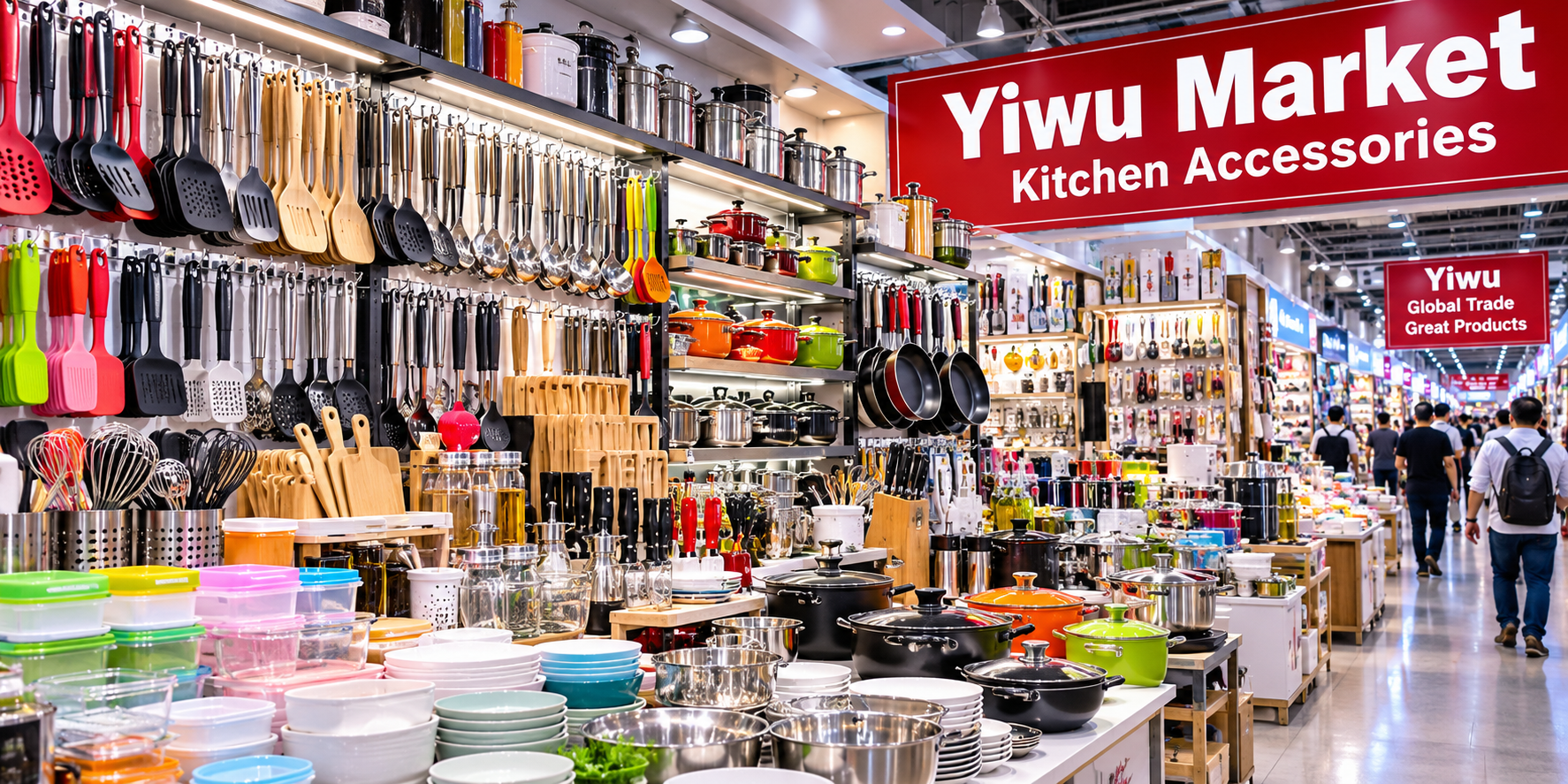
China's kitchenware supply chain covers both inexpensive everyday products and specialized commercial goods.
Cookware
Popular wholesale products include:
-
Frying pans
-
Sauce pans
-
Stockpots
-
Woks
-
Dutch ovens
-
Cast-iron cookware
-
Stainless-steel cookware
-
Non-stick cookware
When sourcing cookware from China, buyers should carefully evaluate product quality, material safety, durability, and compatibility with different cooking methods.
Request detailed specifications covering the base material, metal thickness, coating type, handle construction, lid material, compatible cooking surfaces, and maximum temperature limits.
For non-stick cookware, confirm the coating composition, durability, and applicable food-contact safety requirements in the destination market.
Kitchen Utensils
Utensils are suitable for retailers and e-commerce sellers because they are generally compact and available in many designs.
Common products include:
-
Spatulas
-
Ladles
-
Tongs
-
Whisks
-
Spoons
-
Peelers
-
Graters
-
Can openers
-
Garlic presses
-
Measuring sets
When sourcing kitchen utensils from China, buyers should evaluate the material, durability, ease of cleaning, heat resistance, and suitability for food contact.
For stainless-steel products, confirm the steel grade and corrosion resistance. For silicone utensils, check the material quality and maximum temperature rating.
For plastic or nylon utensils, verify heat resistance and compatibility with non-stick cookware.
Silicone Kitchenware
Silicone products include:
-
Spatulas
-
Baking mats
-
Oven mitts
-
Food storage accessories
-
Ice trays
-
Lids
-
Baking molds
When sourcing silicone kitchenware from China, buyers should pay close attention to material composition, heat resistance, flexibility, durability, and food-contact safety.
Request detailed specifications covering the type of silicone used, operating temperature range, product dimensions, thickness, and any additional materials, such as stainless-steel cores or plastic handles.
For products intended for cooking or baking, verify the stated minimum and maximum operating temperatures and confirm that the products are suitable for their intended applications, such as ovens, microwaves, freezers, or dishwashers.
Compatibility varies by product, so these claims should be supported by the manufacturer's specifications and relevant testing.
Food Storage Products
This segment includes:
-
Storage containers
-
Lunch boxes
-
Food jars
-
Refrigerator organizers
-
Airtight containers
-
Meal-preparation containers
When sourcing food storage products from China, buyers should evaluate material quality, sealing performance, durability, ease of cleaning, and suitability for the intended use.
Common materials include polypropylene (PP), polyethylene (PE), polyethylene terephthalate (PET), silicone, stainless steel, and glass. Each material has different properties, temperature limits, and applications.
For plastic products, specify the resin or material, intended food contact, temperature range, and testing requirements.
Confirm whether containers are suitable for hot food, refrigeration, freezing, microwaving, or dishwasher use rather than assuming they support every application.
For airtight containers, test the lid fit, gasket quality, leak resistance, and ability to maintain a reliable seal.
Ceramic and Glass Products
These include:
-
Plates
-
Bowls
-
Cups
-
Mugs
-
Baking dishes
-
Serving dishes
-
Glass containers
When sourcing ceramic and glass products from China, buyers should evaluate product quality, dimensions, weight, finish, durability, and suitability for the intended application.
For ceramic products, check glaze quality, surface consistency, edge finishing, and resistance to chipping.
For glass products, confirm the glass type and whether it is designed for ordinary serving, hot beverages, baking, or thermal shock resistance.
Food-contact safety is another important consideration. Request relevant testing reports for applicable requirements, including lead and cadmium migration testing for ceramic food-contact surfaces where required.
For glassware, verify that the product and any decorations, coatings, or printed designs meet the relevant food-contact requirements in the destination market.
How Do You Source Kitchenware Wholesale from China?
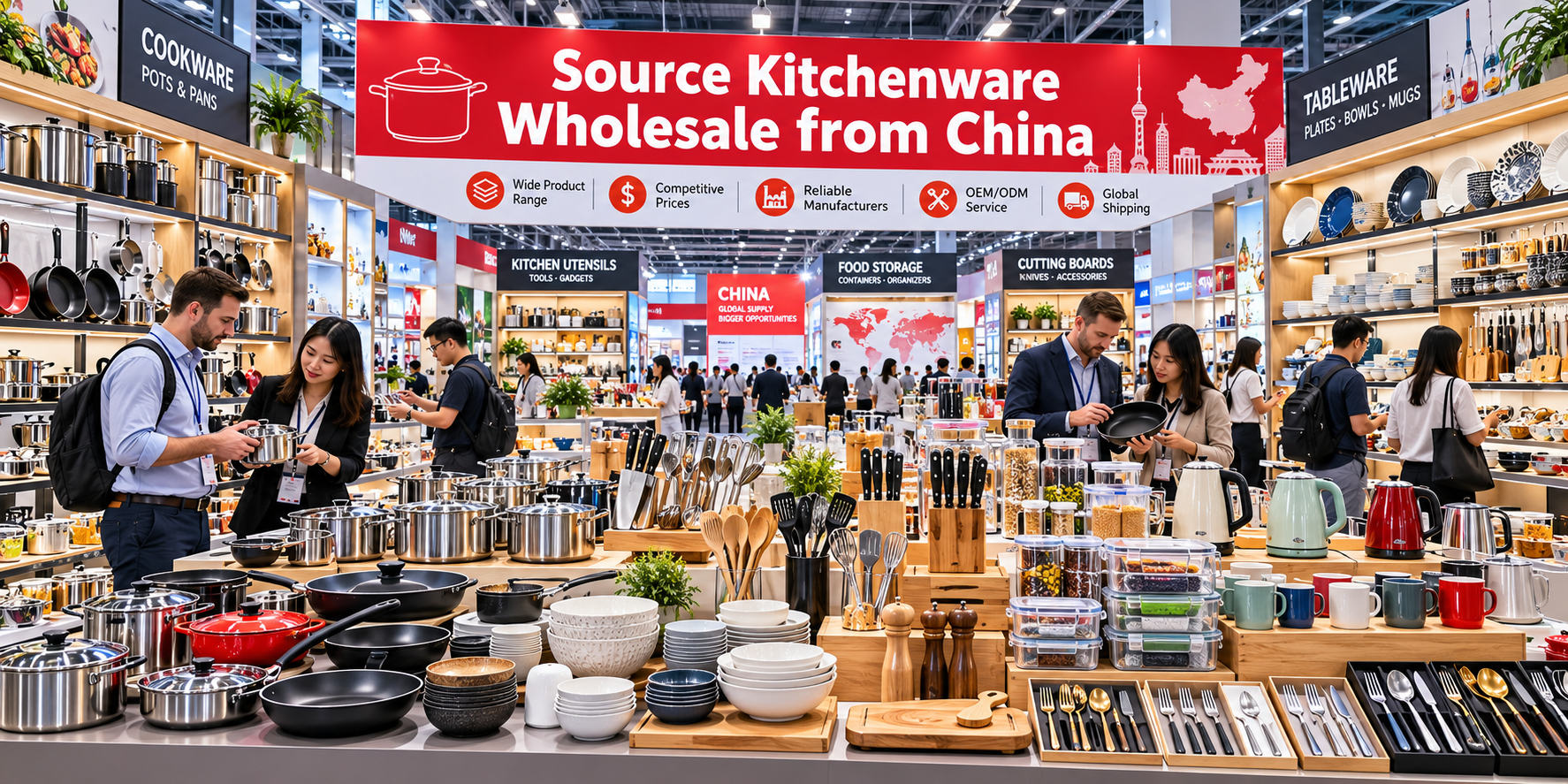
A structured sourcing process reduces quality and cost risks.
Step 1: Define the Product Specification
Before contacting suppliers, create a product specification sheet.
Include:
-
Product dimensions
-
Material
-
Material grade
-
Weight
-
Color
-
Finish
-
Packaging
-
Logo requirements
-
Intended use
-
Target quantity
-
Required certifications
-
Destination country
For cookware, also specify compatible cooking surfaces, such as gas, electric, ceramic, or induction cooktops, and required temperature performance.
For silicone kitchenware, define the operating temperature range. For food storage products, clarify whether the items must withstand refrigeration, freezing, microwaving, or dishwasher use.
A detailed product brief makes it easier to compare quotations on an equal basis and reduces the risk of receiving products that do not meet your expectations.
Step 2: Choose the Right Sourcing Location
Match the product with the appropriate manufacturing cluster.
For example:
-
Small kitchen accessories → Yiwu
-
Metal cookware → Yongkang
-
Ceramic tableware → Chaozhou
-
Commercial kitchen supplies → Guangzhou
-
Mixed household products → Yiwu or Guangdong
This can reduce unnecessary supplier searching.
These locations are starting points rather than strict boundaries. Manufacturers and wholesalers may operate outside the best-known clusters, so evaluate suppliers based on their actual product expertise, production facilities, quality standards, and export capabilities.
Choosing the right sourcing location can reduce unnecessary supplier searching and make factory visits or product inspections more efficient.
If you plan to purchase several product categories, consider whether sourcing them from one region or consolidating orders through a sourcing agent would be more practical.
Step 3: Shortlist Several Suppliers
Never depend on one quotation.
Compare suppliers based on:
-
Unit price
-
MOQ
-
Product specifications
-
Material
-
Production capacity
-
Lead time
-
Packaging
-
Certifications
-
Export experience
-
Customization
-
Payment terms
ou should also verify the supplier's registered business identity, operating address, and manufacturing capabilities. If the supplier claims to operate a factory, determine whether it manufactures the products itself or outsources production to another company.
When requesting quotations, send the same product specification sheet to every shortlisted supplier. This allows you to compare offers fairly and identify unusually low prices that may reflect differences in materials, product construction, or quality-control procedures.
Rather than selecting the cheapest supplier automatically, assess the overall value, including product quality, communication, reliability, compliance, and delivery performance.
Step 4: Request Samples
Samples are essential for kitchenware.
Check:
-
Dimensions
-
Weight
-
Surface finish
-
Sharp edges
-
Welds
-
Handles
-
Coatings
-
Odor
-
Packaging
-
Functional performance
Additional checks may be necessary for specific product categories. For cookware, evaluate compatibility with the required cooking surface and the performance of handles, lids, and coatings.
For food storage products, check lid fit, leakage, and the specified temperature range. For silicone kitchenware, verify flexibility and stated heat resistance. For ceramic and glass products, inspect surface defects, edges, and the effectiveness of the proposed protective packaging.
For ceramic and glass products, also assess how well the packaging protects items during handling and transportation. Ask the supplier for a sample packed using the same materials and methods planned for the commercial shipment. Where appropriate, use a defined packaging test or an independent inspection rather than relying on an informal handling check.
If the samples meet your requirements, approve a reference sample and document the agreed specifications before mass production. Keep records of the approved material, dimensions, color, finish, packaging, and any relevant test results.
Step 5: Verify Food-Contact Compliance
Kitchenware is not simply another consumer-product category.
China maintains national food-safety standards covering food-contact materials and products. The standards include requirements for metal, plastic, rubber, paper, ceramics, glass, coatings, bamboo and wood, and other materials.
The exact requirements for your shipment depend on the product and destination market.
Therefore, ask suppliers for test reports that correspond to the exact product, material, and intended application.
Do not assume that a generic factory certificate covers every SKU.
Step 6: Confirm Packaging Requirements
Kitchenware can be damaged during transportation.
Discuss:
Samples are essential for kitchenware.
-
Individual packaging
-
Carton dimensions
-
Inner protection
-
Foam or molded inserts
-
Moisture protection
-
Drop protection
-
Palletization
-
Carton labeling
For branded kitchenware, also confirm retail packaging details, including logo placement, product information, instructions, and any required warnings or compliance labels. Approve the final artwork before mass production.
Packaging also affects freight costs. A lightweight product with oversized packaging can become expensive to ship because international air freight and some other shipping services calculate charges using dimensional weight as well as actual weight.
For sea freight, excessive packaging can increase the total shipment volume and reduce container utilization.
Ask your supplier to provide estimated carton dimensions, units per carton, gross weight, and total shipment volume before production is completed. Compare packaging options that offer adequate protection without unnecessary bulk.
For ceramic and glass products, request a sample packed using the proposed export packaging. For cookware and metal utensils, check that products are protected against scratches, dents, and surface damage.
For products with removable parts, ensure that lids, handles, and accessories are secured separately where necessary.
Step 7: Conduct Quality Inspection
For commercial orders, consider inspection before shipment.
An inspection can check:
-
Quantity
-
Product dimensions
-
Materials
-
Appearance
-
Function
-
Packaging
-
Labels
-
Carton condition
-
Random samples
Inspection procedures should reflect the product category. For cookware, inspectors may examine handle attachment, coating consistency, dimensions, and compatibility with specified cooking surfaces.
For food storage products, checks may include lid fit, leakage, and the presence of required labeling. For ceramic and glass products, inspections should focus on cracks, chips, surface defects, and protective packaging.
Where product safety or regulatory compliance is involved, visual inspection alone is not sufficient. Food-contact materials, coatings, and other safety-critical features may require laboratory testing, document verification, or specialized inspections.
For large or customized orders, pre-shipment inspection can help identify problems before the goods leave China. Agree on the inspection scope, sampling method, defect classifications, and acceptance criteria with the supplier before production begins.
If an inspection identifies problems, document the findings with photographs, measurements, and a written report. Ask the supplier to correct the issues and arrange reinspection when necessary. Avoid authorizing shipment until significant discrepancies have been resolved according to the agreed purchase terms.
Step 8: Calculate the Landed Cost
Never compare suppliers using product price alone.
Calculate:
Landed cost = Product cost + packaging + domestic transport + international freight + insurance + duties + taxes + inspection + destination charges
This calculation gives you a more realistic view of profitability.
What Food-Safety Standards Apply to Kitchenware?
Food-contact compliance is one of the most important issues when importing kitchenware.
China's food-safety framework includes standards such as GB 4806.1 for general food-contact requirements. Specific standards also cover materials including ceramics, glass, plastics, metals, coatings, rubber, and bamboo or wood.
However, Chinese compliance is not automatically the same as compliance in your destination market.
For example, an importer selling kitchenware in the European Union, United States, United Kingdom, Australia, or another market must identify the rules applicable to that destination.
Before ordering, verify:
-
What material touches food?
-
What food will contact the product?
-
What temperatures will it encounter?
-
Is the product used for cooking, storage, serving, or preparation?
-
What tests are required in the destination country?
-
Does the supplier have current documentation for the exact SKU?
Key takeaway: Never accept a vague "food grade" claim as a substitute for product-specific compliance documentation.
What Should You Check When Choosing a Chinese Kitchenware Supplier?
A reliable supplier should be evaluated beyond price.
Use this checklist:
-
Confirm the company's legal identity.
-
Verify its business registration.
-
Check whether it manufactures or trades.
-
Request factory photographs or an audit.
-
Review production capacity.
-
Request product samples.
-
Verify material specifications.
-
Check relevant testing reports.
-
Confirm export experience.
-
Review packaging capabilities.
-
Confirm MOQ and lead time.
-
Check payment details.
-
Clarify warranty and defect policies.
-
Arrange third-party inspection for significant orders.
The supplier's market location is not proof of manufacturing capability. A wholesale-market vendor may be a manufacturer, distributor, or trading company.
What Are the Advantages and Challenges of Kitchenware Wholesale from China?
| Factor | Advantages | Potential challenge |
|---|---|---|
| Product variety | Very broad selection | Difficult to compare every supplier |
| Pricing | Competitive wholesale options | Cheapest price may reduce quality |
| Customization | OEM/private label available | Custom products often require higher MOQ |
| Materials | Steel, aluminum, silicone, ceramic, glass and more | Specifications must be verified |
| Supplier choice | Many manufacturing clusters | Supplier quality varies |
| Logistics | Mature export infrastructure | Bulky goods can increase freight |
| Quality | Many established manufacturers | Inspection remains important |
| Compliance | Testing infrastructure exists | Destination requirements differ |
The biggest mistake is treating kitchenware as a simple commodity.
A $2 utensil and a $2 utensil can have different materials, durability, packaging, food-contact performance, and defect rates.
Should You Buy from a Factory or Wholesale Market?
Both options can work.
Choose a factory when:
-
You need large quantities.
-
You require OEM products.
-
You want private labeling.
-
You need custom molds.
-
You require consistent specifications.
-
You plan long-term production.
Choose a wholesale market when:
-
You need many different SKUs.
-
You want ready-stock products.
-
You are testing a product category.
-
You have relatively small quantities.
-
You want to compare products quickly.
For many importers, a hybrid strategy works best. Use wholesale markets to identify products and suppliers. Then move successful products to direct factory production as volumes increase.
How Can Ejet Help with Kitchenware Sourcing from China?
International buyers do not always have the time or local resources to visit Chinese markets and evaluate suppliers.
Ejet can help businesses manage the sourcing process through supplier identification, product procurement, quality inspection, consolidation, and international logistics.
This approach can be particularly useful when an order involves multiple Chinese suppliers. Instead of managing every supplier and shipment separately, buyers can use a coordinated sourcing and logistics process.
The objective should not simply be finding the lowest quotation. A better objective is finding the right combination of quality, compliance, price, supplier reliability, and landed cost.
Frequently Asked Questions About Kitchenware Wholesale from China

Is China a good place to buy kitchenware wholesale?
Yes. China offers a large and diverse kitchenware supply base covering cookware, utensils, storage products, tableware, bakeware, and commercial kitchen supplies. The right sourcing location depends on the product and required manufacturing capabilities.
Where is the best place to buy kitchenware wholesale in China?
There is no single best location. Yiwu is useful for small kitchen accessories and mixed merchandise. Yongkang is strong in hardware and kitchenware manufacturing. Chaozhou is important for ceramic tableware, while Guangzhou is useful for commercial and hospitality supplies.
Can I buy kitchenware from China with my own logo?
Yes. Many Chinese manufacturers support OEM and private-label production. However, customization may require minimum order quantities, packaging specifications, artwork approval, tooling, and sample approval before mass production.
How do I verify Chinese kitchenware suppliers?
Start by verifying the company's legal identity and business registration. Then review its factory capabilities, product samples, material specifications, testing reports, production capacity, export experience, and references. For larger orders, consider an independent factory audit.
Is kitchenware from China safe?
Kitchenware safety depends on the specific product, materials, manufacturing quality, and applicable regulations. Food-contact products require particular attention to material safety and testing. Buyers should verify requirements in their destination market rather than relying only on a supplier's general "food grade" claim. China's food-contact standards cover materials including metals, plastics, ceramics, glass, coatings, rubber, and bamboo or wood.
What is the minimum order quantity for kitchenware from China?
There is no universal MOQ. Ready-stock products from wholesale markets may have relatively low quantities, while custom or private-label manufacturing can require higher MOQs. Always confirm MOQ for the exact product, material, customization, and packaging requirements.
Conclusion
Kitchenware wholesale from China can give importers access to a huge selection of cookware, utensils, storage products, tableware, bakeware, and commercial kitchen supplies.
The best sourcing location depends on your product. Yiwu is well suited to small kitchen accessories and mixed merchandise. Yongkang offers a strong kitchenware and hardware manufacturing cluster. Chaozhou is a major ceramic production center, while Guangzhou provides broad trading and hospitality-supply opportunities.
However, successful sourcing requires more than finding a low price. Define your specifications, compare suppliers, request samples, verify food-contact requirements, inspect production, protect products with appropriate packaging, and calculate the complete landed cost.
For international businesses, combining Chinese wholesale markets with professional supplier verification, quality control, procurement, and logistics can create a more reliable kitchenware supply chain.
Here are some related articles you may find interesting: