Back To Blog
Essential kitchen accessories cover the everyday jobs of preparing, measuring, cooking, and storing food. A practical collection starts with dependable basics—not a drawer full of gadgets you rarely touch.
This guide explains which tools deserve space in your kitchen, what to look for when choosing them, and how to build your collection around the meals you actually make.
Which kitchen accessories do you really need?
Start with a chef’s knife, cutting boards, measuring tools, mixing bowls, basic utensils, cookware, and a food thermometer. These kitchen essentials support everyday preparation without requiring a large matching set.
University extension guidance similarly emphasizes versatile basics over specialized appliances, particularly where storage space is limited.
Before shopping, write down five meals you prepare regularly. Then list what each meal requires: chopping vegetables, draining pasta, stirring sauce, roasting ingredients, or storing leftovers. Use that list to identify genuine gaps rather than replacing serviceable items simply because they do not match.
For example, consider whether your next purchase would support baking, weeknight cooking, or packed lunches. Choose according to the job you need done. Treat any essentials list as a starting point, not a rule that every household must follow.
UBC Food Services makes the same distinction: individual cooking habits determine what belongs in your kitchen.
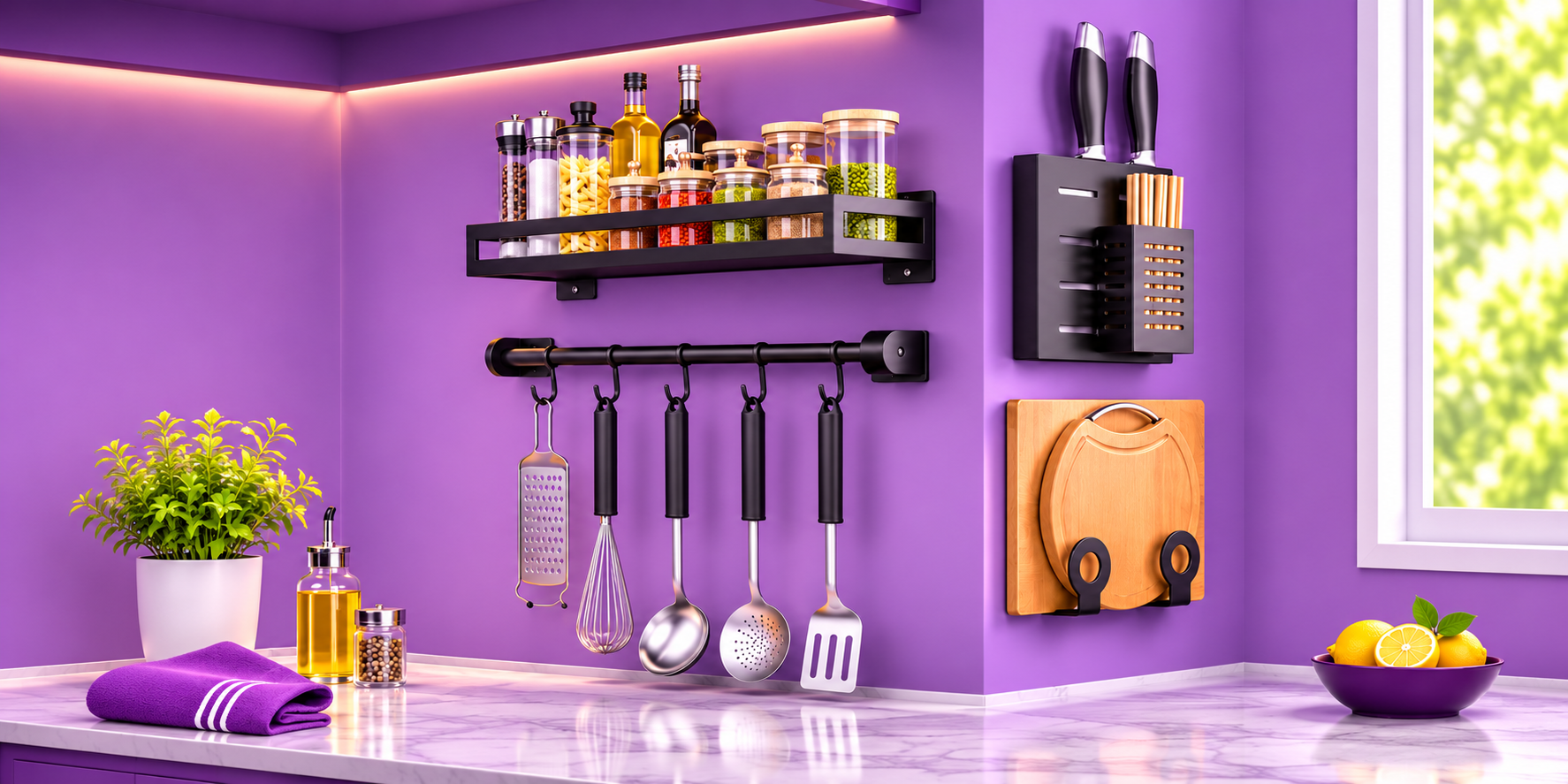
Top 10 Kitchen Accessories for Everyday Cooking
The following ten categories make a practical starting checklist. Read each one against your existing supplies before adding anything to your shopping basket. Where several tools appear together, choose the pieces that fill a real gap rather than treating the category as a set you must buy.
1. A comfortable chef’s knife
A chef’s knife handles everyday cutting tasks, while paring and serrated knives provide useful options for smaller jobs and bread. The Academy of Nutrition and Dietetics includes these knives among its recommended beginner cooking tools, along with a sharpener.
If possible, hold a knife before buying it. Check whether the handle feels secure, whether its weight suits you, and whether you can control it comfortably. Do not assume the largest knife or biggest knife block is the right choice.
Plan for maintenance, too. Read the care instructions and decide how you will keep the blade sharp before committing to a purchase.
2. Cutting boards with adequate working space
Choose boards that fit both your preparation area and your cleaning routine. Separate boards for raw meat and produce help prevent cross-contamination; keeping boards clean and dry matters regardless of the material you select.
Think through a complete meal when choosing sizes. Will there be room for an onion and the chopped pieces, or will you constantly transfer ingredients to another container? Can you comfortably lift and wash the board afterward?
Make the boards easy to distinguish if they serve different purposes. A simple labeling system can help everyone in a shared kitchen follow the same routine.
3. Measuring cups and spoons
Include dry measuring cups, measuring spoons, and a clear liquid measuring jug. These serve different measuring tasks, and the Academy of Nutrition and Dietetics recommends having both dry and liquid measures available. A kitchen scale is another useful option when recipes specify ingredients by weight.
Look closely at the markings before purchasing. Choose measurements you can read easily, handles you can grip, and pieces that fit where you intend to store them.
Check your favorite recipes as well. If you usually follow weight-based recipes, prioritize a scale rather than collecting several overlapping cup sets.
4. Nesting mixing bowls
Mixing bowls belong on basic equipment lists, and nesting designs are recommended when storage space is limited. They provide containers for combining ingredients without demanding a separate cupboard for every size.
Consider a small bowl for dressing, a medium bowl for preparation, and a larger one for mixing. Before buying a set, picture the largest recipe you regularly make. Choose sizes around that routine rather than occasional entertaining ambitions.
If you want bowls to double as storage, consider versions with lids. Check the manufacturer’s instructions before assuming any bowl is suitable for the microwave, freezer, or dishwasher.
5. A spatula, spoon, whisk, and tongs
These utensils cover distinct jobs: stirring, scraping, mixing, lifting, and turning. The American Heart Association includes spoons, spatulas, whisks, and tongs in its essential equipment guidance and advises against metal utensils on nonstick cookware because they can damage the surface.
Start with one practical version of each rather than an oversized utensil bundle. Check handle comfort and how easily you can operate the tongs with one hand.
For tools intended for hot pans, verify their heat rating. A spatula suitable for scraping cake batter is not automatically suitable for stovetop cooking.
6. A versatile skillet and saucepan
Basic kitchen equipment should include cookware suited to your normal portions. A skillet supports tasks such as sautéing vegetables and toasting sandwiches, while pots and saucepans cover boiling and simmering. NC Cooperative Extension identifies these as foundational pieces rather than reasons to purchase a large cookware collection.
Before choosing, check compatibility with your stove and consider the pan’s weight when full. Look at handle clearance, lid storage, and the space available in your sink.
Buy individual pieces as needs become clear. This approach also follows the Academy of Nutrition and Dietetics’ advice to avoid starting with a large, expensive cookware set.
7. A baking sheet and baking dish
Baking sheets and baking dishes appear on university extension essentials lists alongside stovetop cookware. They deserve consideration even if baking desserts is not your main interest.
Choose them around recipes you already intend to cook: perhaps a tray of roasted vegetables or a baked pasta dish. Check dimensions against your oven, including enough room to grasp the handles or edges comfortably.
Also consider where each piece will live between uses. Avoid buying several near-identical sizes before testing how one sheet and one dish fit into your cooking routine.
8. A colander or strainer
A strainer can drain pasta, rinse produce, and help with rinsing legumes such as lentils and beans. The Academy of Nutrition and Dietetics includes one among its beginner kitchen recommendations.
Think about the smallest foods you expect to drain when comparing hole sizes. Consider whether you prefer a handled design, a freestanding colander, or one intended to rest across the sink.
Check its dimensions against your sink and cupboard before buying. If you regularly prepare large portions, include that requirement in your comparison rather than choosing solely for compact storage.
9. A food thermometer
A food thermometer checks whether food has reached the appropriate internal temperature. It is an important food-safety tool, not simply an accessory for enthusiastic meat cooks; University of Maine Cooperative Extension specifically highlights its usefulness for meats, casseroles, and other dishes.
Choose a display you can read comfortably and controls that make sense to you. Read the instructions for placement, cleaning, and any calibration checks the model requires.
Keep suitable cooking-temperature guidance accessible with your recipes. Owning the tool is only the first step; make checking the required temperature part of your cooking routine.
10. Food-storage containers
Food-storage containers complete the journey from preparing a meal to putting leftovers away. UBC Food Services includes them among its essential kitchen tools, specifically for leftover food and lunches.
Choose a manageable range of sizes based on what you actually store. For example, plan separately for individual lunch portions and larger quantities you intend to divide later.
Before buying, check whether the containers meet your intended freezer, microwave, and dishwasher needs. Try matching each container to a likely use, and decide where both bases and lids will be stored. Avoid adding a large assortment without a clear purpose.
How do you choose the best kitchen tools for your home?
Choose the best kitchen tools by matching them to your meals, physical comfort, available storage, and willingness to maintain them. There is no need to treat someone else’s complete kitchen as your shopping target. Specialist guidance consistently recommends starting with basics and adapting the collection to how you cook.
Use this checklist before purchasing:
Identify the job. Name the task the item will perform and the meals in which you expect to use it.
Check what you own. Decide whether an existing tool already does that job satisfactorily.
Test comfort. Where possible, handle the item and assess its grip, weight, controls, and reach.
Read care requirements. Confirm whether you are willing to hand-wash, sharpen, season, or otherwise maintain it.
Confirm compatibility. Check relevant stove, oven, appliance, and temperature restrictions in the product instructions.
Assign a storage space. Measure the drawer, shelf, or cupboard before ordering anything bulky.
For a first kitchen, prioritize the equipment needed for your next week of meals. Keep a running list of tasks that feel awkward, then review whether a purchase would address them. This gives each new addition a specific purpose instead of turning shopping into an attempt to anticipate every possible recipe.
Add kitchen gadgets only when they earn their space
Treat specialty kitchen gadgets as a second-stage decision. UBC Food Services lists items such as a garlic press, blender, food processor, and slow cooker separately from its core essentials. That distinction offers a useful way to organize your own wishlist without dismissing tools that may suit your routine.
Try a practical purchasing rule: write down three things you would make with the gadget during a normal month. Then consider the complete process, including setup, washing, drying, and storage. If the examples feel forced, leave it on the wishlist for now.
Accessibility deserves consideration, too. Give extra weight to features that address your own grip, reach, or lifting requirements. Your priority is equipment you can use comfortably—not proving that you can manage with the smallest possible collection.
Keep kitchen supplies accessible and cared for
Include the less glamorous kitchen supplies in your plan: oven mitts, towels, cleaning materials, and a can opener. Oven mitts and towels feature in essential equipment guidance alongside the tools used directly for cooking. Iowa State University Extension also emphasizes having necessary items where and when you need them.
Build your arrangement around a few simple habits:
Group by task: choose a preparation area for boards and measuring tools, with cooking utensils near their usual workspace.
Plan a return locati0n: give every frequently used item a place you can reach without rearranging a cupboard.
Include maintenance in cleanup: follow each item’s care instructions rather than assuming one washing method suits everything.
Review duplicates: before adding another utensil, decide whether it serves a different purpose or merely repeats one you own.
Keep towels and pot holders away from the stovetop so they do not catch fire, and keep electrical cords away from the stove and sink. Useful storage should support safe habits as well as convenience.
Build a kitchen that supports everyday cooking
Start with the essentials that match your meals, then add deliberately. Check your cupboards before shopping, choose tools you can handle comfortably, and account for cleaning and storage from the outset. The goal is not to own every accessory—it is to have a useful, manageable collection ready for the food you want to cook.
Frequently Asked Questions About Essential Kitchen Accessories
What are the essential kitchen accessories I need to start cooking?
Essential kitchen accessories include a chef's knife, cutting boards, measuring cups and spoons, mixing bowls, cooking utensils, cookware like skillets and saucepans, and food storage containers. These basics help facilitate everyday cooking and meal preparation.
How do I choose the right kitchen tools for my cooking style?
To choose the right kitchen tools, consider the meals you frequently prepare and the tasks involved. Look for tools that will help with those specific jobs while ensuring they fit comfortably in your hand and storage space.
Are expensive kitchen gadgets worth the investment?
While some expensive kitchen gadgets may offer advanced features, it’s crucial to assess whether you’ll use them regularly. Focus on purchasing practical tools that meet your cooking needs rather than high-priced gadgets that may just end up collecting dust.
How can I organize my kitchen supplies efficiently?
Organize your kitchen supplies by grouping items by task, assigning designated storage spaces for frequently used tools, and keeping maintenance materials within reach. This setup helps streamline your cooking process and ensures that you have what you need readily accessible.
What should I consider when buying new kitchen accessories?
When buying new kitchen accessories, consider the intended task, your current inventory of tools, comfort (weight and handle), maintenance requirements, compatibility with your cooking appliances, and appropriate storage solutions. This approach ensures that each new addition has a specific purpose in your kitchen.