Back To Blog
Sourcing beadable pens wholesale starts with checking what each kit includes, whether the beads fit the pen hardware, and how much each usable finished pen will cost.
This article explains how to compare suppliers, test samples, and build a practical first order. Whether you are making gifts, planning a craft workshop, or creating custom bead pens to sell, start with a repeatable design before committing to bulk quantities.
What should you look for when buying beadable pens wholesale?
Look for clearly identified pen blanks, compatible beads, an itemized pack description, and written ordering terms. A useful listing should let you distinguish the number of pens from the total number of components. For example, one Michaels marketplace listing describes a 150-piece package containing 50 pens, 50 refills, and pen bags—not 150 pens.
Before comparing suppliers, define what you actually need. A workshop order might call for individually packed bead pen kits with instructions. A maker assembling finished products might prefer separate blanks and coordinated beads, with no unnecessary packaging.
Use this purchasing brief to keep quotes comparable:
Finished quantity: State how many complete pens you intend to make.
Pen specification: Request the body material, color, ink color, mechanism, and refill details.
Decoration requirements: Identify your intended bead shapes, colors, and focal designs.
Pack contents: Ask for separate counts of pens, beads, spacers, refills, and bags.
Delivery requirement: Give the date you need the materials in hand, including time for inspection and assembly.
Send the same brief to every shortlisted seller. Otherwise, you may end up comparing a complete kit with a cheaper package of undecorated blanks.
Choose complete DIY Pen Kits or separate components
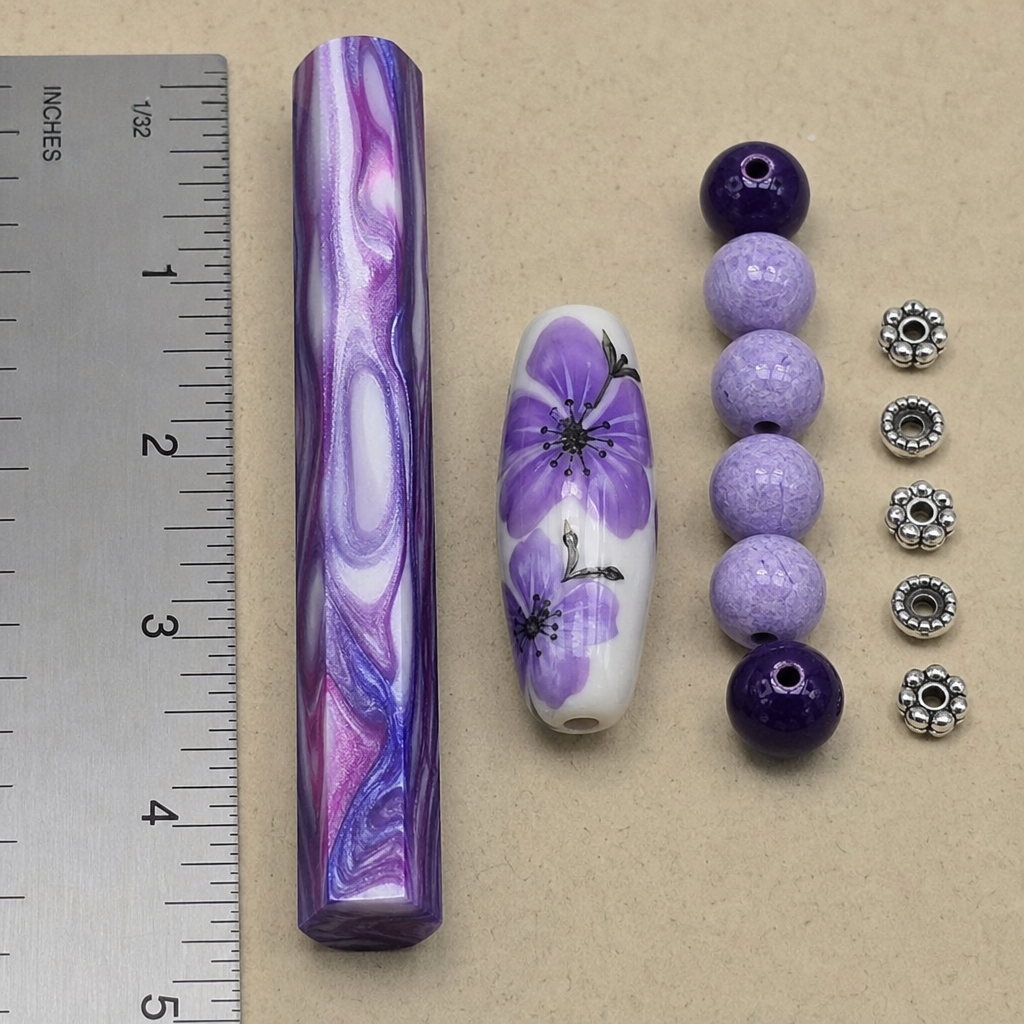
Treat “kit” as a description to investigate, not a guarantee of contents. D.B.C. and More describes one kit as materials for six pens, including pens, focal beads, additional beads, and spacers. Pandahall lists another kit containing pen blanks, several bead types, and decorative tassels. These examples show why an itemized list matters more than the product name.
Complete kits for a defined activity
Consider complete DIY Pen Kits when your priority is organizing a specific project. For a workshop, ask whether the package supports one finished pen per participant and whether instructions are included. Request a photograph of everything supplied for one finished design, rather than relying only on a group photograph.
Check the balance of components, too. If a kit offers assorted colors, ask whether participants can make the pictured combinations or whether the image is only an example. Decide in advance whether substitutions are acceptable.
Separate supplies for controlled designs
Consider separate blanks, beads, and spacers when you want to specify each design yourself. Write a simple materials recipe for every pen: the blank, focal bead, supporting beads, spacers, and packaging. Then use that recipe to calculate quantities rather than buying unrelated assortments.
For a first order, compare both approaches using the same finished design. Include your sorting and packing time in the comparison. Choose the option that gives you an acceptable result with the fewest unresolved details, not simply the largest component count.
How do you check that beads fit beadable pens?
Check the bead-hole diameter against the pen’s rod diameter, then confirm that the entire bead arrangement fits within the usable decorating space.
Do not assume that every product labeled “beadable” is interchangeable. Cordial Jewelry advises checking both rod compatibility and available design space, while one Pandahall kit specifically requires bead holes of at least 2.5 mm for its pen rod.
That measurement applies to that product, not every pen.
When sourcing beads for beadable pens wholesale, request measurements for the exact products you plan to combine. An outside bead measurement does not answer your separate question about its hole size. Ask the seller to identify both dimensions clearly.
Use a sample assembly to check these details:
Threading: Each bead should pass onto the intended rod without forced modification.
Stack length: The full arrangement should leave enough room to secure the closure as instructed.
Orientation: A focal bead should face the direction you intend when the pen is held.
Comfort: Try writing with the decorated pen, not just displaying it upright.
Security: Inspect the assembled design for unwanted movement or a closure that will not seat properly.
If the design does not fit, revise the component recipe before ordering. Do not make bulk purchasing depend on a modification you have not tested.
Find suppliers and compare their answers
Build your shortlist around product detail and responsiveness rather than promotional wording. Specialist catalogs such as Beadable Bliss organize pen blanks, beads, spacers, and refills into separate categories, while Pandahall offers individual kit listings with component descriptions. Use those catalogs as starting points for investigation, not as substitutes for sample testing.
Request quotes for the exact product variant you want. Include its item code, selected color, quantity, and whether you require a fixed assortment. Ask sellers to explain any difference between a mixed pack and individually selected colors.
A useful inquiry might read:
Please quote the attached component list for my planned quantity of finished pens. Confirm the pen material, rod dimensions, compatible bead-hole size, included refills, color allocation, dispatch estimate, shipping charge, and process for reporting missing or defective items. Please also confirm whether samples are available and whether substitutions require approval.
Keep the answers in a comparison sheet. Record what was confirmed, what remains unclear, and when the quote was issued. If a seller answers only part of your inquiry, follow up before paying.
Do not treat an attractive photograph as confirmation of repeat availability. Ask whether you can reorder the same item code and whether colors or hardware may change between batches. If consistency matters to your project, make that expectation explicit.
Compare the cost of usable finished pens
Use your own order figures to compare wholesale beadable pens. Start with the components needed for a complete design, then add the other expenses attached to that order. Keep supplier charges separate from your internal assembly and packing estimates so you can see what drives the total.
A practical worksheet can include:
|
Cost category |
What to record |
|---|---|
|
Pen hardware |
Blanks and any separately purchased closures |
|
Decorative components |
Focal beads, supporting beads, and spacers |
|
Order-related charges |
Shipping and other charges shown in the quote or checkout |
|
Presentation |
Bags, backing cards, labels, or boxes you choose to use |
|
Preparation |
Your estimated sorting, assembly, testing, and packing time |
|
Unusable materials |
Actual missing, damaged, or incompatible components found during inspection |
For a component-cost comparison, divide the relevant order total by the number of complete, usable designs it supplies. Avoid dividing by the advertised piece count when that count includes accessories rather than finished pens.
Also compare the total commitment. A lower unit price is not automatically the right purchase if it requires more inventory than your project needs. Set an order ceiling before evaluating quantity discounts, and keep your first purchase focused on learning whether the product meets your requirements.
What should you test before placing a bulk order?
Test the exact pen, beads, refill, and packaging combination you intend to use. Your sample review should establish whether the design assembles correctly, writes acceptably, feels comfortable, and can be packed without disrupting the decoration. Record the results against the specific supplier item codes so the test is useful when you reorder.
Use the same process for every shortlisted sample:
Check the contents. Compare the shipment with its description and note missing or substituted items.
Inspect the hardware. Look for visible cracks, rough edges, damaged threads, or inconsistent finishes.
Assemble the design. Follow the supplier’s instructions and note any unclear steps or awkward fit.
Test the writing. Write several lines and operate the mechanism repeatedly, checking for skipping or sticking.
Check replacement parts. If refillability matters, remove and reinstall the specified refill according to instructions.
Pack the pen. Confirm that your chosen presentation protects the pen without bending or crowding its decoration.
Do not assume a refill fits because it looks similar. Beadable Bliss lists a 62 mm refill for certain common beadable pens, illustrating the value of checking a named replacement specification rather than ordering an unspecified “pen refill.”
Photograph accepted samples and keep one assembled reference pen. Use it to explain your expectations if a later shipment differs.
Build a small, repeatable design range
For an initial collection of DIY bead pens, choose a limited set of combinations you can describe and reproduce clearly. You might test a neutral design, a brighter option, and one themed variation. Treat these as experiments rather than assuming a particular theme will attract buyers.
Give each design its own component list and photograph. Record the supplier, item codes, quantities used, assembly order, and any acceptable alternatives. If a bead becomes unavailable, this record gives you a clear starting point for testing a replacement.
Use optional embellishments deliberately. For a custom bead pen, decide whether the focal bead, barrel color, or lettering should be the main feature, then build the remaining details around it. Compare the finished options side by side and remove combinations that are awkward to hold or difficult to assemble consistently.
If you are preparing workshop kits, write instructions for the exact supplied design. Have someone unfamiliar with the project follow them before packing the full batch. Note where they hesitate, then improve the wording or layout rather than adding more decorative choices.
Put the order details in writing
Before submitting your first bulk order, turn the accepted sample into an order specification. Include item codes, quantities, approved colors, component measurements, and the agreed handling of substitutions. Save the listing description and the seller’s confirmations alongside your receipt.
Create a receiving checklist before delivery:
- Count pens and decorative components separately.
- Compare colors and hardware with the approved samples.
- Assemble examples from the shipment before committing the whole batch to production.
- Photograph discrepancies and report them through the seller’s stated process.
- Keep untested materials separate from components you have accepted.
For kits intended for children, check the product’s stated age guidance and applicable safety requirements before offering them. One D.B.C. and More kit explicitly warns about small parts and includes age and supervision guidance; do not assume all craft kits are suitable for every audience.
Finally, decide what would justify a reorder: acceptable sample performance, consistent incoming quality, clear supplier communication, and a quantity your project can use. Keep those criteria visible when a larger discount is offered.
Start with a tested design, then scale
The strongest sourcing decision is one you can repeat with confidence. Specify the finished pen first, verify its components, compare complete costs, and test the exact combination before buying in volume.
Start by requesting an itemized quote and a representative sample from your shortlist. Once the sample meets your requirements, document it and place a focused first order. That gives your next purchase a practical foundation: a design you have assembled, inspected, and approved.
frequently asked questions (FAQs) that you can include in your article on sourcing beadable pens wholesale and DIY pen kits:
FAQ 1: What materials are used in beadable pens?
Beadable pens are typically made from a variety of materials, including plastic or metal for the pen body, and may feature rubber or silicone grips. The beads used for decoration can be made of glass, acrylic, wood, or other materials designed to fit securely on the pen.
FAQ 2: Can I use any type of bead with beadable pens?
Not all beads are compatible with beadable pens. It’s essential to check the bead-hole diameter to ensure it fits the pen's rod. Additionally, the overall size and design of the beads should work well within the decorative space of the pen.
FAQ 3: How can I ensure the quality of the pen kits I purchase?
To ensure quality, request samples from suppliers before placing a bulk order. Check the materials, fit, and functionality by assembling a pen using the kit. Confirm that the items you receive match the description provided.
FAQ 4: Are there minimum order quantities when sourcing beadable pens wholesale?
Many wholesale suppliers have minimum order quantities, but these can vary widely. Always check with the supplier for their specific minimum order requirements and whether they offer bulk discounts.
FAQ 5: What should I include in my purchasing brief when contacting suppliers?
Your purchasing brief should include details like finished quantity, pen specifications (material, color, ink type), decoration requirements (bead types and colors), pack contents, and delivery timelines. This will help suppliers provide you with accurate quotes and information.