Back To Blog
Fashion jewelry sourcing works best when style selection and product checks happen together.
For retailers building a collection from China, this list turns current jewelry directions into practical buying briefs: what to sample, which details to inspect, and how to merchandise each look.
Use it to shortlist fashion accessories that suit your customers rather than simply copying a supplier’s bestseller page.
Which fashion jewelry styles should you source from China?
Start by sampling mixed-metal pieces, sculptural designs, modern pearls, layered necklaces, and characterful charms.
These directions appear across 2026 fashion and jewelry coverage, alongside renewed interest in expressive beads and vintage-inspired details.
Treat that coverage as a starting point for product development—not evidence that every style will sell in your market.
For your initial shortlist, separate products into three roles:
Core pieces: Simple hoops, chains, and rings that fit your established customer aesthetic.
Trend tests: More distinctive shapes, colors, or combinations to trial before reordering.
Collection builders: Coordinating pieces that create complete looks without requiring identical matching sets.
Give prospective Chinese suppliers the same reference brief and quality expectations. Compare their samples against one another, not just against catalog photography.
1. Mixed-Metal Jewelry With Deliberate Contrast
Mixed metals are a prominent direction in 2026 jewelry coverage, especially combinations that bring silver-colored and gold-colored elements together. Consider this category if you want a collection that encourages customers to combine finishes rather than choose just one.
Sample interlocking rings, two-tone hoops, and bracelets with contrasting links. Keep the shapes restrained enough that the finish contrast remains the main feature. Ask suppliers to show the same design in different finish proportions before choosing your version.
During inspection, compare color consistency across the entire sample set. Check the backs, joints, and recessed areas—not only the polished front surfaces.
Merchandising idea: Photograph one two-tone piece beside your existing single-finish products to suggest a coordinated combination.
2. Sculptural Earrings and Statement Cuffs
Bold, sculptural jewelry is another clear theme in expert forecasts for 2026. Rounded earrings, substantial cuffs, and organic silhouettes offer useful reference points for a statement-focused buying brief.
Request samples with smooth curves and intentional proportions rather than complicated decoration. Ask for individual earring weights and cuff opening measurements so you can compare options consistently. Then assess the physical samples for balance, closure security, and comfortable edges.
Do not approve a dramatic silhouette from a front-facing image alone. Review side profiles, the reverse surface, and how the piece sits when worn.
Merchandising idea: Style one statement piece with a plain neckline or sleeve so shoppers can judge its scale without competing accessories.
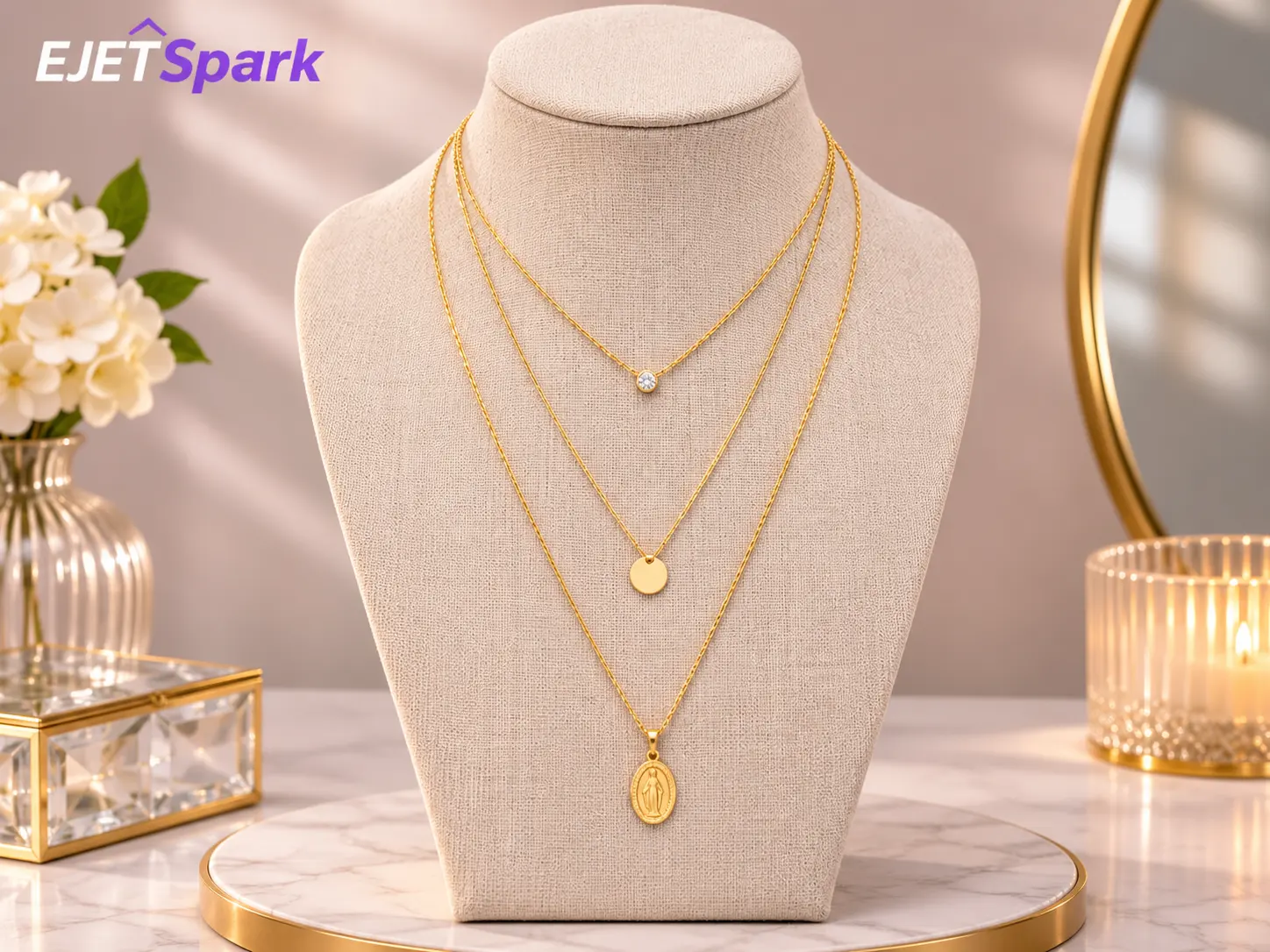
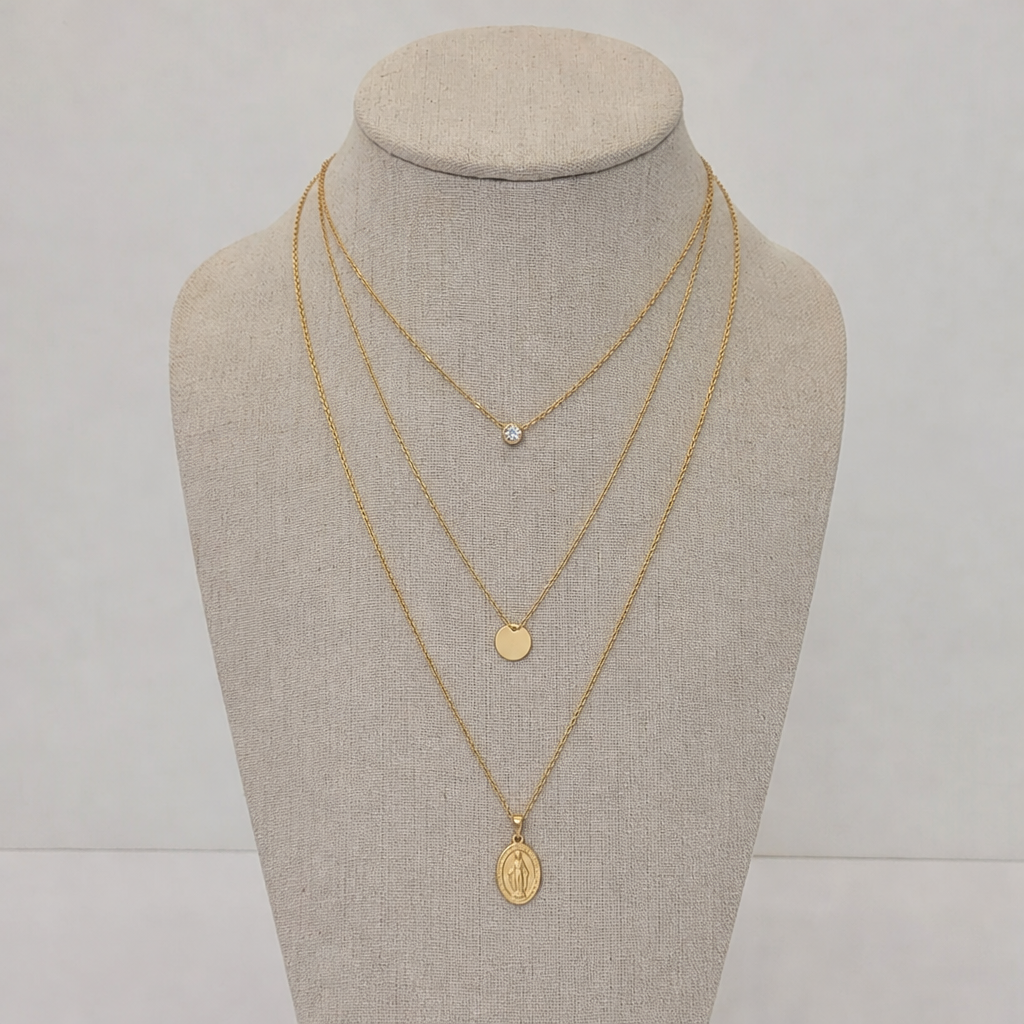
3. Layered Necklaces With Adjustable Lengths
Layering remains visible in current jewelry styling, including combinations of different lengths, textures, and metals. For sourcing purposes, build a necklace group around a clear focal piece rather than collecting unrelated chains.
Try a short plain chain, a medium pendant, and a longer textured strand. Ask suppliers to provide the wearable length, extension length, and pendant dimensions for each component. Test the full combination on a person as well as a display bust.
Choose deliberately between separate necklaces and a connected multistrand design. Sample both if your customers value convenience but also like styling flexibility.
Merchandising idea: Show each necklace individually and as part of the complete stack, with measurements visible in the product listing.
4. Modern Pearl Jewelry With Organic Shapes
Pearls continue to appear in contemporary jewelry forecasts, including irregular shapes, mixed-metal settings, and combinations with chains. Use those directions to develop pearl pieces that feel distinct from a traditional matching strand.
Explore an off-center pearl pendant, irregular drop earrings, or a bracelet that alternates pearls with metal links. Ask the supplier to identify the pearl material clearly and describe the variation you should expect between pieces.
Approve a range of acceptable samples rather than relying on one unusually attractive example. Compare surface appearance, attachment points, and the overall balance of paired earrings.
Merchandising idea: Include close-up photographs of representative pieces and explain expected variation instead of implying that every item will look identical.
5. Charm Necklaces and Personalized Details
Charms remain prominent in jewelry trade coverage, with personal expression a recurring theme. For a focused range, consider initials, lockets, symbolic pendants, and small motifs that work within one recognizable design language.
Begin with a tightly edited charm selection and a small number of compatible chains. Specify attachment dimensions and check that every approved charm fits every intended necklace or bracelet. Test how clusters hang together before ordering them as a coordinated group.
For engraved or personalized products, request an approval process covering spelling, placement, and character limits. Agree on how mistakes will be handled before accepting customer orders.
Merchandising idea: Present suggested combinations while leaving shoppers room to choose their own arrangement.
6. Boho Jewelry With Cords, Beads, and Pendants
Cord necklaces and substantial pendants have featured in 2026 fashion coverage, offering a useful direction for boho jewelry. Translate the look into a controlled assortment rather than combining every available tassel, bead, and symbol.
Choose one visual theme, such as earth tones, coastal colors, or dark cords with polished metal. Ask suppliers to identify bead and pendant materials rather than accepting vague descriptions such as “natural style.”
Inspect cord ends, knots, attachment loops, and the reverse of each pendant. Wear the sample with different necklines to assess the intended length and positioning.
Merchandising idea: Build a small styling story around relaxed shirts or knitwear, using consistent colors across necklaces, bracelets, and earrings.
7. Vintage Styles With Lockets and Geometric Details
Vintage and heirloom references remain part of current jewelry coverage, including lockets, nostalgic motifs, and designs drawn from earlier collections. Use vintage styles as creative direction while developing an assortment with its own identity.
Consider oval pendants, geometric earrings, signet-style rings, and restrained floral details. Give suppliers reference boards that explain the proportions, textures, and mood you want rather than asking for exact reproductions of branded pieces.
For darkened or antique-looking finishes, approve a physical color standard. Inspect hinges, raised details, and recessed areas across several samples to decide what variation is acceptable.
Merchandising idea: Describe new products as vintage-inspired, and use close-ups to highlight their texture and construction.
8. Colorful Beads and Statement Strands
Beads are receiving attention in both fashion reporting and jewelry trade coverage. For a buying brief, focus on purposeful color combinations and interesting proportions rather than assuming that a larger bead automatically creates a stronger design.
Develop a limited palette tied to your clothing or accessories assortment. Sample tonal strands, contrasting bead sizes, or a necklace with one oversized focal element. Ask suppliers to document bead materials, dimensions, and the finished necklace weight.
Check drilled openings, stringing, closures, and finishing at both ends. Compare multiple samples side by side for the appearance you intend to sell.
Merchandising idea: Photograph the strand against clothing as well as a plain background so customers can assess both color and scale.
9. Brooches and Decorative Pins
Brooches were visible on the London autumn/winter 2026 runways, including floral and decorative interpretations. Consider them as a targeted addition if your customers already buy jackets, occasionwear, scarves, or expressive fashion accessories.
Start with a distinct silhouette: a sculptural flower, an abstract metal shape, or a restrained pearl arrangement. Request photographs of the fastening mechanism before sampling, then inspect how securely it closes.
Try the sample on the types of fabric shown in your planned styling. Assess weight, balance, and the condition of the fabric after removal rather than approving the design purely for its appearance.
Merchandising idea: Show the same pin on two suitable garments, giving shoppers a practical reason to consider it.
10. Refined Minimalist Accessories
Not every collection needs to lean into maximalism. Trendvision’s autumn/winter 2025–2026 forecast also identified a quieter direction built around refined shapes, restrained pearls, and subtle surface textures.
Use minimalist accessories as a balancing category: small hoops, simple pendants, narrow bands, and understated bracelets. Keep the assortment visually coherent through a shared finish or repeated shape rather than adding many nearly identical products.
Inspect these samples closely for visible seams, uneven polishing, bent posts, and inconsistent closures. Set clear acceptance criteria even when the design looks straightforward.
Merchandising idea: Pair a simple piece with one bolder item from the collection, giving customers an understated entry point into your trendy jewelry range.
Turn Your Shortlist Into a Supplier-Ready Buying Brief
Before requesting quotations from Chinese suppliers, define exactly what you want priced. Send the same specifications to each candidate and ask them to identify any proposed substitutions. Keep your initial inquiry focused enough that you can compare the answers meaningfully.
Include these details in your brief:
Product specification: Dimensions, target weight, base material, finish, closures, and component descriptions.
Order structure: Minimum quantities by design and finish, sample charges, and customization requirements.
Production terms: Sample approval stages, production timing, packaging, and inspection arrangements.
Quality expectations: Acceptable appearance variation, functional checks, and the process for resolving defects.
Material wording deserves particular attention. Gold-plated, gold-filled, and vermeil describe different constructions; a gold-colored photograph does not establish which one you are buying. The FTC also notes that gold plating wears over time, with wear affected by use and plating thickness. Request written specifications that support the descriptions you plan to publish.
Keep an approved reference sample and record agreed changes in the purchase documentation. Compare the production order against that reference rather than relying on memory or a supplier’s changing catalog page. Ask for clarification whenever a quotation leaves materials or finishing unspecified.
How Should You Choose Your First Order?
Choose your first order by matching a small selection of styles to your existing customers, then approving the samples and commercial terms before increasing quantities. A trend report can guide exploration, but your buying decision should reflect your own sales history, price positioning, and ability to present the products convincingly.
Use this final checklist before committing:
Customer fit: Select pieces that complement products your customers already purchase.
Sample approval: Check appearance, measurements, closures, and the complete styled combination.
True purchasing cost: Budget for packaging, freight, inspection, testing, and applicable import charges—not only the quoted unit price.
Accurate listings: Prepare material descriptions, dimensions, care information, and representative photographs.
For U.S. sales, review the requirements relevant to the product and intended age group. CPSC guidance distinguishes voluntary jewelry standards from mandatory children’s-product requirements, including lead restrictions. Confirm an appropriate compliance and testing plan before placing an order, especially if children’s jewelry is involved.
Start with a coherent collection, not the longest possible product list. Use the first order to evaluate the supplier, refine your specifications, and learn which styles deserve a reorder.
Frequently Asked Questions About Sourcing Fashion Jewelry from China
What are the key jewelry trends to look for when sourcing from China?
Key trends include mixed-metal pieces, sculptural designs, layered necklaces, modern pearls, boho styles, and vintage-inspired jewelry. It's essential to stay updated on current fashion forecasts to align your offerings with consumer preferences.
How can I ensure the quality of jewelry samples from Chinese suppliers?
Compare samples against each other and check for color consistency, weight, balance, and secure closures. Request detailed specifications about materials and finishes, and conduct thorough inspections of the samples.
What should I include in my buying brief for suppliers?
Your buying brief should include product specifications (dimensions, materials, finishes), order structure (minimum quantities, sample charges), production terms (timing, inspection arrangements), and quality expectations (appearance variation, functional checks).
How can I gauge customer interest in new jewelry styles before placing a bulk order?
Start by sampling a variety of styles and obtaining customer feedback. You can also analyze sales history, trends, and customer inquiries to identify which pieces are likely to resonate with your target market.
What compliance regulations should I consider when importing jewelry into the U.S.?
Ensure adherence to CPSC guidelines, particularly if you plan to sell children’s jewelry, which has stricter regulations. Consider any material specifications, testing for lead and other substances, and accurate labeling of products.