Back To Blog
Animal figures can anchor a wildlife display, inspire a pretend adventure, or add character to a room. Finding top animal figures and toy animals starts with deciding how you want to use them—not choosing the biggest set.
This article explores collection themes, practical selection criteria, display ideas, and care considerations to help you build a collection that feels intentional.
What makes an animal figure collection worth building?
A worthwhile animal figure collection has a clear purpose, pieces you enjoy, and room to grow without becoming cluttered. Your starting point might be realistic animal models for close observation, toy animal figures for storytelling, or decorative animals chosen for their shapes and colors. There is no need to make one collection serve every purpose.
Before browsing, finish this sentence: “I want these figures mainly for…” Your answer gives you a useful filter. A dramatic pose might suit a display, while a play scene might call for several animals that work together.
Set a boundary, too. You could collect one habitat, one species, or only pieces that fit a particular shelf. A boundary gives each addition a reason to belong. It also makes it easier to pass on an appealing figure that does not suit your space or interests.
Collection themes with room for personality
Instead of treating “best collections” as a universal ranking, consider which theme you would enjoy developing. The following approaches offer distinct starting points, whether you prefer a small arrangement or an expanding wildlife scene.
Wildlife grouped by habitat
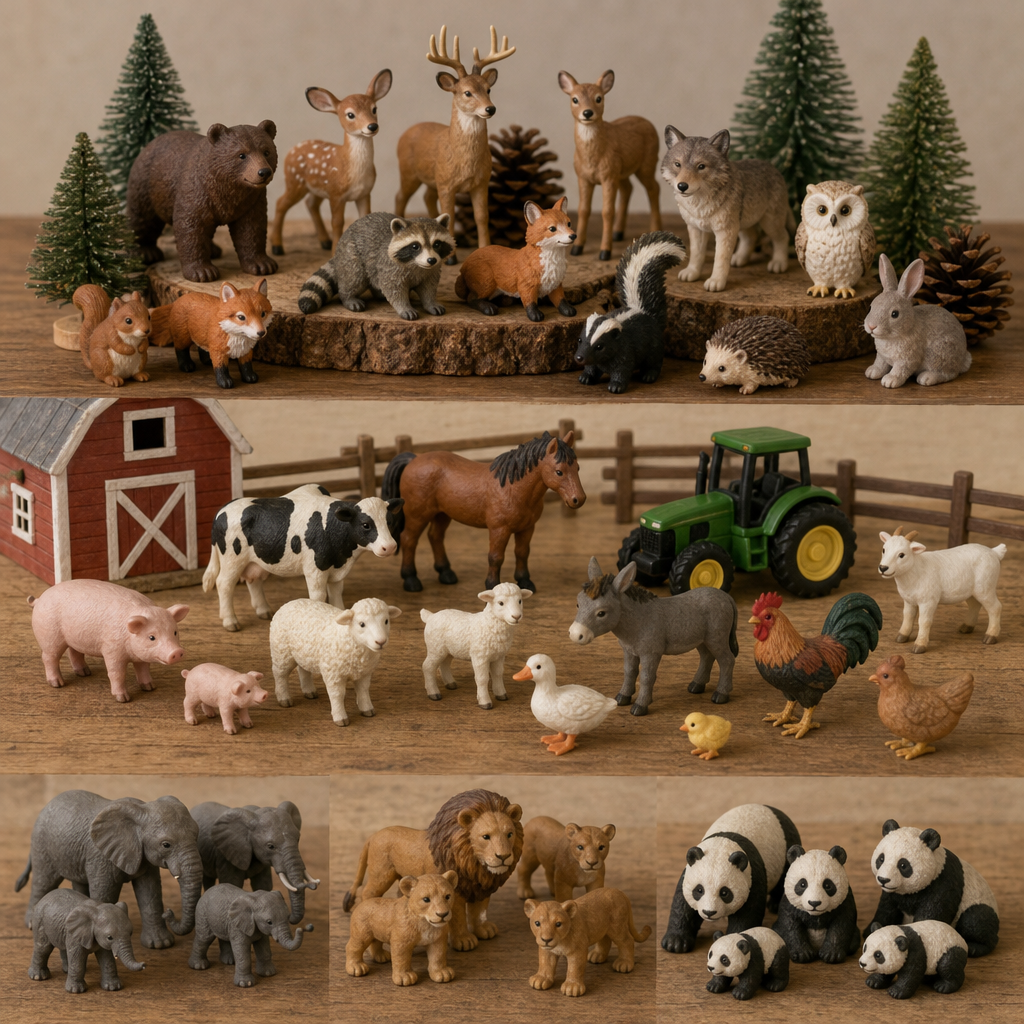
Build around a setting such as a woodland, grassland, or coastal scene. Choose the animals first, then check their habitats against reliable wildlife references if accuracy matters to you. This keeps an attractive arrangement from becoming an accidental mix of unrelated environments.
For a display, try a backdrop and generous spacing. For pretend play, suggest a scene using a suitable play mat rather than buying every possible accessory. Leave open space for the animals to move through an imagined story.
Farm and familiar-animal scenes
A farm-inspired collection offers a setting for stories about feeding, shelter, and daily routines. You might begin with a few favorite animals and introduce additional figures only when they add something to the scene. There is no requirement to complete an entire farm at once.
Keep decorative accessories separate from the essential figures when planning your purchase. Ask whether you want the animals themselves or whether the packaging and scenery are doing most of the selling. That distinction helps you choose a set you will actually use.
A single species or sculptural style
A collection devoted to elephants, horses, birds, or another favorite can emphasize differences in pose and artistic interpretation. Alternatively, connect several species through a shared finish, such as a restrained color palette. Either approach gives decorative animals a consistent visual direction.
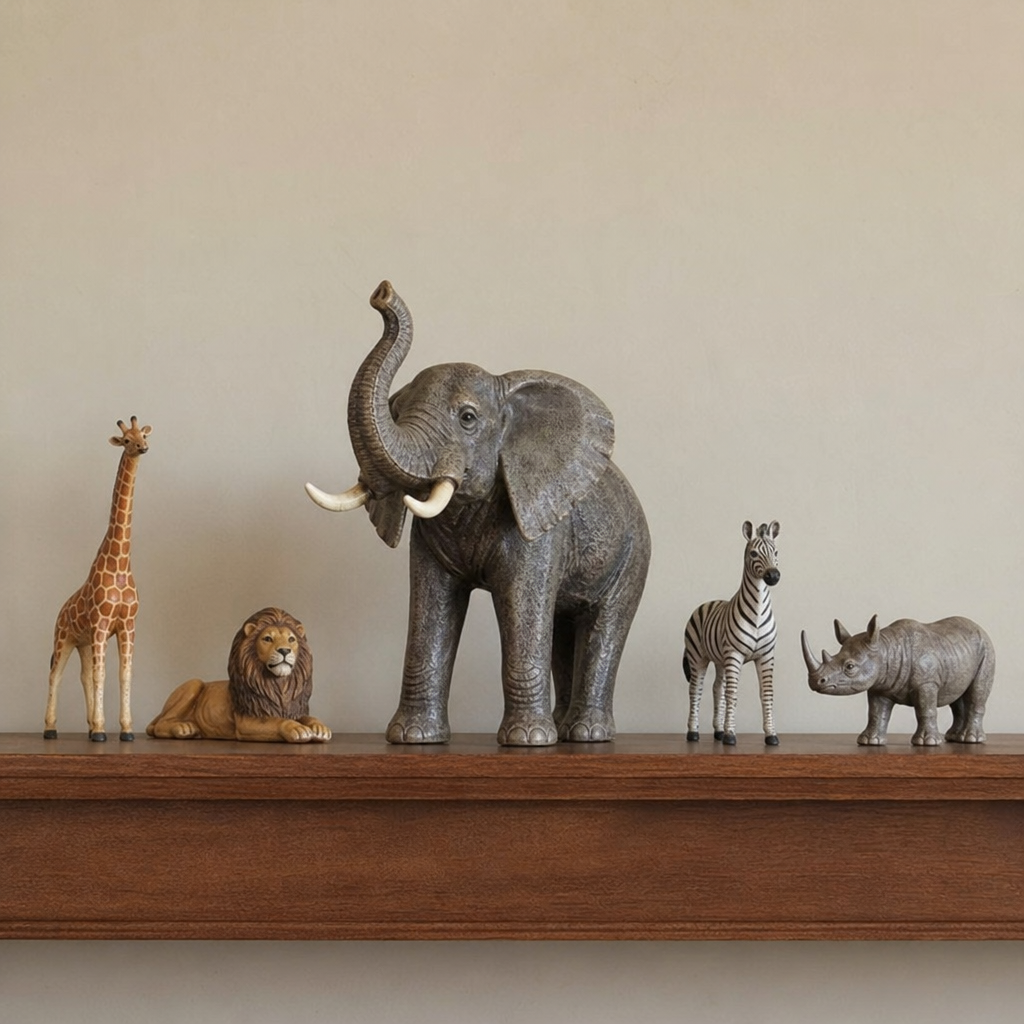
Try choosing one anchor piece before adding companions. Photograph it in the intended space, then consider what would complement it rather than compete with it. You may find that a small group expresses your taste better than a crowded shelf.
How do you choose between toy animals and decorative figurines?
Choose according to the intended user and setting: toys should be selected for age-appropriate play, while decorative figurines should be assessed as display objects. For children, follow the age guidance and safety information on the packaging, and match the toy to the child’s interests and abilities, as the U.S. Consumer Product Safety Commission recommends.
Do not let an appealing animal design substitute for checking the product’s stated purpose. If you want a child’s plaything, look for clear toy information rather than assuming a decorative object is suitable. If the listing is unclear, ask the seller before purchasing.
For display pieces, assess the object in relation to its surroundings. A detailed miniature invites close viewing, while a larger silhouette might suit a more open surface. Measure the actual space, including the depth needed for a tail, base, or extended pose.
Keep these safety points separate from aesthetic preferences:
Read the full age guidance. Choose toys that match the intended child, not simply a favorite animal or an impressive piece count.
Keep small parts away from children under three. This applies to small accessories as well as figures that present a small-parts hazard.
Plan for younger siblings. If older children have toys with small parts, consider where those toys will be used and stored so younger children cannot access them.
Look beyond the product photograph
An attractive photograph is a starting point, not a complete buying decision. Make a shortlist based on the information you can verify, then compare the actual dimensions, included pieces, intended use, and care instructions. Treat missing information as a question to resolve rather than a detail to guess.
Use this checklist when comparing animal figurines:
Size and proportions: Record height, length, and width. If figures will share a scene, decide whether you want consistent scale or a deliberately mixed arrangement.
Pose and footprint: Look for views showing how the figure stands and how much surface space it occupies. Ask for another photograph if the base is hidden.
Finish and detail: Examine close-ups of faces, markings, seams, and edges. Decide which details matter at the distance from which you will actually view the piece.
Contents: Confirm whether photographs show the entire purchase or include separate props. Count the animals you want rather than treating every accessory as equal value.
Condition: For secondhand pieces, request photographs of any chips, repairs, missing parts, or worn areas before deciding.
Give yourself a spending limit before comparing sets. Then ask whether you would still want the purchase if the largest accessory or most eye-catching packaging were removed. This keeps attention on the figures rather than the presentation.
Create a display with breathing room
Start by placing your favorite piece, then add companions one at a time. Try grouping figures by habitat, species, color, or artistic style rather than using all four approaches together. Step back after each addition and check whether the arrangement still has a clear focal point.
For animal statues, map the footprint on the intended surface before buying. A paper template can help you judge whether the piece leaves enough usable space around it. Consider nearby drawers, doors, and everyday movement rather than measuring the shelf alone.
For ceramic and glass figures, prioritize a stable position where they are unlikely to be knocked or dropped. These materials can crack or break on impact, and the Canadian Conservation Institute identifies preventing breakage as the most important precaution.
If you own more pieces than you want to display, consider rotating small groups. Photograph arrangements you like so you can recreate them later. A collection does not need to be visible all at once to feel complete.
Care for the pieces you choose
Keep any supplied care instructions with your purchase record. Before cleaning, identify the material and check for applied decoration or previous repairs. Avoid assuming that a cleaning method suitable for one figure will suit every item in your figurine collection.
For ceramic and glass pieces, lift with both hands and support the main body rather than using a projecting feature as a handle. The Canadian Conservation Institute recommends careful, two-handed handling and warns against lifting objects by potentially weak attachments.
A closed display cabinet is worth considering for ceramic or glass collections because it helps protect against dust and accidental contact. Preventing dust buildup also reduces the need for cleaning and the handling risks that come with it. Follow specialist advice for valuable, damaged, or unusually fragile pieces rather than experimenting with cleaning products.
Keep a simple inventory with a photograph, dimensions, purchase details, and condition notes. This gives you a practical reference when choosing additions or reorganizing storage. It can also prevent duplicate purchases you did not intend to make.
Build around what you enjoy
The best collection is not necessarily the largest or most elaborate. It is one whose purpose is clear, whose pieces suit their intended use, and whose arrangement makes you want to look again.
Start with a focused group, check the practical details, and leave room for your interests to develop. Whether you choose playful scenes or sculptural animal models, thoughtful selection matters more than collecting everything.
Frequently Asked Questions About Animal Figures And Toy Animals
What are the differences between toy animals and decorative figurines?
Toy animals are designed for play and should be age-appropriate, while decorative figurines are meant for display and aesthetic enjoyment. Consider the intended use when choosing between the two.
How can I start my own animal figure collection?
Begin by defining the purpose of your collection, such as for play, display, or educational purposes. Choose a theme that resonates with you and set boundaries to keep your collection focused.
What should I consider when displaying my animal figures?
Ensure there's enough space for each piece to be appreciated. Group similar figures together by habitat or species, and consider the overall aesthetic while maintaining a clear focal point in the display.
How can I care for my ceramic or glass animal figurines?
Handle them with care, using both hands to support the main body. Store them in a closed cabinet to protect against dust and accidental damage, and refer to care instructions specific to the materials used.
What is the best way to choose between different brands or collections of animal figures?
Research product dimensions, poses, finishes, and included pieces. Make a checklist of your preferences, and compare different options to find the best fit for your collection and intended use.