Back To Blog
Temu is a real online marketplace, but that does not make every product, seller, or transaction equally safe.
Its purchase-protection program addresses certain order problems, while regulatory actions show why buyers should scrutinize product safety and seller accountability.
Buying wholesale from China offers a different approach: more opportunity to specify and inspect goods, but more responsibility for sourcing and compliance.
This comparison separates those risks so you can choose a buying method that fits your needs.
Is Temu safe and legit?
Temu is legitimate as an operating marketplace, but it should not be treated as a blanket guarantee of safe merchandise. The FTC identifies Whaleco, Inc. as its operator, and Temu publishes purchase-protection and return policies. Those facts establish that it is an identifiable business with customer-service processes—not that every listing meets applicable safety requirements.
To explain whether Temu is legit by assessing its overall safety, separate four questions:
Transaction safety: What happens if an order never arrives or differs from its description?
Account security: How will you protect your login and payment information?
Privacy: What information does the service collect, use, and share?
Product safety: What evidence supports the item's suitability for its intended use?
This distinction matters because solving one problem does not solve the others. A refund can address a missing parcel; it cannot establish that an electrical charger passed safety testing.
Similarly, secure checkout does not verify a manufacturer's claims about materials or protective performance. Temu's refund program and the European Commission's product-safety findings concern different layers of buyer protection.
My practical recommendation: evaluate the consequences of failure before evaluating the discount. Apply much stricter evidence requirements when an item will protect someone, be used by a child, or become inventory sold to customers.
Regulatory findings put product safety in perspective
There are documented reasons to approach the safety of Temu cautiously. In September 2025, Temu agreed to a $2 million U.S. settlement resolving allegations that it failed to provide required seller information and mechanisms for reporting suspicious marketplace activity.
This concerned marketplace transparency and reporting—not a finding that every Temu transaction was fraudulent.
European scrutiny has focused more directly on illegal-product risks. On May 28, 2026, the European Commission fined Temu €200 million for shortcomings in assessing those risks.
Its investigation included selected chargers that failed basic safety tests and baby toys presenting chemical or suffocation hazards. These findings should not be generalized into a failure rate for every product category.
The Commission accepted a corrective action plan concerning risk assessment on October 26, 2026.
Separately, on November 17, 2026, it issued preliminary findings that Temu's risk-mitigation measures were inadequate, citing ineffective product-compliance controls, weak moderation, and ineffective sanctions. Preliminary findings are not a final determination, and the accepted action plan is not an endorsement of every listing.
For shoppers, the takeaway is specific: do not substitute marketplace availability for product verification. For businesses, make documentation a purchasing requirement rather than something to request after inventory arrives.
What should you know about Temu app safety?
The safety of the Temu app involves both account protection and your comfort with its data practices; its privacy policy is not an independent security audit. Temu's current U.S. policy describes collecting account, purchase, payment, support, device, and usage information, along with information from certain third parties. Read those disclosures before deciding how much information to provide.
Privacy and security require different decisions
Temu security concerns are easier to assess when privacy and unauthorized access are considered separately. Reviewing data collection helps you decide whether to use the service; protecting your password helps reduce account-access risks.
Temu's policy also describes information sharing and privacy choices, so checking those settings is more useful than assuming that installation alone proves either safety or danger.
For a cautious setup, consider these steps:
Use a unique password rather than one shared with your email account.
Review device permissions and decline optional access you do not need.
Avoid uploading unnecessary personal photographs or documents.
Open your account directly to investigate order problems rather than following unexpected messages.
Using a browser instead of installing the app is an option if you prefer not to install it. However, that is not a privacy guarantee: Temu's privacy policy covers both its website and mobile application. Assess Temu app safety through permissions, account habits, and disclosed data practices—not a single reassuring label.
Buyer protection helps with orders, not product certification
Temu states that its Purchase Protection Program offers refunds for items that do not arrive, arrive damaged, or are not as described. That provides a route for resolving certain problems, but eligibility and procedures still matter. Keep the listing, order confirmation, photographs, and relevant messages so you can explain what went wrong.
Its U.S. return policy generally allows returns within 90 days of purchase, with exceptions; most electronics have seller-dependent windows of 45, 60, or 90 days. Some categories and customized products have restrictions, and return packages generally must be sent within 14 days after submitting the request. Check the actual item and policy before paying rather than assuming every order has identical terms.
For payment, the FTC recommends credit cards when possible because qualifying purchase problems can be disputed with the card issuer. Keep transactions on the marketplace and be wary of requests to pay elsewhere; Temu says it cannot verify or assist with off-platform transactions. These precautions address payment and dispute risks, not the physical safety of what arrives.
How does Temu compare with buying wholesale from China?
The useful distinction is retail-style ordering versus a managed sourcing relationship—not simply Temu versus China. Wholesale sourcing can involve identifying manufacturers or trading companies, defining specifications, negotiating terms, and arranging inspections. It creates opportunities for control, but those controls must be requested, funded, and verified.
Use this decision framework rather than comparing advertised unit prices alone:
|
Decision factor |
When considering Temu |
When considering wholesale from China |
|---|---|---|
|
Purchase purpose |
Evaluate the specific listing for your immediate need |
Define intended use, sales market, and repeat-order requirements |
|
Quality expectations |
Check the listed materials, dimensions, and limitations |
Put measurable specifications and acceptance criteria in writing |
|
Evidence |
Request support for important product claims |
Build document verification and testing into supplier approval |
|
Problem resolution |
Read the applicable marketplace refund terms |
Negotiate inspection, defect, compensation, and dispute terms |
|
Budget |
Confirm checkout costs and return conditions |
Budget for sourcing, testing, freight, storage, and unusable units |
The wholesale column reflects a sourcing process to build, not benefits that every supplier automatically provides. Government sourcing guidance recommends specifications, samples, due diligence, contracts, and quality control; skipping those steps removes much of the potential advantage. Temu's protection, meanwhile, remains subject to its marketplace policies.
For example, ask different questions when considering one desk organizer versus a repeat order for your store. The first decision may center on dimensions and returnability. For the second, require a repeatable specification, documented acceptance criteria, and a clear plan for defective inventory.
A Temu safety vest illustrates why evidence matters
A search for a Temu safety vest needs more scrutiny than a search for ordinary clothing. High-visibility apparel standards address garment design, background and retroreflective materials, performance classes, marking, testing, and care. Bright fabric and reflective-looking strips alone do not establish conformity.
Before buying workwear, ask your employer or safety professional to identify the required garment type, performance class, and applicable standard. Then request documentation tied to the exact style or model—not a photograph of an unrelated certificate.
ISEA's high-visibility standard guidance specifically describes model-level declarations of conformity and material-performance requirements.
Apply the same rule to a wholesale supplier. A larger order or direct factory relationship is not a substitute for evidence. If you cannot verify that a vest meets the requirements for its intended workplace, choose a supplier that can provide the necessary documentation rather than relying on reviews or appearance.
Make wholesale purchasing a controlled process
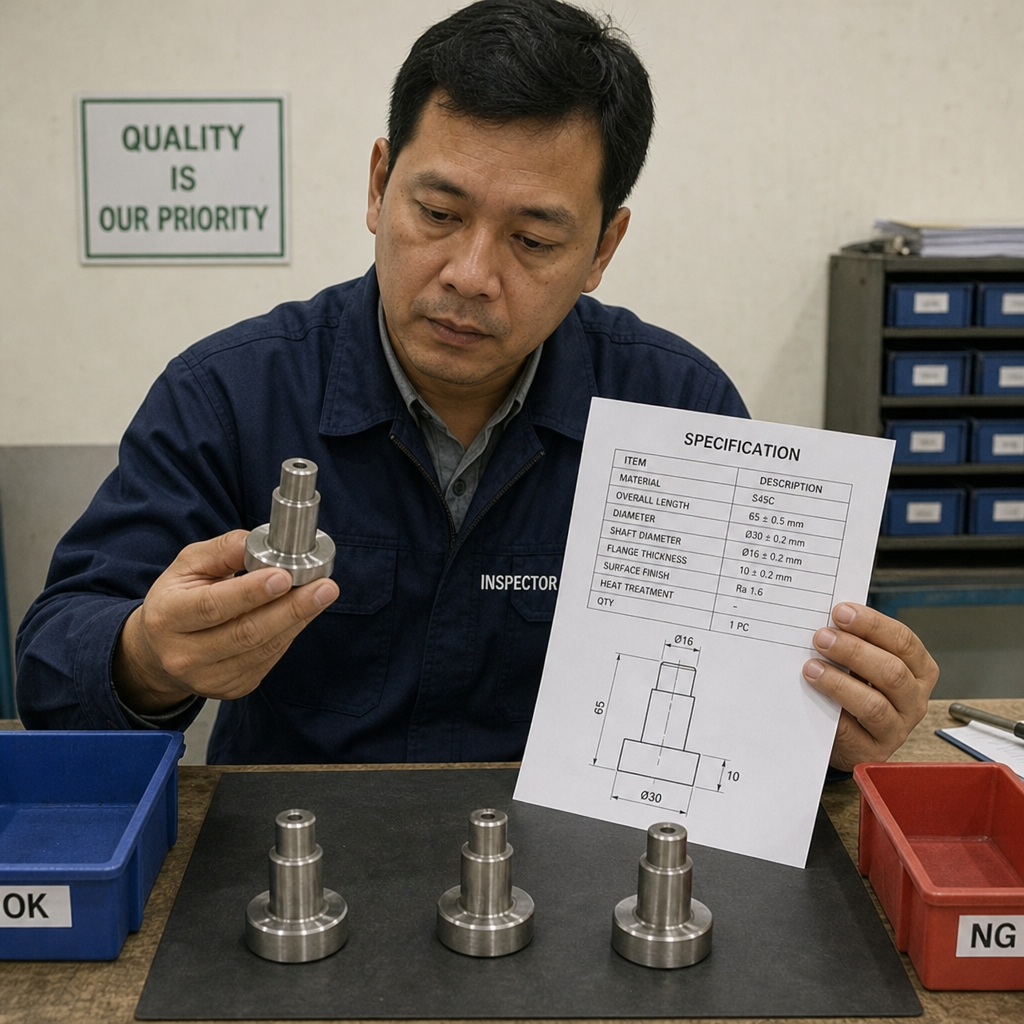
Treat buying wholesale from China as a supplier-management project. Before requesting prices, write down what an acceptable product must do, which characteristics must remain consistent, and what evidence you need before authorizing shipment. This makes quotations easier to compare and disagreements easier to identify.
A practical supplier-approval checklist includes:
Define the product: Specify dimensions, materials, packaging, labeling, and acceptable defects.
Identify the supplier: Clarify whether you are dealing with a manufacturer, trader, or agent, and investigate its capabilities.
Approve a sample: Keep a reference sample, but do not assume it guarantees production quality.
Document the agreement: Address inspection rights, payment stages, quality requirements, and remedies.
Inspect production: Arrange appropriate checks before shipment and inspect again upon receipt.
These steps align with government and business-council sourcing guidance, which emphasizes due diligence and continuing quality control rather than reliance on initial samples.
Keep compliance separate from appearance
A product can look well made without meeting its regulatory requirements. For U.S. products subject to CPSC certification requirements, importers have specific responsibilities; imported children's products generally require an importer-issued Children's Product Certificate supported by applicable testing.
Required general-use products instead use a General Certificate of Conformity. Not every product has the same obligations.
Ask a qualified compliance adviser to identify the requirements for your exact product before committing to resale inventory. Match documents to the model, materials, and applicable rules, and clarify who is responsible for certification. Buying through an online marketplace does not eliminate the need to understand your role as importer or reseller.
Compare the usable cost, then choose
For your own purchasing worksheet, compare the cost of usable goods—not just the supplier's unit quote. Include product cost, samples, testing, inspection, freight, applicable duties, handling, storage, and a realistic allowance for defects.
Ask what each quotation includes and have a customs broker confirm applicable import requirements rather than assuming a familiar shipping term settles everything.
Before ordering through either route, make three decisions:
Set your evidence threshold: Identify which claims need documentation before purchase.
Set your loss limit: Decide what financial loss, delay, or unusable stock you can tolerate.
Set your exit rule: Walk away if the seller cannot answer essential questions or support safety claims.
My recommendation is to consider Temu selectively for purchases where failure has limited consequences and the listing is clear. Consider managed wholesale sourcing when you need repeatable specifications and can support proper verification. For safety-critical goods, prioritize traceability and credible compliance evidence over either channel.
The bottom line: neither a familiar app nor a factory quotation should replace due diligence. Choose the buying process that lets you verify what matters—and decline the bargain when verification is missing.
Frequently Asked Questions About Is Temu Safe? Temu vs Buying Wholesale From China
What safety measures does Temu have in place for transactions?
Temu implements a purchase-protection program that addresses order issues, but consumers must evaluate each product and seller for their own safety.
Is Temu a legitimate platform for online shopping?
Yes, Temu is a legitimate online marketplace operated by Whaleco, Inc., but buyers should be cautious as the safety of individual listings can vary.
How does Temu's product safety compare to buying wholesale from China?
Buying wholesale allows for more control over product specifications and quality inspection, whereas Temu requires buyers to assess safety and compliance information independently.
What privacy and security risks should I be aware of with the Temu app?
Temu collects various user data, including account and purchasing information. It's essential to review their privacy policy and apply security measures to protect your account.
Can I trust the quality of safety products, like a Temu safety vest?
It's important to verify that safety products meet specific standards and regulations before purchasing, as not all listings will provide adequate documentation or evidence of compliance.