Back To Blog
Buying face changing keychains wholesale means sourcing interactive key accessories in bulk for resale, gifting, or promotional use.
The buying decision goes beyond choosing a funny expression: you need to check the mechanism, confirm customization options, and understand the complete order cost.
This article explains how to evaluate samples, compare suppliers, and build an order that matches your audience without relying on unverified product promises.
What is a face changing keychain?
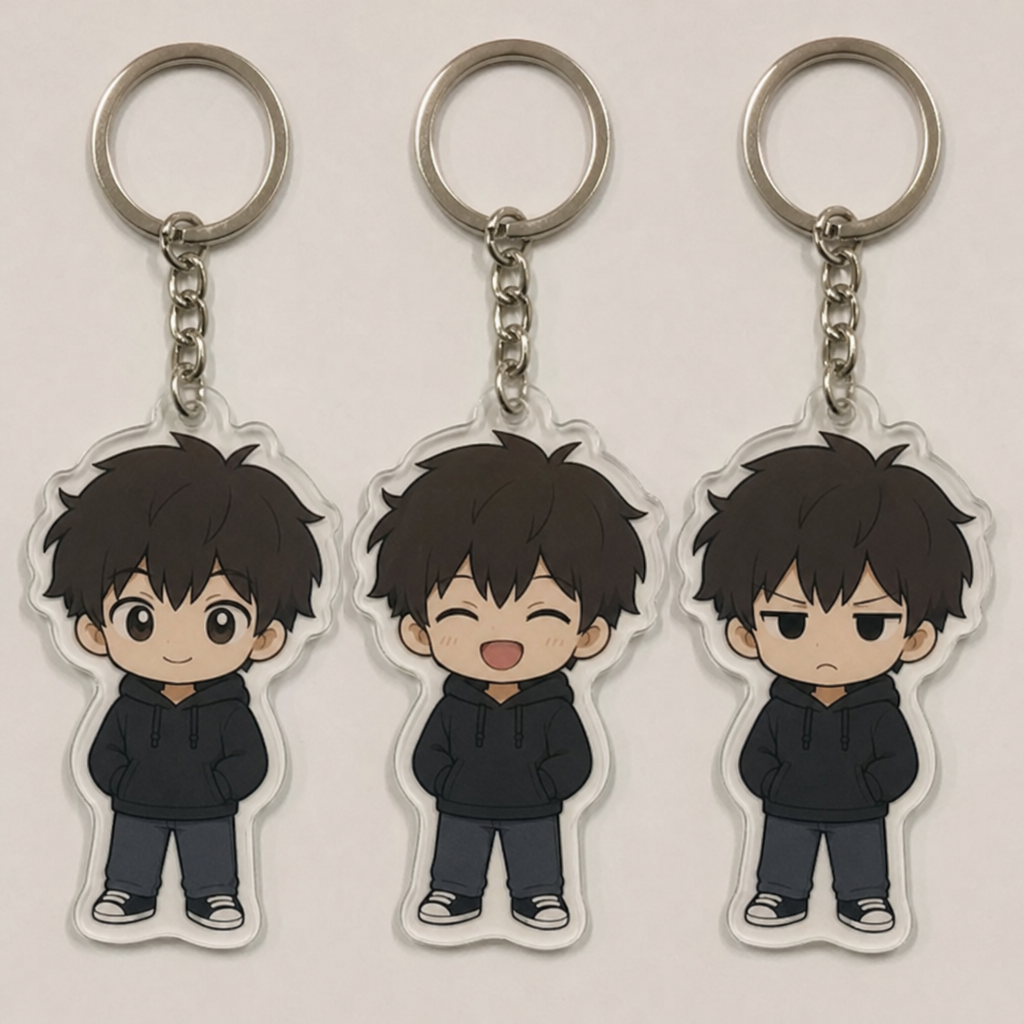
A face changing keychain is a novelty key accessory with a mechanism that switches the character’s facial expression. Some designs use a push button to cycle through different faces; for example, TipTop describes a model with three expressions activated by pressing the character’s stomach. Treat that as a model-specific feature, not a specification shared by every product in the category.
For a wholesale purchase, start by defining exactly what you mean by “face changing.” Ask for a demonstration showing the complete expression cycle, the control locati0n, and the attachment hardware. A clear product definition gives every supplier the same brief and makes their quotations easier to compare.
Also distinguish an interactive character from a keychain printed with a portrait. If your brief says only “custom face keychains,” explain whether you want changing expressions, a customer’s photograph, or an original character design. Otherwise, an attractive quotation may describe the wrong product entirely.
Choose an audience before choosing an assortment
Decide who will receive or purchase the keychains before selecting colors, expressions, and packaging. A boutique testing a small accessory range needs a different order plan from an organization preparing an event giveaway. Start with one clear use case rather than trying to serve everyone in the first shipment.
Consider these possible approaches:
Retail assortment: Choose a focused group of designs and decide whether shoppers can select individual styles. Plan how each variation will be photographed and tracked.
Event giveaway: Prioritize a clear visual connection to the event, straightforward distribution, and packaging that keeps pieces organized.
Branded merchandise: Identify where the logo or message should appear without hiding the changing expression or obstructing its control.
Personalized gift range: Decide whether personalization belongs on the character, an attached tag, or the packaging, then confirm what the supplier can actually produce.
Keep the initial selection manageable. Rather than committing to every available variation, establish a small test assortment and record which designs attract inquiries and purchases. Use those observations—not assumptions about popularity—to shape the next order.
How do you compare wholesale keychain suppliers?
Compare wholesale keychain suppliers against the same written specification, then use samples and documented order terms to evaluate their responses. A useful comparison covers the exact model, expression mechanism, customization scope, quantity requirements, packaging, delivery arrangements, and defect process. The lowest quoted unit price should not decide the purchase on its own.
Product listings show why clarification matters. Hengjun advertises customization and a press-to-change function, while its supplier FAQ says minimum order quantities differ by product. That makes a product-specific quotation more useful than assuming one minimum applies across a supplier’s catalog.
Send each candidate a consistent request:
|
Comparison point |
What to request |
|---|---|
|
Product identity |
Model reference, current photos, and a demonstration video |
|
Order quantity |
Minimum per order, design, color, and customization option |
|
Assortment |
Exact style breakdown and whether substitutions require approval |
|
Customization |
Available methods, artwork requirements, and proofing process |
|
Packaging |
Individual packing, carton quantities, and labeling options |
|
Timing |
Separate estimates for sampling, production, and shipment |
|
Problem resolution |
Inspection window, evidence required, and available remedies |
Look for specific answers rather than reassuring adjectives. If a supplier describes the product as “premium,” ask what you can inspect: finish, attachment construction, print quality, and consistent expression changes. Save the agreed specifications alongside the quotation so there is a shared reference before production begins.
Turn sample inspection into a practical quality check
Order samples before approving a larger purchase, and review them against a written checklist. Photographs help you assess appearance, but your evaluation should also include operating the mechanism and examining the attachment. Ask whether the sample represents the materials, finish, and construction intended for your order.
For context, Hengjun identifies its listed expression-changing model as plastic. Do not extend that specification to other designs or accept “plastic” as a complete description of every component. Request material details for the body, moving parts, ring, and any additional decorations on your selected model.
Use a repeatable inspection routine:
Cycle through every expression. Check whether each face settles into position and remains readable. Note sticking, incomplete changes, or inconsistent operation.
Review the exterior. Examine seams, edges, paint placement, printed details, and visible marks under ordinary lighting.
Inspect the connection points. Check the ring, chain, connector, and body attachment for visible gaps or looseness.
Assess handling. Consider whether the control is comfortable to operate and whether the accessory suits the intended use.
Check the packed sample. Confirm that packaging protects the face and mechanism and includes the agreed identification.
Record concerns with photographs or video and ask for a revised sample where necessary. Keep an approved reference sample and a written list of acceptable differences. A sample check is a purchasing step, not a substitute for any required testing or professional compliance review.
What can you customize on face changing keychains?
Customization depends on the selected product and supplier, so confirm each requested change before treating it as available. Define whether you need a logo, a different color, individual names, custom expressions, or a completely new character. These are separate requests and should receive separate confirmations, costs, and approval steps.
Hengjun’s listing advertises customization and OEM/ODM service, but it does not establish that every design change is possible on every model. Use broad supplier claims as the starting point for a detailed conversation, not as approval of your artwork or production requirements.
Separate branding from individual personalization
For branded merchandise, ask whether the same artwork can be applied consistently across the full batch. Specify placement, size, colors, and how the finished result will be approved. Request a proof that shows the decoration on the actual product shape, not simply a standalone logo file.
For personalized keychains, explain whether each piece needs a different name, image, or message. Ask how individual files should be submitted, how spelling will be checked, and how finished pieces will be matched to recipients. Avoid promising one-off personalization to customers until you have tested that workflow.
Protect the expression-changing function
When considering customizable keychains, keep the interactive feature central to the brief. Ask the supplier to show that decoration, added tags, or packaging will not obstruct the button or moving face. Approve both the appearance and the operation of the customized sample.
If you want an original character, provide drawings of every intended expression and request confirmation of development requirements. For artwork involving recognizable characters, ask for documented authorization and obtain appropriate advice before proceeding. Do not treat a catalog image as evidence of permission to reproduce a design.
Build a budget around the complete order
Request an itemized quotation instead of budgeting from the headline unit price. Include the product, customization, samples, packaging, shipment, and any other charges identified for your transaction. Ask which costs are included, which remain estimates, and who is responsible for arranging each stage.
For your own planning, calculate an estimated landed cost per sellable unit by dividing the complete expected order cost by the number of units you reasonably expect to offer for sale. Keep uncertain charges visible rather than hiding them inside a single optimistic figure. Confirm applicable import costs with a qualified provider when sourcing internationally.
Then compare the order with your actual sales plan. Account for selling fees, fulfillment, customer support, and the room you need for a viable margin. A larger quantity deserves consideration only if the total commitment fits your budget and you have a credible plan for using or selling it.
Ask for separate quotations for a test order and a repeat order. This helps you evaluate the cost of learning before committing more cash. Do not assume that reorder pricing, availability, or production timing will match the first purchase; request confirmation when you are ready.
Plan packaging and product presentation together
Choose packaging around how the keychain will be displayed, shipped, or handed out. Ask whether the supplier can provide individual protection, a display-ready card, or another format suited to your plan. Review the complete packed sample so presentation does not become a last-minute decision.
Be especially clear about assorted styles. TipTop’s listing explicitly describes random-design fulfillment, illustrating why buyers should not assume that product photographs guarantee a particular design selection. For your wholesale order, request a written breakdown and specify whether substitutions are acceptable.
For online selling, create a short demonstration showing how the expression changes, alongside clear front, back, and attachment photographs. State exactly what the customer receives, including whether a design is selectable or randomly supplied. Use only features verified on your own stock, and avoid copying unsupported safety, durability, or wellness claims from a listing.
Confirm suitability and order terms before payment
Ask for the intended age group, product classification, relevant documentation, and proposed warnings for the exact model you intend to buy. If your audience includes children, have the product and documentation reviewed by an appropriate specialist for your market. Do not rely on a broad description such as “for everyone” when planning a specific offer.
Supplier descriptions are not interchangeable. For example, the TOKOTOKO listing on SUPER DELIVERY specifies a recommended age of 12 and up for its particular face-changing keychain. That is a useful reminder to verify the selected model rather than carrying assumptions from one listing to another.
Before payment, put the practical agreement in writing:
Approved product: Model, materials, expression count, artwork, and reference sample.
Quantity breakdown: Units per design and color, plus any agreed personalization list.
Packaging: Individual protection, labels, carton arrangement, and required inserts.
Schedule: Approval deadlines, production estimate, dispatch arrangements, and delivery expectations.
Inspection and remedies: When checks happen, how issues are reported, and what resolution has been agreed.
Ask whether partial shipments or substitutions require your approval. Also confirm who will answer questions after dispatch and what information they need to investigate a problem. Resolve unclear terms before the order becomes urgent.
Start with a clear brief and scale from evidence
A successful face changing keychain wholesale purchase begins with a defined audience, an inspected sample, and a complete written quotation. Choose the product for its verified operation and suitability, not just an appealing photograph or a low starting price. Keep customization promises narrow until the supplier has demonstrated them.
Your next step is simple: prepare one specification sheet and send it to a shortlist of suppliers. Compare their responses, test the strongest candidates, and begin with a quantity your business can comfortably manage. Let the results of that first order guide the assortment and scale of the next one.
Frequently Asked Questions About Face Changing Keychains
What are face changing keychains?
Face changing keychains are novelty accessories that feature a mechanism allowing them to change facial expressions. They typically come with various expressions that can be cycled through by pressing a button or interacting with the keychain.
How can I customize face changing keychains?
Customization options may vary by supplier but typically include choices for logos, colors, individual names, custom expressions, or unique character designs. It's essential to confirm the available customization options with your supplier before placing an order.
What should I look for when comparing wholesale keychain suppliers?
When comparing suppliers, consider factors such as product identity, order quantity, customization options, packaging, delivery arrangements, and supplier response to your specifications. Always request samples to ensure product quality.
How do I ensure the quality of the face changing keychains I order?
Before placing a bulk order, always request samples and evaluate them against a written checklist. Inspect the mechanism's operation, exterior quality, attachment points, and ensure the keychain matches your specifications.
What is the best way to present face changing keychains for sale?
Packaging should align with how you plan to display or distribute the keychains. Consider individual protection, display-ready options, and a clear presentation of the product features. Include photography and demonstration videos to enhance online selling.