Back To Blog
 How Boutique Stores Source Wholesale Gifts from China
Most independent boutique and small retail store owners face the same dilemma. Mass-produced generic gifts suffer from severe homogeneity and slim profit margins, while local wholesale options in the United States are overpriced with limited design variety.Boutique retailers share three core demands: finding unique wholesale items, sourcing affordable wholesale gift options, and securing stable, retail-ready gift inventory. This is why an increasing number of overseas boutique owners choose to work with Chinese suppliers.
This practical, step-by-step guide walks boutique store owners through the whole process of sourcing gifts from China.It also compares Chinese suppliers with local suppliers, helping you build a low-risk, high-margin inventory system for your boutique business.
Three key sourcing standards before buying
Whether you choose local suppliers or Chinese factories, you need to make a clear plan.Define your standards first, then procure your goods. Avoid overstock, squeezed profits and slowmoving styles.
Unique Wholesale Items
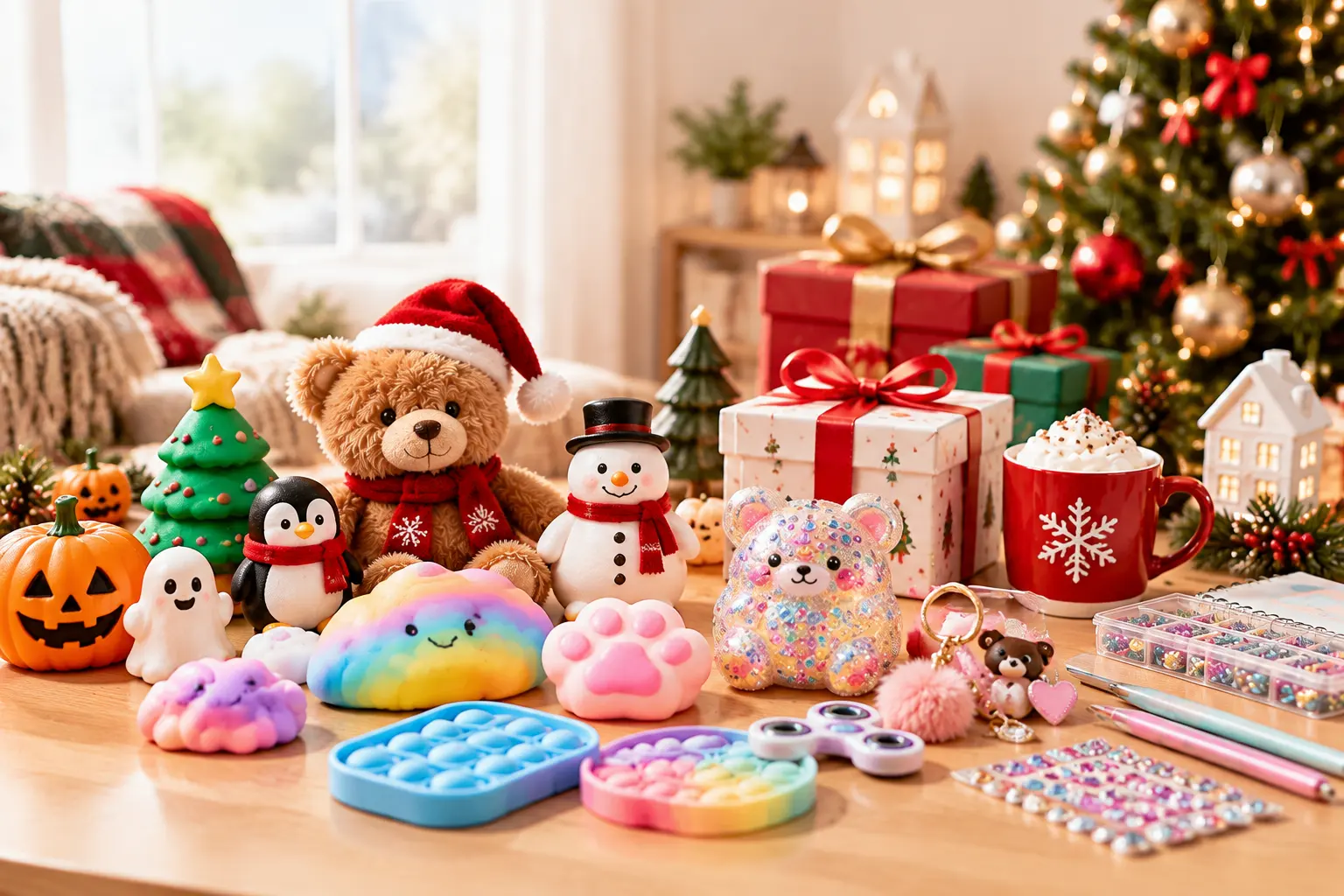
Boutique stores profit from product differentiation rather than common sales. Avoid common generic products sold on Amazon and chain supermarkets. Focus on niche decorative gifts, themed holiday ornaments, handmade-style home decor, and custom-packaged gift items to stand out from competitors.
Cost-Effective Wholesale Gifts for Boutiques
Boutique retail requires enough profit margins to sustain operations. Local American wholesale products come with high markups and thin profits. In contrast, Sourcing from China significantly lowers unit costs. It’s among the most effective strategies for boutique owners to boost overall profits.Start with small trial orders.
Start with small trial orders
Boutique owners have low order volumes, so there is no need to chase large bulk purchases.Many Chinese gift manufacturers offer low MOQ and small-batch customization. This fits the inventory needs of small retail businesses perfectly.
Practical ways to source wholesale gifts from china
This is the most practical section of this guide. Each sourcing channel suits different boutique scales, and new store owners can follow these steps directly.
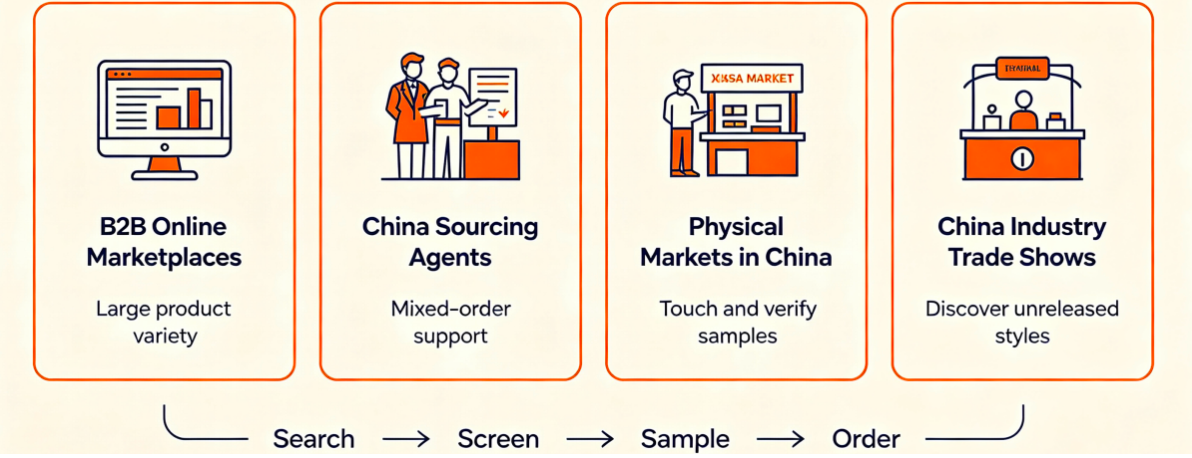
B2B Online Marketplaces
For new boutique owners with no China sourcing experience and small order volumes.
Platforms like Alibaba are the most common way for overseas small shop owners to source gift products from China.
Complete Step-by-Step Workflow
Suppose you want to open a boutique and source holiday decorations. You don’t need to submit large bulk orders immediately from the start.
Step 1: Initial Screening
After opening the Alibaba website, pick your preferred language setting. Type the wholesale items you want, such as holiday gifts, into the search bar, and you will see many relevant products.

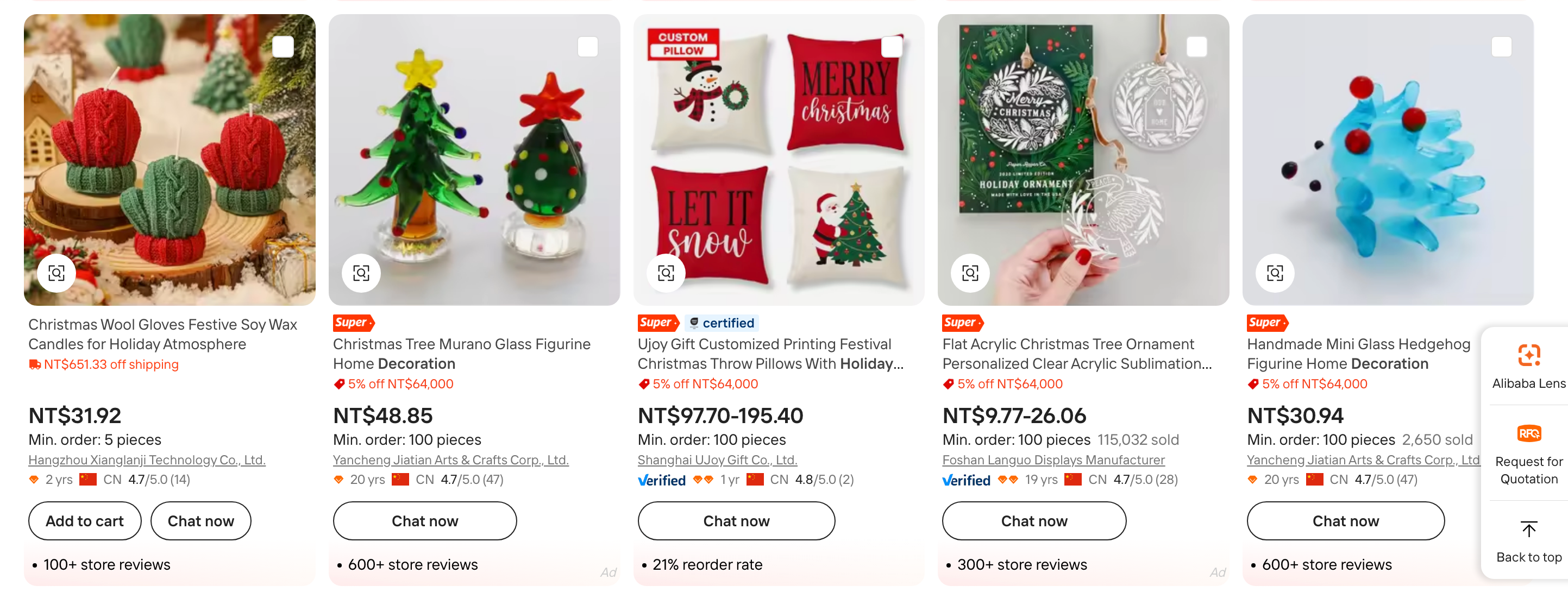
You can easily see the MOQ listed for every product.Some listings even sell units as low as 1 piece, so you can carry out your initial screening here.
Step 2: Screen qualified suppliers
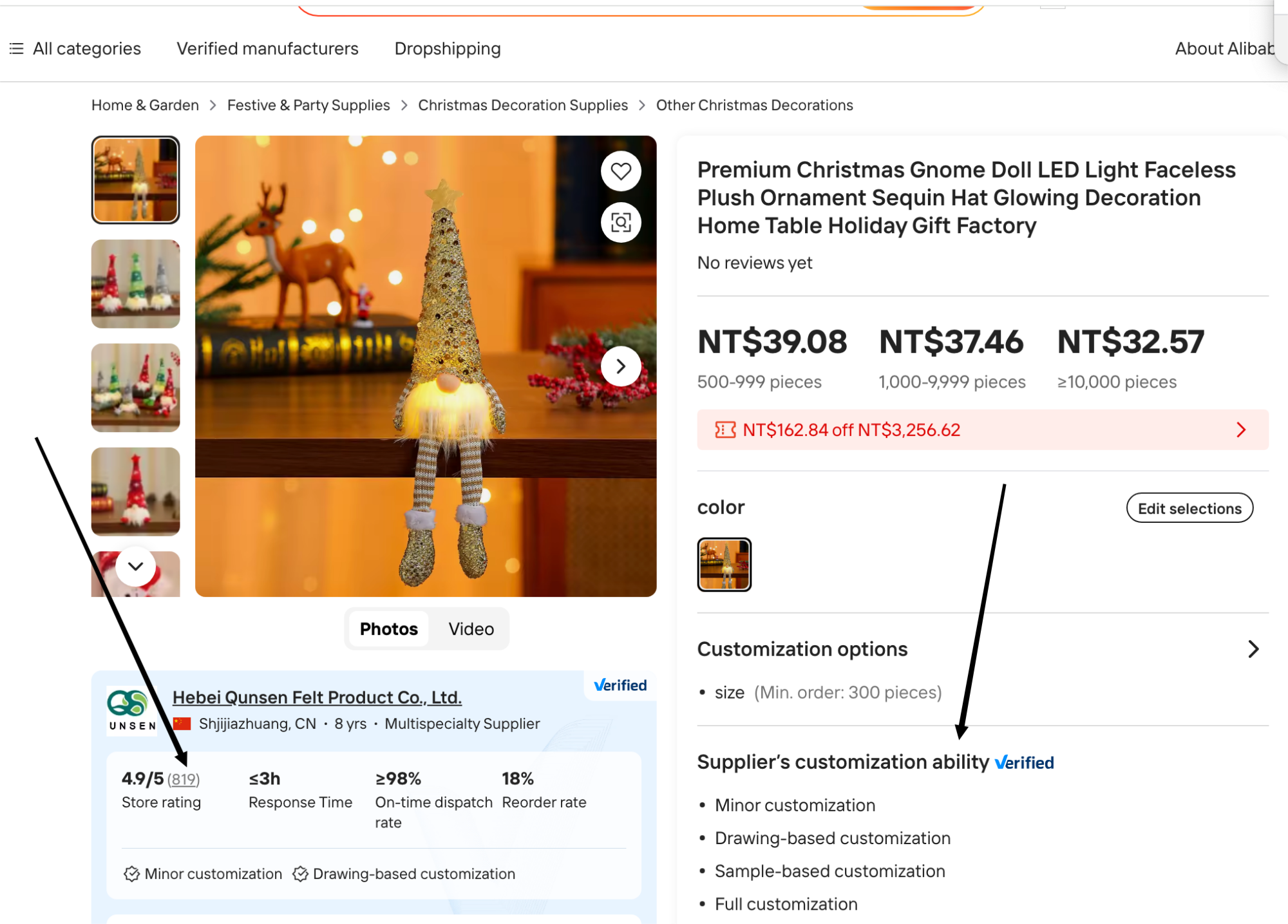
On the product detail page, you will find the supplier’s overall store rating, response time, on-time delivery and repeat purchase rate. It also shows their customization options: light customization, custom from artwork, custom from sample and on-demand customization. Filter vendors to match your requirements.
Step 3: Order samples before bulk orders
Compare samples from 2 to 3 suppliers at the same time. Check texture, color difference and packaging quality.
Pros: No overseas travel required, massive product variety, easy supplier comparison, access to exclusive niche gift items.
Cons: Requires basic communication and supplier screening work.
China Sourcing Agents
Most boutiques sell kinds of products, including wooden decor, fabric gifts, seasonal ornaments, and so on. Reaching out to several manufacturers on your own can eat up a lot of your time.
Professional sourcing agents solve this problem perfectly for small retailers.
EJET is your trusted China sourcing partner. You don’t need to contact multiple factories one by one. Our professional sourcing team is dedicated to solving these challenges for retailers handling mixed multi-item orders,Feel free to get in touch with us.
Physical markets in China
Centered around Yiwu International Trade City, this is the world’s largest sourcing hub for gifts. Many overseas boutique owners travel to China regularly for product selection. Visiting the market in person allows you to touch physical products, verify color and texture quality, check retail packaging details, and connect directly with vendors.
You can access the latest seasonal trends and exclusive niche styles unavailable on mainstream online platforms. Most market suppliers support small-batch mixed wholesale, which is far more friendly to small boutique orders than large-scale factories.
China Industry Trade Shows
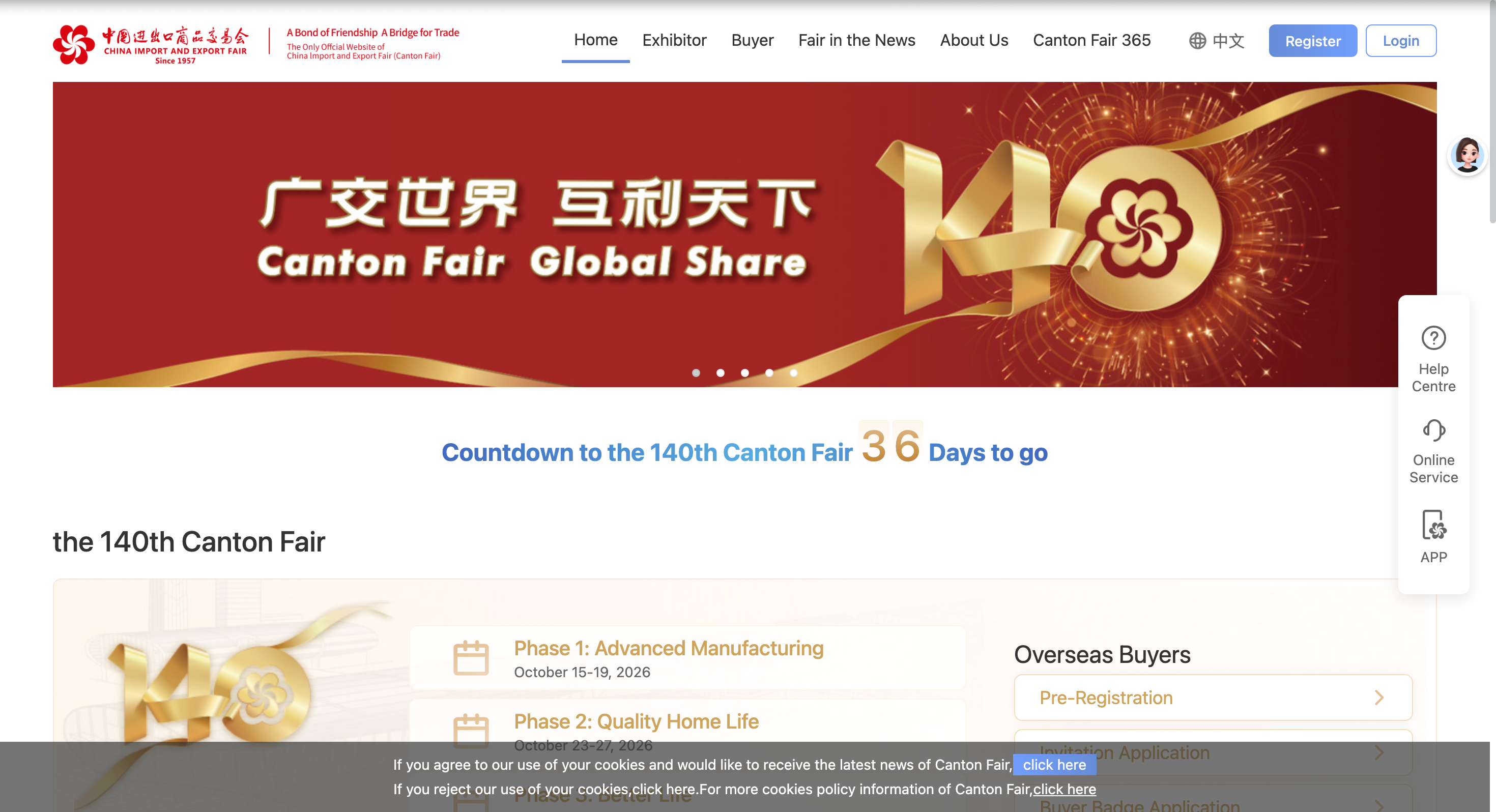
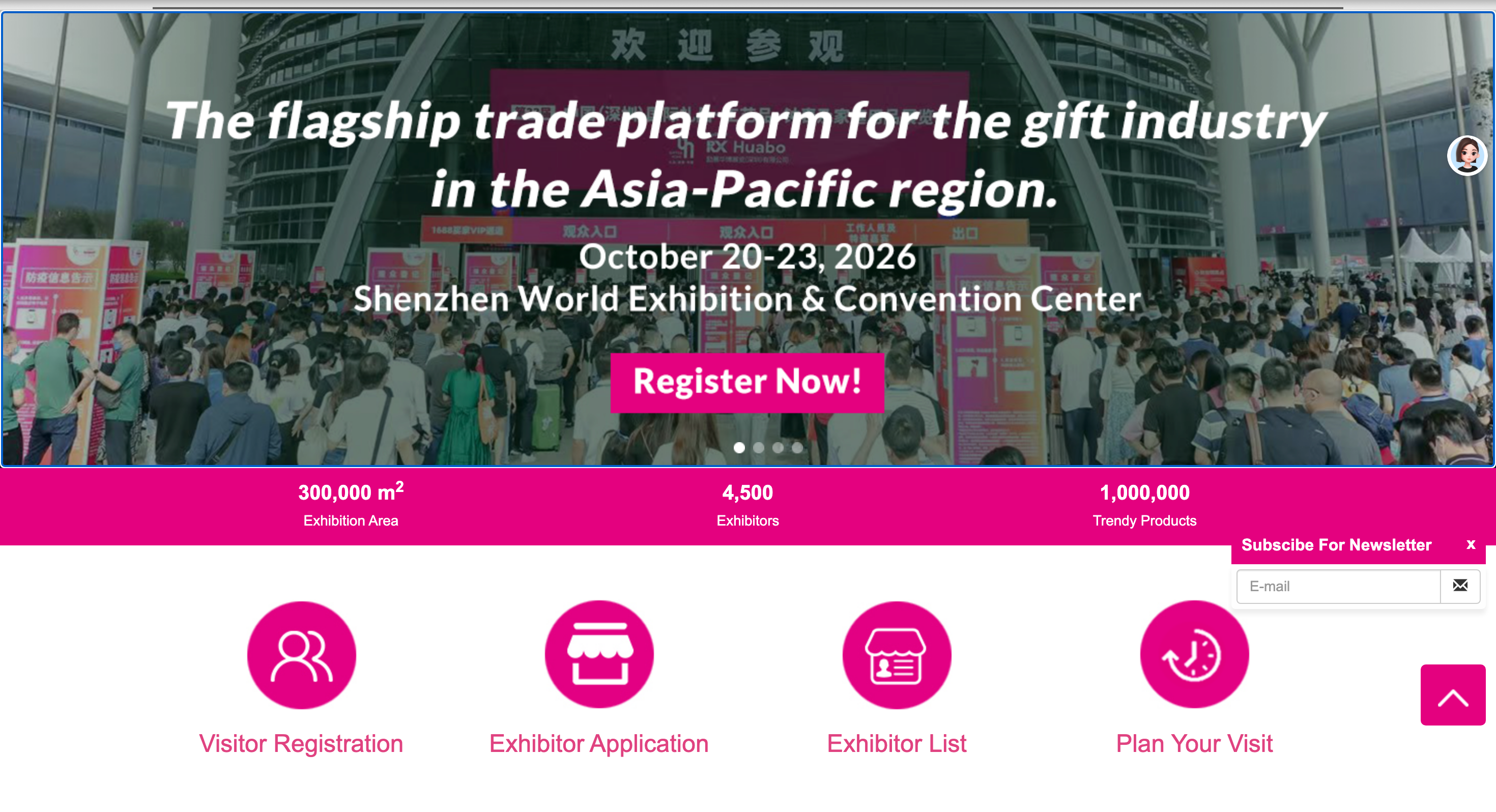
Top exhibitions like the Canton Fair and China Gift Fair gather high-quality original factories. These platforms are perfect for boutique owners who want to update inventory regularly and build differentiated store styles. You can connect directly with factory owners here and get access to the latest unreleased holiday gifts and home decor styles.
TradeShow Dates for 2026
| 140th Canton Fair (Autumn, Guangzhou) | 34th Shenzhen Gift Fair (Autumn) |
|---|---|
| Venue | Venue |
| China Import and Export Fair Complex, Guangzhou | Shenzhen World Exhibition & Convention Center (Bao’an) |
| Dates | Dates |
| Phase 2 (Gift, home decor & holiday goods zone): Oct 23 – Oct 27, 2026 Phase 3 (Toy & fashion consumer goods zone): Oct 31 – Nov 04, 2026 |
Autumn Session: Oct 20 – Oct 23, 2026 |
| Best For | Best For |
| Phase 2: gift & home decor sourcing Phase 3: squishy toys & trendy play items |
Newly launched IP licensed gifts, trendy general merchandise & stress relief toys |
| Note | Note |
| Divided into 3 phases — make sure you don’t visit the wrong one. | Spring session (Apr 25–28) has concluded. Autumn is the key gift sourcing window for H2 2026. |
Sourcing From China vs Local Wholesalers
Many shop owners start by searching for local suppliers or local wholesale distributors. While this offers certain conveniences, it has obvious limitations in profitability and product diversity.
| Comparison Metrics | Sourcing From China | Local Wholesalers |
| Product Price | Lower unit price with generous gross profit margin | Higher price, squeezing your profit margin |
| Product Uniqueness | Massive product range, customisable options, plenty of niche & exclusive styles | Heavy product homogenization, slow new item updates |
| MOQ (Minimum Order Quantity) | Negotiable small trial orders | Extremely low ordering threshold |
| Lead Time | Longer lead time including production and ocean shipping | Local in-stock inventory, ultra-fast restocking |
| Product Catalog | Custom wholesale catalog available for your brand | Ready-to-download wholesale catalog provided |
Sourcing Mix Strategy
Relying on only one sourcing channel limits your boutique’s growth and profitability. A mixed strategy delivers the best results.
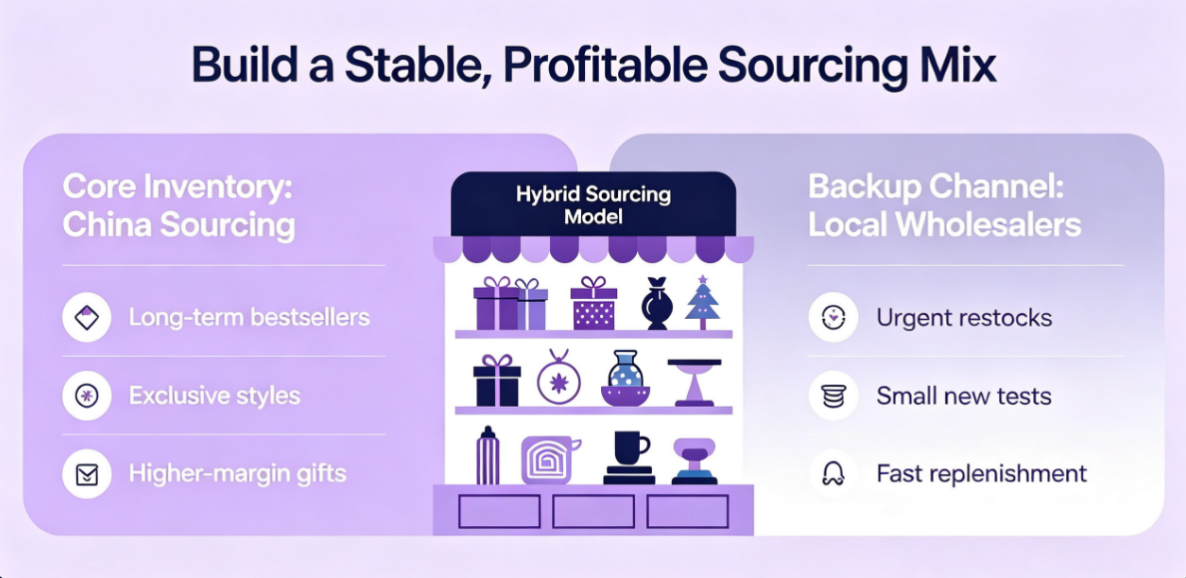
Use Chinese suppliers as your core inventory source for long-term bestsellers, differentiated exclusive styles, and high-margin gift products. Leverage China’s diverse design resources and low manufacturing costs to outcompete other local boutiques.Use local wholesale as your backup channel for urgent restocks, small-scale new product tests, and fast inventory replenishment, ensuring flexible and stable store operations.
This hybrid sourcing model — China-sourced core inventory plus local supplementary stock — is the most stable, profitable, and scalable solution for modern boutique gift retail businesses.
If you decide to source goods from China after reading this article, there are several pitfalls you need to avoid.
1. Placing bulk orders without sampling
Online product images are often optimized. Actual products may differ greatly in color, texture, and packaging. Skipping samples easily leads to unsellable inventory losses.
2. Ignoring landed cost
Shipping fees, import duties, packaging, and inspection costs largely determine your final profit. Focusing solely on factory unit prices will erase all your margins.
3. Trusting verbal promises only
All key terms — packaging standards, lead time, color tolerance, and after-sales policies — must be confirmed in written messages to avoid disputes.
4. Bulk stocking untested new products
Try not to place large orders for new styles without market verification. Always start with small-batch trials to reduce inventory risk.
5. Neglecting retail-ready packaging
Most factories deliver bare products without gift boxes. Unpackaged items cannot be sold directly in premium boutique stores, so you need to confirm product packaging with the supplier’s contact person.
Here are some related articles you may find interesting: