Back To Blog
Finding designer toy suppliers in China starts with matching your project to the right supplier, then checking its identity, capabilities, samples, and commercial terms before committing to production.
This article explains where to search, how to compare wholesale and custom options, and what to request before placing an order.
Use the checklists to build a shortlist that fits your artwork, budget, and intended market—not just your preferred unit price.
How can you find reliable designer toy suppliers in China?
Use supplier marketplaces and trade fair directories to identify candidates, then verify each candidate against the same written requirements.
Alibaba offers third-party supplier assessment reports, while the HKTDC Hong Kong Toys & Games Fair maintains an exhibitor directory that includes mainland Chinese businesses.
Treat these channels as starting points for investigation rather than endorsements of a particular supplier.
Before searching, decide whether you need existing products for resale or a partner to manufacture your own character. Your shortlist should reflect that distinction. A seller with attractive catalog stock is not automatically the right partner for developing an unfamiliar sculpt.
Follow this sourcing sequence:
Define the product: Specify intended audience, size, appearance, quantity, packaging, and destination market.
Find relevant candidates: Search by product and manufacturing process, not simply “toys.”
Request comparable evidence: Ask everyone for the same company information, project examples, and quotation details.
Evaluate samples: Separate appearance approval from production-readiness approval.
Agree on controls: Document specifications, inspection requirements, ownership, and remedies before ordering.
Keep a comparison sheet from the first conversation. Record unanswered questions alongside prices so that an incomplete quotation does not look more competitive than a properly scoped one. Use unresolved identity, ownership, or safety questions as reasons to pause, regardless of the quoted price.
Choose between wholesale stock and custom production
For sourcing purposes, separate three routes: buying existing wholesale designer toys, commissioning production from your specifications, or adapting a supplier-developed design.
In common sourcing usage, OEM means manufacturing to the buyer’s design or specifications; ODM involves supplier design capability or an existing design that can be adapted. Those labels alone do not settle ownership or exclusivity.
|
Route |
Evidence to request |
Points to settle |
|---|---|---|
|
Existing wholesale stock |
Current SKU list, sample, inventory confirmation, authorization documents where relevant |
Authenticity, resale rights, assortment, replenishment |
|
Buyer-designed production |
Comparable work, development proposal, prototype and tooling breakdown |
Specifications, approvals, tooling ownership, changes |
|
Supplier-developed design |
Design proposal, rights documentation, customization scope |
Exclusivity, permitted modifications, ownership, resale restrictions |
For designer toys wholesale purchasing, ask whether the quoted assortment is fixed or selectable. Request quantities by character and colorway, not just a total carton count. If products are sealed, agree on how shortages, damaged packaging, and incorrect assortments will be verified.
For custom toy production, define who will turn artwork into production-ready files. Ask whether sculpting, engineering, paint development, packaging artwork, and revisions are included. Do not assume a factory quotation covers creative development.
When discussing OEM/ODM services, describe the required deliverables in plain language. “Manufacture this approved sculpt” and “develop a character from this concept” are different assignments, even if a supplier offers both under one customization heading.
Search through channels that provide usable evidence
Supplier marketplaces
On Alibaba, review the underlying assessment report rather than stopping at a Verified Supplier badge. The program describes checks covering company information, production capabilities, and process controls, but Alibaba also states that it does not guarantee the authenticity or accuracy of all assessment information.
Make your search terms specific. Try “custom vinyl figure manufacturer,” “painted resin collectible supplier,” or “original character figure OEM,” then compare the results against your brief. These are search prompts, not proof that a listed business performs the advertised process itself.
A broad search such as “toy sourcing China” can help you explore the market. For shortlisting, add your product type, material preference, and required service. Save the listing and relevant documents so you can later compare sales claims with the actual quotation.
Trade fair exhibitor directories
The HKTDC Hong Kong Toys & Games Fair includes collectible products, models, and figurines among its offerings, and its exhibitor directory identifies participating mainland Chinese companies. Use those listings to find leads and review company profiles before arranging meetings. Check current event details directly with the organizer before planning travel.
Prepare a meeting agenda around your project. Request close-up examples of paintwork, an explanation of production stages, and a discussion of likely engineering compromises. Follow up in writing so that an encouraging booth conversation becomes a documented proposal.
Direct outreach and introductions
Contact designer toy manufacturers and toy design companies with a concise project summary, rather than asking only for their “best price.” Request examples they are authorized to share and ask which development and production tasks they handled.
If you use a sourcing agent, establish its role before paying for introductions. Ask who selects factories, how fees are calculated, whether supplier commissions are received, and whether inspection is independent. Require written disclosure of who will contract with you and who will manufacture the goods.
Build a brief suppliers can quote accurately
Prepare a single sourcing brief and send the same revision to every candidate. Mark requirements as essential, preferred, or open to supplier advice. Where you lack technical knowledge, request a recommendation with its implications for appearance, cost, durability, and schedule.
Include:
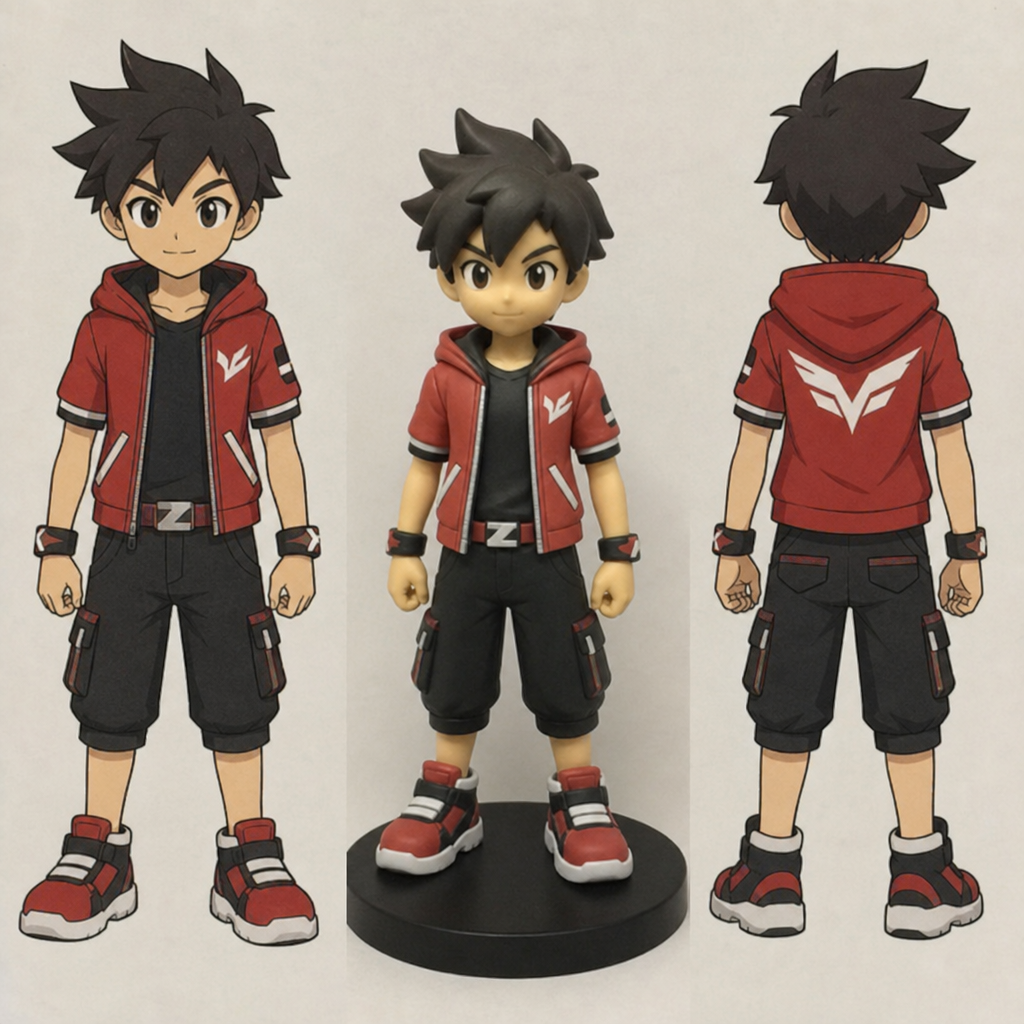
Artwork: Front, side, and rear views, plus notes on features that must remain unchanged.
Dimensions: Intended height, base footprint, accessories, and any fit requirements.
Appearance: Color references, finish, paint boundaries, and acceptable seam locations.
Construction: Preferred material, articulation, detachable parts, and display base requirements.
Order structure: Quantity per character and colorway, with alternative quantity scenarios.
Packaging: Box concept, protective insert, accessories, labeling space, and carton requirements.
Market: Countries of sale, intended audience, and relevant retailer requirements.
Deliverables: Samples, files, tooling, inspection records, and shipping documents you expect.
For art figures, identify the details that carry the character: perhaps an uneven smile, an oversized head, or a particular silhouette. Ask suppliers to flag proposed changes before altering those details. Put approved changes into the next brief revision rather than leaving them in scattered messages.
For example, if the figure must stand without a base, require the supplier to address stability during development. If packaging must display the face through a window, ask for a packaging sample that demonstrates the presentation. Turn expectations into reviewable deliverables.
Verify the business and its actual production role
Ask prospective toy suppliers in China for their legal company name in Chinese, registration details, registered address, and production address. Compare those details with the quotation, invoice, and assessment documents. Alibaba’s supplier-verification guidance recommends checking legal identity and distinguishing the assessed business from the facility and activities covered by the report.
Then investigate project fit. Ask which processes happen in-house, which are subcontracted, and who manages the subcontractors. Request a live video walkthrough or an independent factory assessment when the order risk justifies it. Focus the review on the operations your figure requires, rather than the size of the building.
Have candidates explain a comparable project:
What did the customer supply at the beginning?
Which development and production steps did this company perform?
What design changes were required, and how were they approved?
How were finished products checked against the approved sample?
Do not automatically reject a trading company or assume that direct factory contact resolves every risk. Instead, require transparency about the manufacturing site, responsibilities, communication, and corrective action. Choose a structure you can verify and manage.
Pause when information conflicts. Request a written explanation for different company names, production addresses, or payment beneficiaries, and independently confirm it before proceeding. Do not let a claimed deadline replace due diligence.
Compare complete costs and realistic commitments
Ask every supplier to separate development, tooling, manufacturing, packaging, testing, inspection, and delivery charges. Request the quotation’s validity period and list of exclusions. Compare the same specifications, quantities, and delivery basis across candidates.
Use this checklist to expose gaps:
|
Cost or commitment |
Question to resolve |
|---|---|
|
Minimum order quantity |
Does it apply per sculpt, colorway, SKU, or total order? |
|
Development |
Which files, samples, and revision rounds are included? |
|
Tooling |
What is included, who owns it, and how are repairs handled? |
|
Packaging |
Are artwork preparation, inserts, and cartons included? |
|
Testing and inspection |
Who arranges them, pays, and handles failures? |
|
Production schedule |
What starts the lead-time clock, and which approvals are required? |
|
Delivery |
What named locati0n and trade rule apply? |
Request a landed-cost estimate from an appropriate logistics or customs professional before committing. Give that professional the product description, materials, shipment details, and proposed delivery terms. Avoid treating an initial freight estimate as a complete import budget.
Specify the selected Incoterms rule, named place or port, and version in the contract. ICC explains that these rules allocate particular delivery obligations and risks, but do not determine ownership transfer, payment terms, product specifications, or remedies for breach. Address those matters separately.
Also request a schedule broken into approvals and production stages. Ask what happens if artwork changes, a sample fails, or testing requires rework. Plan your launch around confirmed milestones rather than an unexplained promise of fast delivery.
Protect the original design before sharing full files
Discuss intellectual property protection with qualified counsel before disclosing valuable production files or commissioning tooling. The USPTO’s China IP toolkit explains that China generally follows a first-to-file trademark system. Do not assume that using or registering your brand elsewhere provides the protection you need in China.
Start initial conversations with enough information to establish capability, then control access to detailed files as due diligence progresses. Keep dated records of artwork, revisions, and approvals. Ask counsel to tailor confidentiality, permitted-use, ownership, and enforcement provisions to the parties and project.
Your agreement should address ownership or authorized use of the original design, sculpt files, engineering files, paint artwork, packaging artwork, and tooling. Specify whether the supplier may photograph or display the project, produce additional units, or sell overruns and rejected pieces. Define procedures for returning files and transferring tooling if the relationship ends.
For existing branded products, request evidence that the seller is authorized to supply them for your intended market. Ask for clarification when a catalog uses recognizable characters without explaining the rights involved. Treat unresolved authorization as a reason to stop, not an opportunity to obtain a cheaper collectible.
Keep rights documentation alongside the purchase order. Make permitted uses clear enough that a new account manager can understand them without relying on old chat messages.
What samples and quality checks should you require?
Require samples that answer separate questions: whether the design looks right, whether the proposed construction works, and whether production matches the approved standard.
Establish written quality checks before manufacturing, then agree on inspection stages and corrective action. SGS distinguishes product testing, factory audits, and inspections at initial, during-production, and final stages; use each for its relevant purpose rather than treating one check as a substitute for all others.
Approve the design and production reference separately
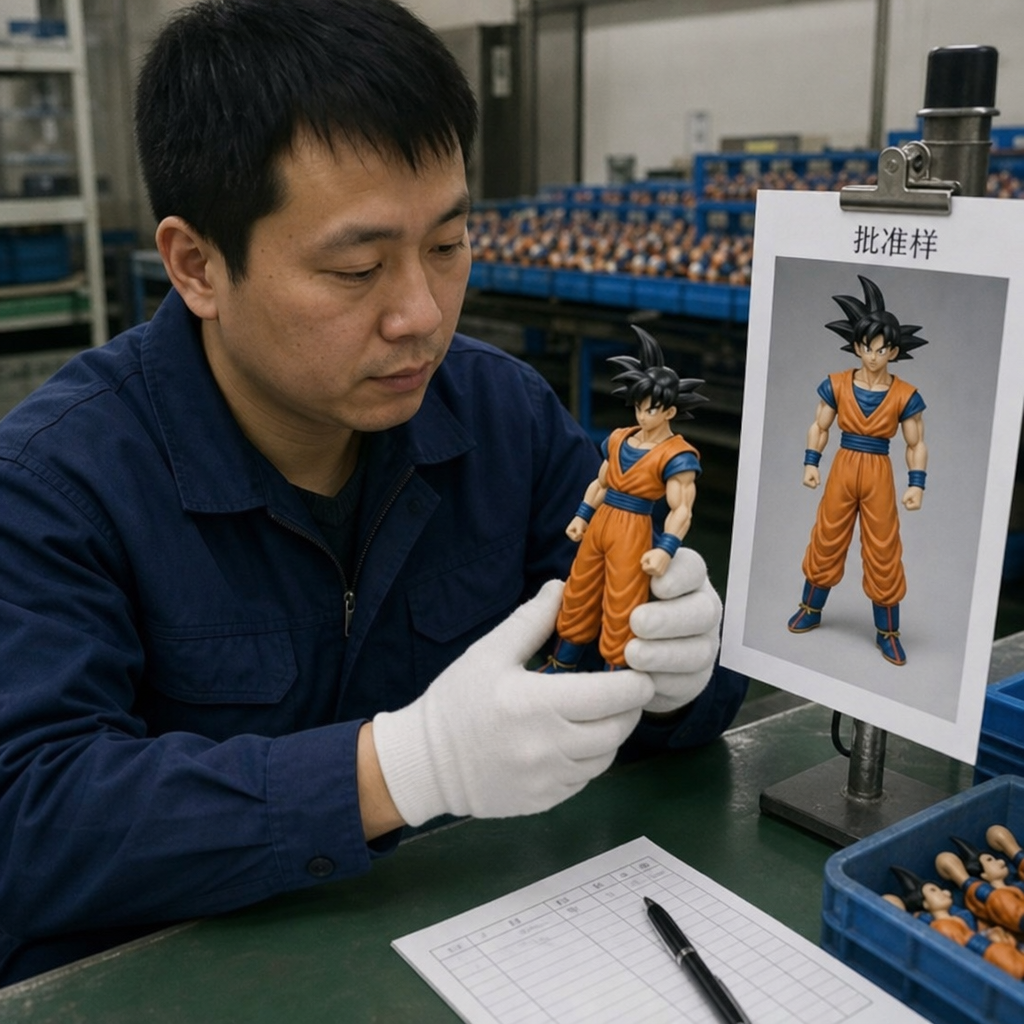
For your Designer Toy project, review the sculpt before approving decoration. Check silhouette, facial expression, accessory scale, stance, and visible seams. Request clear photographs from multiple angles, but examine physical samples before approving tactile qualities or final presentation.
Next, request a preproduction sample that reflects the intended materials, finish, assembly, and packaging. Ask the supplier to identify anything that still differs from planned production. Do not sign off on “equivalent” details without describing what that means.
Create a controlled reference sample and specification pack. Identify the sample version, approval date, approved deviations, and people authorized to approve changes. Arrange for both sides to retain matching references where practical.
Make inspection criteria specific
Replace “good paint quality” with observable requirements. Mark critical paint boundaries on photographs and agree how to assess scratches, glue marks, gaps, wobble, missing accessories, and packaging damage. Define the inspection conditions and acceptance criteria with your inspection provider.
A useful inspection checklist covers:
Appearance: Agreed colors, paint placement, surface finish, and visible defects.
Assembly: Correct components, intended fit, and accessory completeness.
Presentation: Approved insert, artwork, labels, and product positioning.
Shipment accuracy: SKU quantities, colorways, carton markings, and packing arrangement.
Agree on the sampling plan, defect categories, reporting format, and response to failure before the inspection. Require rework and reinspection arrangements in writing. Keep visual workmanship inspection separate from laboratory safety testing.
Which safety requirements apply to designer toys?
Applicable requirements depend on the product, intended audience, and countries of sale—not simply whether it is described as a collectible. In the United States, CPSC considers labeling, marketing, consumer recognition, and age-determination guidance when classifying children’s products. A “14+” or “adult collectible” label alone does not settle that classification.
For U.S. children’s toys, CPSC guidance explains the application of the mandatory toy safety standard and testing and certification obligations.
Manufacturers and importers of children’s products subject to applicable CPSC rules must certify compliance through a Children’s Product Certificate. Confirm the requirements for your specific product with a qualified laboratory or compliance professional before production.
Give that adviser the design, materials, intended age group, accessories, packaging, and marketing concept. Request a written testing and documentation plan. Resolve questions before finalizing materials and packaging rather than asking the supplier for a generic “toy certificate.”
When reviewing reports, check that the identified product and materials match your order. Ask how changes to coatings, components, colors, or suppliers will be assessed. For other destination markets, obtain market-specific advice instead of assuming that U.S. documentation is sufficient.
Place a controlled first order and document the result
Use the first order to evaluate the entire working relationship, not just the finished figure. Set approval checkpoints, reporting expectations, inspection arrangements, and shipment-release conditions in the purchase documents. Choose an order scope you can afford to evaluate carefully.
Before authorizing production, confirm that you have:
Identified the contracting entity and manufacturing site.
Approved the specification revision and reference sample.
Documented design, file, and tooling arrangements.
Agreed on costs, payment milestones, and delivery responsibilities.
Established testing, inspection, and corrective-action requirements.
Tie progress reviews to evidence: sample approvals, production updates, test documentation, and inspection results. Independently confirm any requested change in bank details through an established contact method. Keep final commercial decisions in the purchase record, even when day-to-day conversations happen through messaging apps.
After delivery, compare the shipment with your order and record discrepancies. Review paint consistency, packaging condition, shortages, communication, and how effectively problems were resolved. Use those findings to decide whether to reorder, revise specifications, or reopen sourcing.
Build the shortlist around evidence, not promises
Finding suitable China toy suppliers is a process of narrowing uncertainty. Search broadly, brief consistently, and require clear answers about identity, capability, ownership, quality, and delivery before increasing your commitment.
Your next step is practical: prepare one sourcing brief and one comparison sheet. Send them to relevant candidates, resolve the gaps, and pay for samples only when the proposed route makes sense. Choose the partner whose evidence and working practices support your project—not the one making the most confident promises.
Frequently Asked Questions About Finding Designer Toy Suppliers in China
What are OEM and ODM in the context of toy production?
OEM (Original Equipment Manufacturer) refers to manufacturing products based on the buyer's specific designs or specifications, while ODM (Original Design Manufacturer) involves suppliers offering pre-existing designs that can be customized. It's essential to understand these distinctions when sourcing toys to clarify ownership and exclusivity terms.
How do I verify the legitimacy of a toy supplier in China?
To verify a toy supplier's legitimacy, request their legal company name, registration details, and production address. Compare this information with quotations and invoices. Additionally, seek third-party assessment reports and consider independent verification through factory audits or walkthroughs.
What information should I include in a sourcing brief for toy suppliers?
A sourcing brief should include detailed specifications such as artwork, dimensions, appearance, construction preferences, order structure, packaging requirements, market considerations, and expected deliverables (samples, files, inspection records). Clarity helps suppliers provide accurate quotations.
What quality checks should I request during the toy production process?
Request specific quality checks that include design approval of the sculpt, production samples that reflect intended materials, and clear inspection criteria. It's important to establish documented quality control measures before manufacturing to ensure the final product meets expected standards.
What safety standards apply to designer toys?
Safety requirements for designer toys depend on the product type, target audience, and countries of sale. In the U.S., for example, the Consumer Product Safety Commission (CPSC) regulates children's toys and requires compliance certification. Always confirm specific safety obligations with a qualified compliance professional before production begins.