Back To Blog
Importing trendy toys from China means finding products with credible demand, verifying suppliers, confirming safety compliance, and managing the full cost of delivery.
The practical approach is to validate a small selection before committing to a large order, then connect purchasing decisions to testing, inspection, and shipping milestones.
This article focuses on importing into the United States; other destinations require their own compliance review.
How do you import trendy toys from China successfully?
To import trendy toys from China successfully, define your customer and product requirements, shortlist suppliers, approve samples, verify applicable safety requirements, calculate landed costs, and inspect production before shipping.
Treat these as connected decisions rather than separate tasks. A low purchase price is useful only if the finished toys meet your specifications, can legally enter your market, and leave enough margin after delivery and selling expenses.
Build your first order around a manageable product range. For example, consider testing one original plush design in a limited selection of colors rather than launching plush toys, electronic games, and construction sets together. That approach gives you fewer specifications, packaging versions, and supplier relationships to coordinate.
Use these decision gates before releasing money:
Demand gate: Identify the buyer, expected selling price, and evidence of purchase interest.
Supplier gate: Verify the business, manufacturing arrangements, and ability to meet your specifications.
Compliance gate: Establish the applicable requirements and obtain suitable testing evidence.
Commercial gate: Confirm landed cost, payment terms, and a realistic delivery plan.
Shipment gate: Review inspection results, documentation, and unresolved defects before dispatch.
Keep a record of each approval. When a supplier proposes a change later, you should be able to compare it with an agreed specification rather than relying on a chat message or memory.
Validate toy trends before choosing products
Start with a narrow customer profile: preschool gift buyers, families seeking travel activities, or adult collectors, for example. Then investigate what those buyers value. Your research should distinguish genuine purchase intent from attention generated by a video.
Review marketplace listings, search interest, retailer assortments, and customer reviews together. As a research method, look for agreement across several signals rather than treating any single ranking as proof. Record your observations over time so you can distinguish a recurring need from a brief spike.
For each candidate, build a short opportunity sheet:
Customer need: Explain the play experience, gifting occasion, or collecting interest.
Demand evidence: Note repeated searches, review themes, or inquiries from your existing audience.
Competitive gap: Identify a specific improvement, such as clearer instructions or better storage.
Commercial constraints: Record your target retail price, acceptable landed cost, and inventory budget.
Risk flags: Flag branded characters, batteries, magnets, small components, or uncertain age suitability for review.
Treat categories such as sensory play, construction, and collectibles as research starting points—not declarations about current popular toys. Before ordering, confirm whether the particular design and price point appeal to your audience.
Pay attention to complaints, too. If buyers repeatedly mention missing pieces, consider a product with a clear contents checklist and an inspection plan for completeness. Avoid assuming you can solve a problem until samples and production controls demonstrate how.
The goal is not to predict the entire toy market. It is to identify one product opportunity you can evaluate, explain, and afford to test.
Build a supplier shortlist around capability
For sourcing Chinese toys, consider business-to-business marketplaces, trade-show exhibitor directories, direct manufacturer inquiries, and sourcing agents as possible starting channels. Search by product type, material, and manufacturing process rather than simply requesting “trendy toys.” Your initial brief should make the requirement clear enough for suppliers to quote consistently.
Avoid judging capability by catalog size alone. Ask which operations the supplier performs itself, which are subcontracted, and where your order would actually be made. A trading company may be a suitable partner, but you should understand its role and how it will communicate production changes.
Send the same request to every candidate
Prepare a request for quotation that includes intended age group, dimensions, materials, functions, packaging, estimated quantity, and destination market. Ask suppliers to separate unit price from tooling, samples, printing, testing support, and other charges. Include the delivery term and named locati0n so the quoted prices have a comparable basis.
Request practical evidence alongside pricing:
Registered business name, business license, and production address.
An explanation of whether the seller is the factory, an intermediary, or both.
Relevant product specifications and existing reports for review.
Minimum order quantities by design, color, and packaging version.
Sample availability, proposed production schedule, and inspection access.
Written procedures for defects, replacements, and unauthorized material changes.
Follow up on inconsistencies. If the invoice name, bank beneficiary, and business registration differ, ask for a documented explanation before paying. Consider independent verification or a factory assessment when the value or complexity of the order justifies it.
If using a sourcing agent, define responsibilities and fees in writing. Ask who selects factories, who owns inspection reports, and whether the agent receives supplier commissions. Your aim is to make incentives and accountability visible before a problem occurs.
Use samples to turn expectations into specifications
Order samples from the strongest candidates and evaluate them against the same checklist. Compare dimensions, assembly, finish, component count, packaging, and instructions. Record observations with photos so supplier discussions focus on specific differences rather than subjective descriptions such as “better quality.”
Separate your product evaluation from formal safety testing. A sample that looks sturdy or works smoothly is not, by itself, evidence of regulatory compliance. For children’s toys, use the applicable testing and certification process described by the Consumer Product Safety Commission, or CPSC.
Once you select a supplier, create an approved reference sample and a written specification. Include material descriptions, permitted colors, dimensions and tolerances, packaging artwork, component quantities, and functional checks. Identify anything that must not change without your approval.
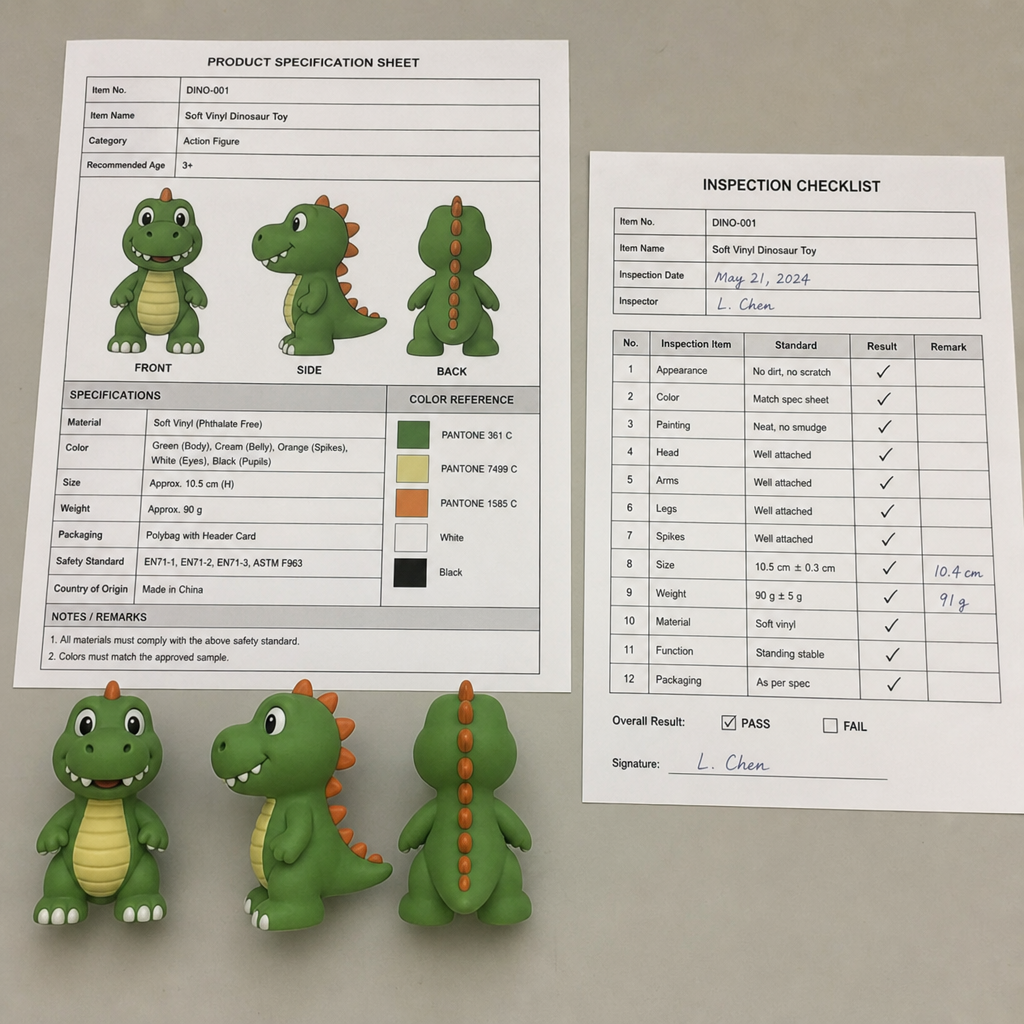
For a construction set, your specification might require a particular piece count, illustrated assembly instructions, and separate packaging for accessories. For a plush toy, document fabric, stuffing, embroidery, seams, and label placement. Ask the testing laboratory which specifications or variations affect its assessment.
Approve a production-representative sample before authorizing the main run. Keep one reference yourself and arrange access for the inspector. Make sure both the purchase order and inspection checklist refer to the same specification version.
What safety documentation do U.S. toy importers need?
U.S. importers of toys intended primarily for children aged 12 or younger generally need testing by a CPSC-accepted third-party laboratory and a Children’s Product Certificate, or CPC, covering applicable requirements.
The importer is responsible for identifying the rules that apply to the product. The toy safety standard incorporated into federal regulations is ASTM F963, with applicability determined by the product and its manufacture date.
Do this work before finalizing production—not after cartons are ready to leave. Give the laboratory product photos, materials, intended age group, functions, accessories, and packaging. Ask it to identify the required testing scope and explain how color, material, or component variations should be handled.
Match the evidence to the actual product
Treat safety documentation as a product-specific file, not a collection of supplier badges. Check whether reports identify the correct model, materials, tested samples, applicable requirements, laboratory, and results. Ask the laboratory to help resolve gaps before relying on existing supplier reports.
Build a working file containing:
Test evidence: Reports supporting the applicable requirements for the product being imported.
Certificate information: The CPC and its required supporting details.
Product identification: Model numbers, specifications, photographs, and relevant variations.
Labeling records: Approved artwork, warnings, instructions, and tracking information.
Production traceability: Factory details, production dates, batch references, and approved changes.
Children’s products must also carry required tracking information on the product and packaging, to the extent practicable. These markings support identification of the manufacturer or private labeler, production location and date, and batch or run information. Review the requirements while designing labels rather than trying to add them after packing.
Do not assume that a supplier’s general “export certificate” answers every U.S. requirement. Assess the evidence against the rules applicable to your toy and intended users. Use CPSC’s product-specific guidance when special features or hazards require closer review.
Prepare certificate data for import filing
CPSC’s general requirement to electronically file certificate data for regulated imports took effect on July 8, 2026. The corresponding effective date for covered goods entered from a Foreign Trade Zone is January 8, 2027. Confirm the applicable process with your broker before shipping, including who supplies, verifies, and transmits the certificate data.
Keep compliance approval separate from sales urgency. If you change a material, component, or design, pause and ask the laboratory what review or additional testing is necessary. An approaching launch date is not a reason to leave the product file incomplete.
Put production, payment, and inspection terms in writing
Your purchase order should describe the product you approved, not just a catalog number. Attach the specification, packaging artwork, quantity breakdown, agreed delivery term, and production milestones. Include a clear procedure for approving changes and resolving nonconforming goods.
Negotiate payment milestones around verifiable progress where possible. For example, propose a deposit followed by a balance tied to satisfactory inspection and document review. Whether a supplier accepts that arrangement is a commercial negotiation; do not assume a particular payment split is standard or guaranteed.
Define your inspection scope before production begins. Ask the inspector to check quantity, appearance, workmanship, functions, components, packaging, and conformity with the reference sample. Agree on defect definitions and the response to a failed inspection, including rework and reinspection responsibility.
Inspection and laboratory testing serve different purposes: inspection checks the agreed production criteria, while regulatory testing supports compliance with applicable safety requirements. Use both where appropriate rather than treating one as a substitute for the other. CPSC guidance explains the testing and certification obligations for children’s products.
For branded designs or licensed characters, request evidence of authorization and obtain qualified advice where ownership is unclear. For your own designs, address artwork, molds, tooling access, and ownership in the agreement before paying development charges.
Calculate landed cost before negotiating volume
Build a cost model before increasing order quantities. Use written quotes wherever possible, mark estimates clearly, and record when each quote expires. The purpose is to see whether the order works at a realistic selling price, not merely whether the factory price looks attractive.
Include these lines in your budget:
|
Cost area |
Items to request or estimate |
|---|---|
|
Product |
Unit price, customization, tooling, and packaging |
|
Verification |
Samples, testing, inspections, and reinspection allowance |
|
Transport |
Origin handling, freight, insurance, and destination delivery |
|
Import |
Duties, brokerage, bond requirements, and applicable fees |
|
Receiving |
Unloading, warehouse intake, labeling, and storage |
|
Sales |
Fulfillment, marketplace fees, advertising, discounts, and returns |
For an internal planning estimate, divide total shipment-related purchasing and delivery costs by the expected number of sellable units. Then assess selling expenses separately to estimate contribution per sale. Keep that management calculation distinct from the customs valuation used for your entry.
Verify duties for the exact product
Have your customs broker review the product’s Harmonized Tariff Schedule classification, origin, customs value, and applicable additional duties. USTR provides a classification-based lookup for Section 301 measures, while USITC guidance explains how additional China tariffs appear in the tariff schedule. Do not assume a base tariff rate represents the entire duty obligation.
Ask for a dated estimate and reconfirm it before shipment. Run a cautious scenario with higher delivery costs, slower sales, or additional inspection expense. If the margin works only when every assumption is favorable, revise the product, price, or order size before committing.
Plan logistics around the complete delivery route
Logistics planning should connect the factory pickup date to the date inventory is ready for sale. Request comparable courier, air, or ocean proposals where appropriate, using the same carton quantities, dimensions, weights, destination, and service scope. Ask each provider to identify exclusions rather than comparing only the headline freight price.
For every option, request a door-to-door schedule with separate allowances for production release, origin handling, transport, customs processing, and final delivery. Treat proposed arrival dates as planning assumptions rather than promises you can automatically pass to customers. Build your launch calendar around inspected, released, received inventory.
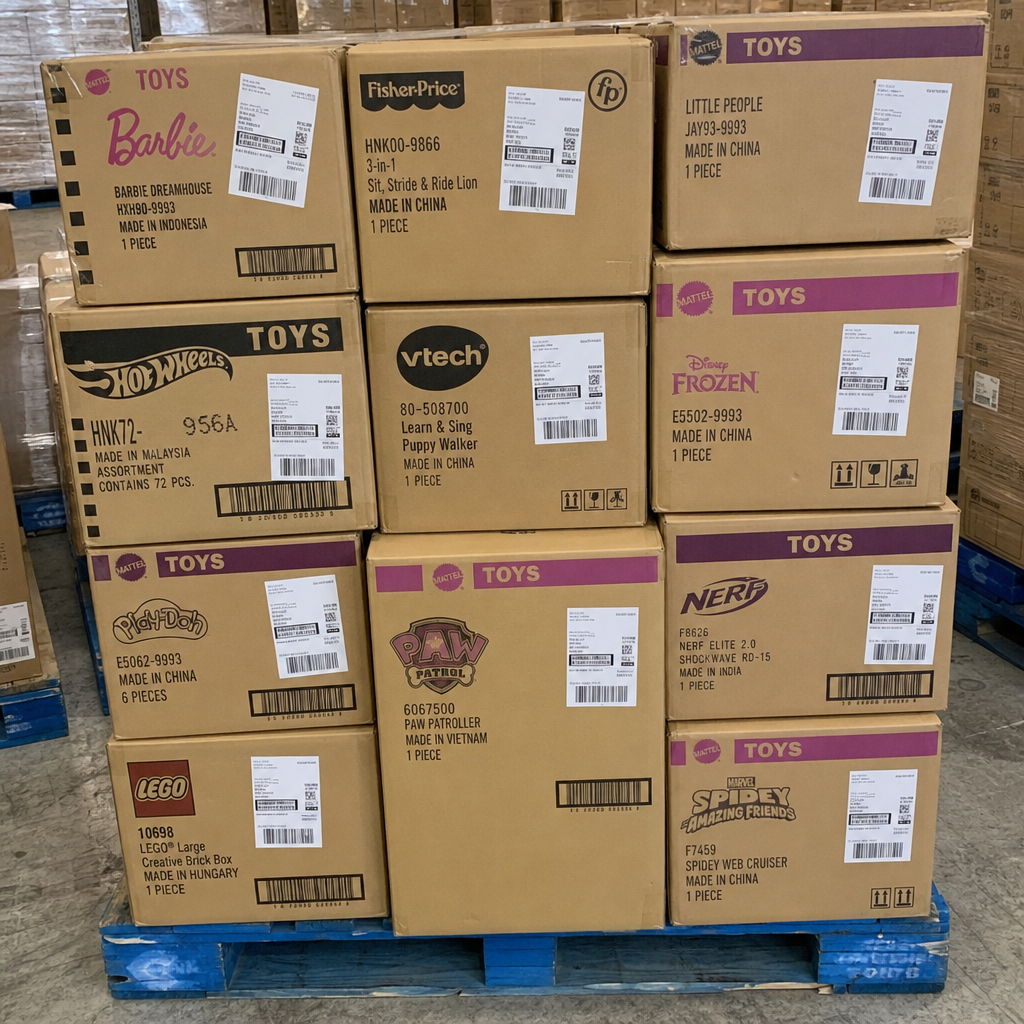
Make delivery responsibilities explicit
Use the agreed Incoterms rule, named location, and version in your contract. Incoterms allocate specified obligations, costs, and delivery risk between buyer and seller; they do not replace the sales contract. Select a term that matches the transport arrangement rather than choosing a familiar abbreviation without checking its meaning.
If considering DDP, ask who will arrange import clearance, pay duties, and provide entry records. Although DDP places extensive obligations on the seller, ICC cautions that local regulatory requirements can complicate its use. Have your broker confirm the proposed arrangement before accepting an “all-inclusive” offer.
Give the broker complete product descriptions and invoice information before departure. CBP requires commercial invoice details including an adequate merchandise description, quantities, values, and relevant classification information. Using a broker does not remove the importer’s ultimate responsibility for compliance.
Launch a controlled order and improve from evidence
Make your first commercial order a controlled test, not a bet on the largest quantity discount. Choose a quantity you can fund through production, delivery, and a conservative selling period. Reserve money for receiving issues, customer support, and a possible reorder rather than spending the entire budget on inventory.
Before shipment, review this release checklist with the responsible parties:
The approved specification matches the finished product and packaging.
Inspection issues are resolved and documented.
Required testing, certification, and filing arrangements are complete.
Invoice quantities, model references, and shipment details are consistent.
Freight responsibilities, insurance arrangements, and destination charges are understood.
Your receiving locati0n has delivery instructions and a process for checking the goods.
After delivery, inspect incoming cartons and record discrepancies promptly. During the sales test, track actual margin, sell-through, damage, missing components, returns, and customer questions. Compare performance against the assumptions in your original opportunity sheet.
Use the findings to decide what changes before reordering. Clearer instructions may address one issue; a recurring assembly problem may require a product redesign. Investigate safety complaints promptly and seek appropriate guidance rather than treating them as ordinary merchandising feedback.
A reorder should be a fresh approval. Reconfirm materials, specifications, price, testing implications, inspection arrangements, and delivery assumptions instead of copying the previous order without review.
Build a repeatable importing process
The strongest approach to importing trendy toys is disciplined rather than rushed: validate demand, verify the supplier, document the product, establish compliance, and understand the full delivery cost. Use each approval to reduce uncertainty before making the next commitment.
Start with one clearly defined product opportunity and a written sourcing brief. Expand only when your production records, customer feedback, and actual margins support the decision. That gives you a repeatable process—not simply a warehouse full of toys that once looked promising.
Frequently Asked Questions About Importing Trendy Toys from China
What are the first steps to import trendy toys from China?
To start importing trendy toys from China, first define your target customer and product requirements. Then, research suppliers, approve samples, verify compliance with safety regulations, calculate landed costs, and inspect production before shipping.
What safety documentation is required for importing toys into the U.S.?
Importers of toys intended for children aged 12 or younger must obtain testing from a CPSC-accepted laboratory and a Children’s Product Certificate (CPC). This documentation ensures that the toys comply with safety standards such as ASTM F963.
How can I verify the credibility of a supplier in China?
You can verify a supplier's credibility by checking their business registration, manufacturing capabilities, production quality, and customer reviews. Request documented evidence of their certifications and communication regarding production changes.
What is the significance of landed costs in importing toys?
Landed costs include all expenses associated with bringing the product to your locati0n, such as production costs, shipping fees, duties, insurance, and handling fees. Understanding these costs is crucial to ensure that your selling price covers all expenses and provides a profit margin.
How do I ensure compliance with U.S. toy safety regulations?
To ensure compliance, familiarize yourself with the applicable safety standards, obtain necessary testing and certification from a qualified laboratory, and maintain thorough documentation for your products, including product specifications, test evidence, and labeling requirements.