Back To Blog
Essential Office Stationery for Efficient Workspaces
A well-stocked workspace makes everyday work smoother, faster, and less frustrating. The right mix of office stationery, office supplies, paper products, writing tools, and desk organization basics helps people capture ideas, manage documents, communicate clearly, and keep their work area under control.
Whether you are setting up a home office, refreshing a shared workplace, or creating a supply list for a growing team, a practical stationery setup starts with the items people actually use every day.
What office stationery does every workspace need?
Every workspace needs a reliable core of paper products, writing tools, filing supplies, sticky notes, labels, basic office equipment, and desk organization items.
These essentials support the small but constant tasks that keep work moving: taking notes, signing documents, planning projects, sorting paperwork, labeling files, and keeping frequently used materials within reach.
The goal is not to fill every drawer with extras, but to build a useful supply system that prevents interruptions.
A strong stationery setup also depends on how the workspace is used. A reception desk may need envelopes, forms, pens, and visitor logs close at hand. A creative studio may rely more on sketch pads, markers, index cards, and project folders.
A home office may need fewer bulk supplies but benefit from smarter storage and a compact selection of dependable stationery items.
The best approach is to think in categories instead of buying random products. When each category has a clear purpose, it becomes easier to avoid clutter while still having everything needed for daily work.
Paper products keep information visible and organized
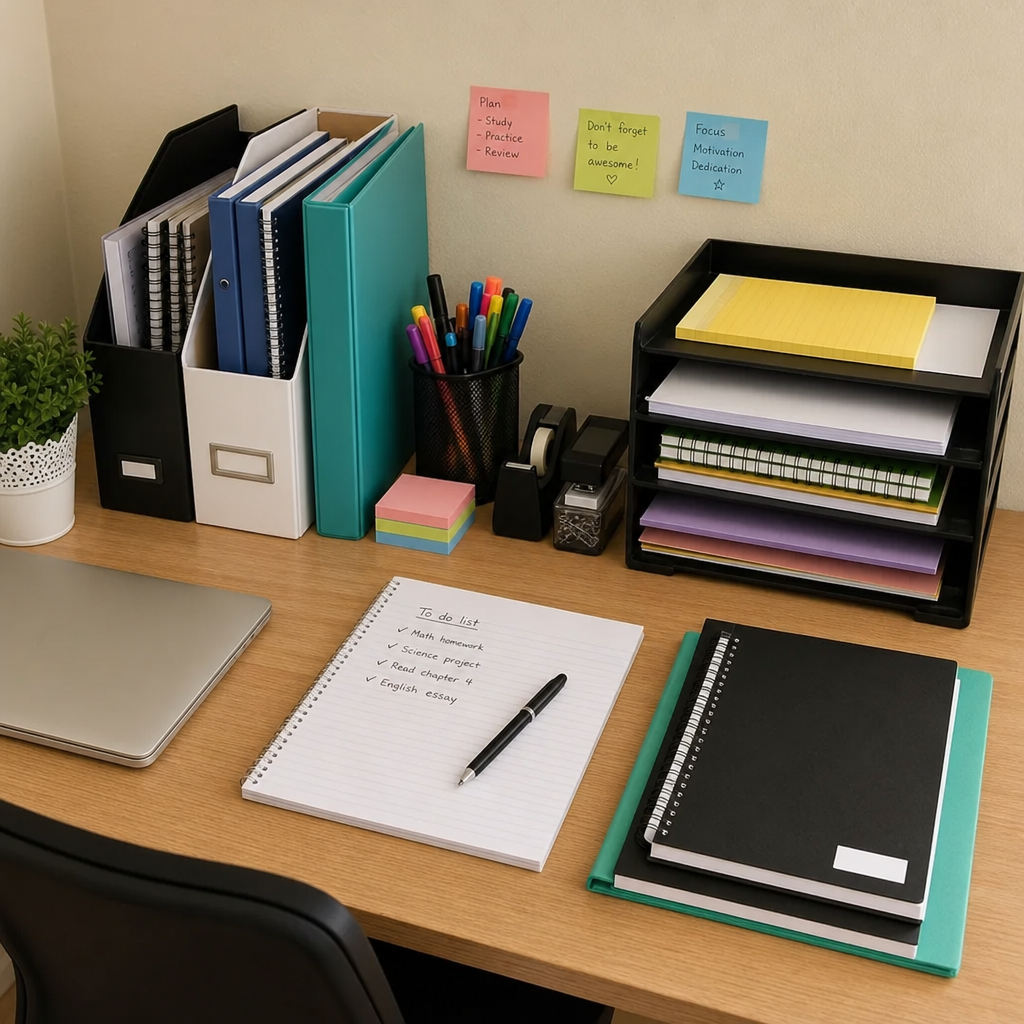
Even in digital workplaces, paper still plays an important role. Printed documents, quick notes, meeting agendas, forms, labels, calendars, and project drafts all require the right paper products. Keeping a balanced supply prevents last-minute searches for printer paper, envelopes, or a clean notebook when work needs to happen quickly.
Common paper products for a workspace include:
- Printer and copier paper for everyday printing, reports, forms, and internal documents.
- Notebooks and notepads for meetings, brainstorming, call notes, and task planning.
- Sticky notes for reminders, page markers, quick labels, and temporary instructions.
- Index cards for presentations, study notes, process steps, or project planning.
- Envelopes and mailing supplies for documents, invoices, letters, and small shipments.
- File folders for sorting projects, clients, departments, or personal records.
Paper products are most useful when they are easy to access but not scattered everywhere. Store bulk printer paper near the printer, keep notebooks at active workstations, and place sticky notes where people actually write reminders. This sounds simple, but thoughtful placement often matters more than quantity.
It also helps to match paper to the task. Lightweight paper may be fine for internal drafts, while heavier paper can be better for client-facing documents, certificates, or printed presentations. Not every workspace needs specialty stock, but having a small amount available can make polished documents easier to produce when needed.
Writing tools support clear thinking and quick action
Writing tools are among the most used office supplies because they help turn ideas, decisions, and tasks into something visible. Pens, pencils, highlighters, markers, and correction tools may seem basic, but they are essential for meetings, planning sessions, editing, labeling, and everyday communication.
A practical writing toolkit usually includes:
- Ballpoint or gel pens for everyday writing, forms, signatures, and note-taking.
- Pencils and erasers for sketching, drafting, calculations, and temporary notes.
- Highlighters for reviewing documents, marking priorities, and studying reference materials.
- Permanent markers for labeling boxes, folders, packages, and equipment.
- Dry-erase markers for whiteboards, planning boards, and collaborative work.
- Correction tape or fluid for quick fixes on printed documents.
Quality matters more than having dozens of options. A pen that skips, a marker that dries out, or a pencil sharpener that breaks easily can slow down a simple task. Choose writing tools that feel comfortable, write consistently, and suit the type of work being done.
For shared spaces, it is useful to separate personal writing tools from communal supplies. A central cup of pens may be fine for quick use, but meeting rooms, reception areas, and supply cabinets should have their own clearly maintained sets. This reduces the common problem of every pen slowly disappearing from the places where people need them most.
Desk organization turns supplies into a system
Office stationery only works well when people can find it. Desk organization is what turns a pile of supplies into a workspace that supports focus. Without a system, even a well-stocked office can feel chaotic because paper, pens, clips, chargers, and folders end up competing for space.
Start by grouping items based on how often they are used. Daily items should live within arm’s reach. Weekly items can go in drawers or nearby cabinets. Backup supplies should be stored away from the desktop so they do not crowd the active work area.
Useful desk organization items include:
- Desktop trays for incoming, outgoing, and active documents.
- Drawer dividers for pens, clips, sticky notes, and small stationery items.
- File sorters for current projects or frequently referenced materials.
- Pen cups or tool holders for writing tools used every day.
- Cable clips or ties for reducing visual clutter around office equipment.
- Label holders or tabs for folders, shelves, bins, and supply areas.
Good organization should feel intuitive. If a system is too complicated, people will stop using it. For example, three labeled trays are usually better than ten overly specific piles. A simple setup encourages consistent habits, which is what keeps a workspace neat over time.
Which office supplies are easy to overlook?
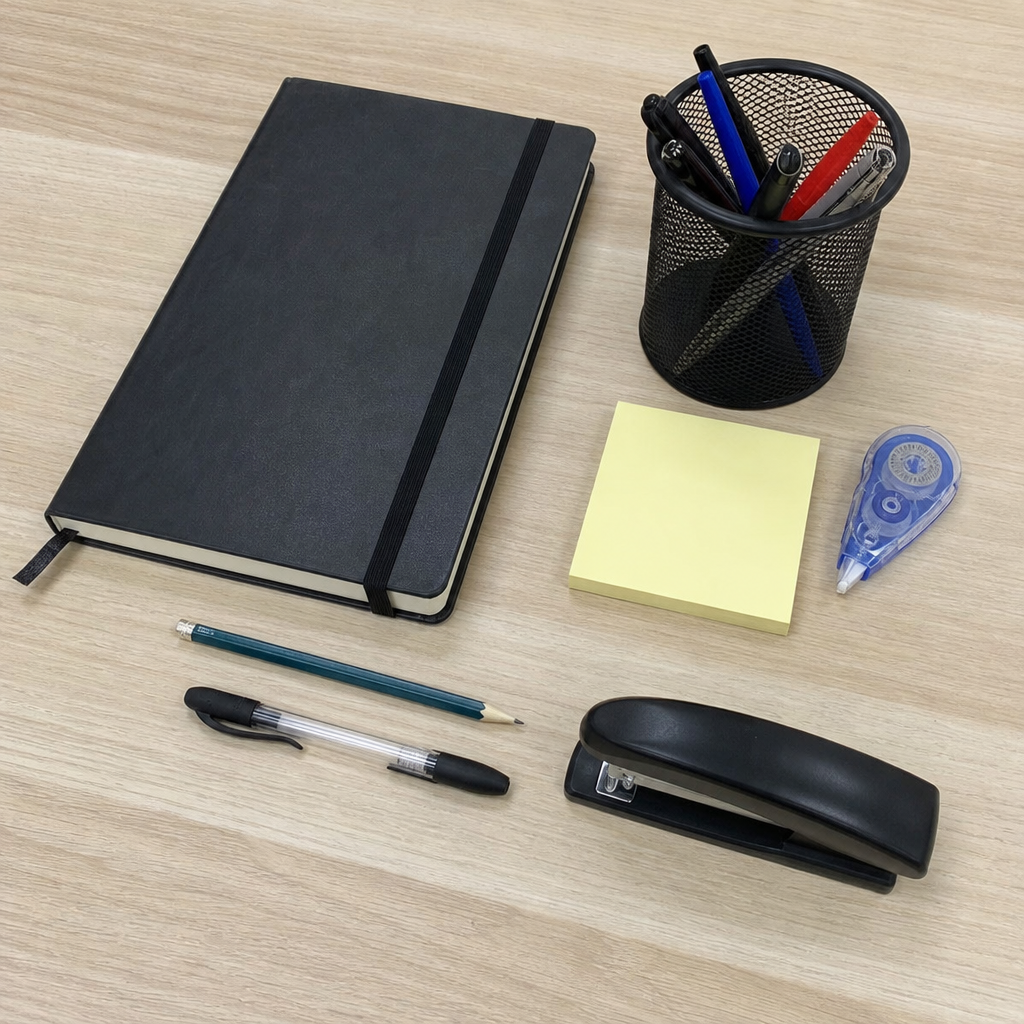
The easiest office supplies to overlook are the small items that only seem important when they are missing. Clips, staples, tape, labels, rubber bands, scissors, rulers, and adhesive tabs rarely get much attention, but they solve everyday problems quickly.
Keeping these basics available prevents small tasks from becoming unnecessary interruptions.
Many workspaces focus on visible items like notebooks and pens but forget the supporting tools that help people finish a task. A printed packet needs staples or clips. A mailed document needs an envelope and tape. A folder system needs tabs and labels. A package needs a marker, scissors, and perhaps packing tape.
Here is a useful small-supply checklist:
- Paper clips and binder clips in several sizes.
- Staplers, staples, and staple removers.
- Clear tape, packing tape, and tape dispensers.
- Scissors and utility knives where appropriate.
- Rubber bands for temporary bundling.
- Adhesive labels and file tabs.
- Push pins or magnets for boards.
- Rulers, page flags, and bookmarks.
- Glue sticks or adhesive rollers for light paper tasks.
These items are inexpensive compared with the time wasted searching for them. In shared workplaces, store them in a labeled supply drawer or cabinet so everyone knows where to look. In a home office, a single drawer organizer can hold most of these essentials without taking over the workspace.
Office equipment completes the everyday setup
Stationery and office equipment work together. Paper, labels, files, and writing tools support the work, while equipment helps produce, process, and manage that work. The right equipment depends on the size and purpose of the workspace, but even a simple office benefits from a few reliable basics.
Common office equipment may include a printer, scanner, shredder, label maker, paper trimmer, calculator, laminator, or binding tool. Not every workspace needs all of these, and buying too much equipment can create clutter. The better question is which tasks happen often enough to justify having the tool nearby.
For example, a label maker can be helpful if the office manages files, bins, shelves, inventory, or cables. A shredder is useful where sensitive documents are handled. A scanner helps reduce paper storage by turning physical documents into digital records. A paper trimmer can make presentations, signs, or printed materials look cleaner than scissors alone.
Placement matters here too. Equipment should be near the supplies it uses. Printer paper should be stored close to the printer, labels near the label maker, and shredder bags near the shredder. This makes routine maintenance easier and keeps the workspace from feeling scattered.
Building a practical office stationery list
A good office stationery list should reflect real work habits instead of copying a generic shopping cart. Before restocking, look at what gets used quickly, what sits untouched, and what people often ask for. This helps you buy enough of the right items without overfilling cabinets.
Use this simple process when planning or refreshing supplies:
- List daily tasks. Include printing, note-taking, mailing, filing, labeling, meetings, and document review.
- Match supplies to each task. Identify the paper products, writing tools, and accessories each task requires.
- Check storage space. Buy quantities that fit your drawers, shelves, or supply room without creating clutter.
- Standardize common items. Choose a few dependable pens, folders, notebooks, and labels instead of too many variations.
- Create a restocking routine. Review supplies regularly so essentials are replaced before they run out.
- Keep shared areas labeled. Clear labels reduce confusion and make it easier for everyone to return items properly.
This approach works for both individual and team workspaces. It also makes purchasing easier because you are not guessing. You are building a repeatable system based on how the workspace actually operates.
Choosing quality without overbuying
It is tempting to stock up on every stationery item, especially when setting up a new office. But more is not always better. Oversupply can lead to crowded drawers, forgotten materials, and wasted money if items dry out, become damaged, or no longer fit the way people work.
A balanced strategy is to invest in quality for high-use items and stay practical with occasional-use products. Pens, notebooks, printer paper, folders, and desk organizers are used often enough that durability and comfort matter. Specialty markers, presentation folders, or binding supplies can often be kept in smaller quantities unless they are part of regular operations.
Consider these buying guidelines:
- Choose dependable basics before decorative extras.
- Buy in bulk only for items used consistently.
- Avoid too many styles of the same product unless there is a real need.
- Test new writing tools or organizers before ordering large quantities.
- Store extras in a controlled, dry place to protect paper and adhesives.
This keeps the workspace prepared without turning storage areas into clutter zones. The best office supplies are the ones that are easy to use, easy to replace, and aligned with actual work.
A well-stocked workspace makes work feel easier
Essential office stationery is not just about having pens and paper on hand. It is about creating a workspace where people can move through tasks with fewer delays, less clutter, and more confidence. When paper products, writing tools, desk organization, office equipment, and everyday stationery items are chosen with purpose, the whole work environment becomes easier to use.
Start with the basics, organize them clearly, and adjust as your needs change. A thoughtful supply setup does not have to be complicated; it simply needs to support the work happening every day. With the right essentials in place, your workspace can stay practical, productive, and ready for whatever the next task requires.
Frequently Asked Questions About Essential Office Stationery
What are the essential office stationery items every workspace should have?
Essential office stationery includes paper products like printer paper and notebooks, writing tools such as pens and pencils, filing supplies, sticky notes, labels, and basic desk organization items.
How can I organize my office stationery effectively?
Organizing office stationery involves grouping items by frequency of use, placing frequently used supplies within reach, using trays and dividers, and labeling storage areas to make finding items easier.
What types of paper products are most commonly used in a workspace?
Commonly used paper products include printer and copier paper, notebooks, sticky notes, envelopes, file folders, and index cards for various tasks and documentation needs.
Why is it important to use quality writing tools?
Quality writing tools, such as pens and markers, enhance productivity by ensuring smooth writing and reducing interruptions caused by faulty equipment, which can slow down tasks.
How often should I restock office supplies?
It is advisable to review and restock office supplies regularly, ideally every few months, or when you notice items are running low to ensure that essential supplies are always available.
Here are some related articles you may find interesting: