Back To Blog
Buying paint brushes wholesale for drawing and painting supplies starts with matching the brushes to the work, then choosing quantities that make sense.
This article explains how to compare materials, shapes, sample quality, and supplier terms before placing an order.
Whether you are stocking a classroom, planning workshops, or replenishing a studio, use it to build a practical assortment without buying unnecessary extras.
What should you look for when buying wholesale paint brushes?
Look for wholesale paint brushes that suit your paint medium, produce the marks you need, and perform consistently in a sample test. Compare the exact assortment and total delivered cost rather than judging an offer by its brush count alone. Start with the project requirements, then ask suppliers to quote against those requirements.
Write down who will use the brushes, which paints they will use, and what they need to paint. A beginner workshop focused on broad color areas calls for a different purchasing brief than a studio producing detailed illustrations. Make those differences explicit before comparing catalogs.
Build your initial specification around:
Medium: Identify acrylic, watercolor, gouache, oil, or another intended material.
Tasks: Separate background coverage, general painting, linework, and fine detail.
Quantity: Specify how many usable brushes of each type you need, not just the total.
Handling: Request samples so users can assess grip, balance, and control.
Reordering: Ask whether individual shapes and sizes can be purchased again.
Treat this specification as your comparison sheet. If a supplier proposes an alternative assortment, check what changed before accepting the substitution.
Match brush fibers to the paint medium
Brush selection is not simply a choice between natural and synthetic hair. Manufacturers offer different fiber blends and stiffness levels for different media, so inspect the intended use of the exact range. Princeton’s selection guidance emphasizes choosing brushes around their handling characteristics and the artist’s medium.
Synthetic brushes for acrylic and mixed-media work
Synthetic brushes are worth including in an acrylic sample order, but avoid treating every synthetic brush as interchangeable.
Winsor & Newton’s Galeria range, for example, uses a blend of synthetic filaments designed for responsiveness, control with thicker color, and shape retention. That illustrates why the construction of a particular range matters more than a broad material label.
For your own comparison, test the paint at the consistency users actually prefer. Try a broad stroke, a narrow edge, and repeated changes of direction. Record whether each sample gives the control required for the planned lesson or artwork.
Watercolor brushes for washes and controlled marks
For watercolor, assess water capacity, flexibility, and the brush’s shape when wet.
Canson identifies those characteristics as important selection considerations and discusses both natural-hair and synthetic options. A purchasing decision should therefore account for wet performance, not just how neatly a dry brush appears in its packaging.
Ask testers to paint a wash and then make a sequence of smaller marks. Note how frequently they choose to reload and whether they can comfortably switch between the two tasks. Keep their observations with the sample identification so they remain useful when ordering.
Bristle options for oil and heavier applications
Natural bristle is another option to evaluate for oil or acrylic painting. Winsor & Newton describes its Winton Hog brushes as retaining the bristles’ natural curve to support control and accuracy with those media. Use the manufacturer’s compatibility guidance to narrow your shortlist, then test the specific brushes with your materials.
Avoid buying an unfamiliar fiber in large quantities solely because it sounds premium. Request a small selection first and compare it against brushes your users already know.
Build an assortment around useful shapes
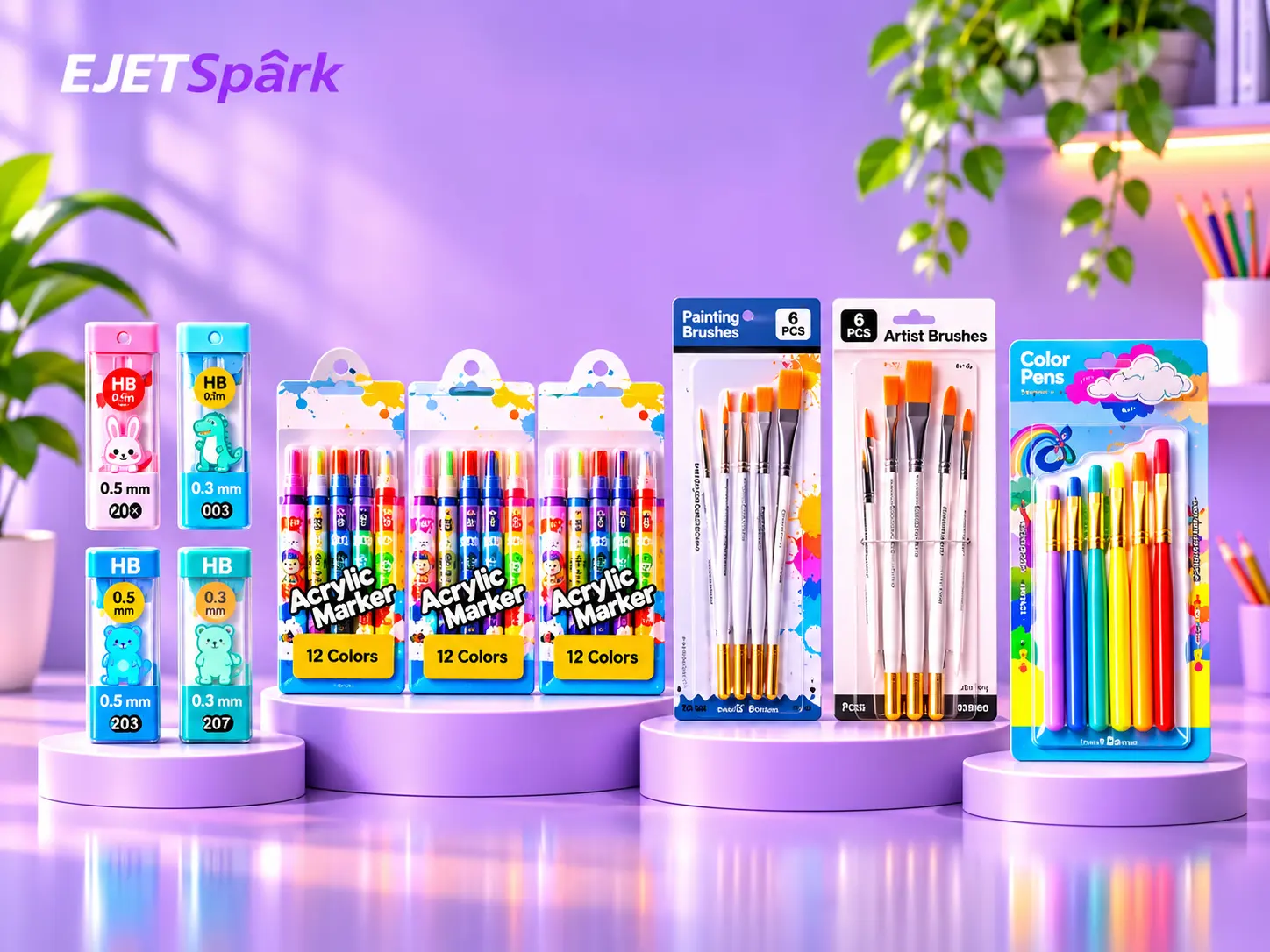
Choose shapes by the marks required in your projects. Princeton’s shape guides describe distinct uses for flats, angled brushes, filberts, and specialty shapes, including fans for blending or dry-brushed texture. Those functions provide a more useful starting point than simply maximizing the variety in a pack.
Consider these roles when requesting samples:
|
Brush shape |
Task to include in your sample test |
|---|---|
|
Round |
Lines, small shapes, and changes in stroke width |
|
Flat |
Broad coverage and straight-edged marks |
|
Filbert |
Rounded strokes and softened transitions |
|
Angle |
Controlled edges and directional marks |
|
Fan |
Blending or textured dry-brush effects |
These tests reflect the uses described in manufacturers’ brush-shape guidance, but your preferred assortment should follow your own results.
Request the quantity breakdown for every shape and size. Do not assume a mixed pack contains equal numbers of each item or that its largest brushes suit your largest projects. Ask for dimensions and sample photographs where the listing leaves those details unclear.
Start with the shapes required by your core activities. Add specialty brushes when you can identify a specific lesson, technique, or customer need for them.
Are cheap paint brushes good value compared with professional paint brushes?
Cheap paint brushes are good value for your order only if they pass the performance checks required by the intended task. Professional paint brushes deserve the same scrutiny: a higher price or product label should not replace a sample comparison. Establish your minimum acceptable performance, then compare the cost of the options that meet it.
For an introductory workshop, your acceptance criteria might focus on comfortable handling, secure construction, and completing the planned exercises. For detailed studio work, you might place more weight on how precisely a sample reproduces the desired marks. These are purchasing priorities to set with the actual users, not assumptions to make from packaging.
Compare costs using a clearly defined basis:
Delivered cost per usable brush = total delivered order cost ÷ number of brushes that meet your requirements.
For illustration, suppose one assortment includes several specialty shapes your program will not use. Exclude those pieces when comparing its practical value with a simpler assortment. This is a planning calculation, not a prediction of product quality.
You can also separate the order into performance tiers. Request an economical option for general exercises and another option for demanding detail work. Let sample results determine whether maintaining both tiers is worthwhile.
Test samples before committing to bulk paint brushes
Make sample testing resemble a normal painting session. Use the same paint, surface, and working methods planned for the larger order, then document what happens. A repeatable test gives your team a clearer basis for approval than impressions gathered from different projects.
Use this checklist for each sample:
Inspect the dry brush. Record its labeled size, visible shape, and any obvious construction concerns.
Check handling. Ask intended users to assess comfort and balance during ordinary work.
Paint repeatable marks. Use the same lines, filled shapes, and edge exercises for each comparable sample.
Watch for interruptions. Note loose hairs, unexpected spreading, or other issues that disrupt the task.
Clean as directed. Follow the manufacturer’s instructions rather than improvising a different cleaning method.
Repeat the exercise. Compare the next session with the first before approving the sample.
For watercolor samples, include a wet-shape assessment and an exercise that reveals water-holding behavior, both relevant selection factors in Canson’s guidance. Keep the test focused on the techniques your users need rather than trying to rank brushes universally.
Where possible, label each sample with its supplier, range, shape, and item code. Photograph the sample beside its test marks and record a simple decision: approved, rejected, or needs another trial. Agree on who has final approval before requesting the production order.
Plan quantities around classrooms, studios, and resale
Build your bulk paint brush order from actual activities rather than a round-number pack size. List the brushes needed at each workstation, then multiply by the number of simultaneous users. Add a separately identified reserve based on your own experience and storage capacity.
For a classroom, draft the order alongside the lesson plan. If students must switch between broad painting and small details during the same exercise, include both tools in each workstation allocation. Ask the instructor to approve a complete sample kit, not just isolated brushes.
For a shared studio, invite users to identify their most-used shapes before ordering. Keep individual requests separate from communal stock so that specialist preferences do not determine the entire purchase. Record withdrawals and replacements to create a better basis for the next order.
For resale, request packaging samples and an itemized assortment. Check whether each unit communicates the brush shape, size, and intended medium clearly enough for your customers. Confirm whether replenishment requires buying the complete assortment again.
For workshops and events, prepare one full participant kit and run through the activity before assembling the rest. Use that trial to confirm quantities and identify anything missing. Keep the approved kit as your packing reference.
Confirm supplier terms in writing
Use the same specification when requesting quotes from different suppliers. Ask each one to separate product quantities, packaging, delivery charges, and any other applicable costs. This makes it easier to identify differences without assuming every offer covers the same order.
Before authorizing payment, request written answers covering:
Minimum quantities: What must be purchased per order, item, shape, or size?
Assortment details: What exact quantities are included, and are substitutions permitted?
Sample matching: Will the order use the same specifications as the approved samples?
Timing: What dispatch estimate is being quoted, and when will it be confirmed?
Packaging: How will brush heads be protected and individual items identified?
Problems on arrival: What is the process for reporting shortages, damage, or defects?
Repeat orders: Which item codes should you use to request the same products again?
If the brushes are needed for a scheduled class or event, communicate that requirement before accepting the quote. Ask how changes will be communicated and leave room in your own schedule for inspection and kit assembly. Do not treat an unconfirmed delivery estimate as a guaranteed arrival date.
Retain the approved specification, correspondence, and sample records together. Check the delivered order against those documents before distributing the brushes.
Protect the order with practical brush care
Include care instructions when distributing brushes, especially in shared spaces. Princeton recommends mild soap and water for watercolor and acrylic brushes, appropriate cleaning methods for oil paint, and avoiding storage that leaves brushes resting on their heads. Follow the instructions for the specific brush and paint combination you purchase.
Set up a clearly identified cleaning area and make the routine part of each session. Ask users to clean brushes promptly, reshape them as directed, and return them to the designated drying or storage locati0n. Keep instructions visible rather than relying on a single verbal reminder.
Assign someone to check shared stock periodically. Separate brushes needing attention from those ready for use, and record why replacements are requested. Use those observations when reviewing the next purchase instead of automatically repeating the previous quantities.
Buy for the work, not just the pack size
A practical wholesale order begins with clear tasks, tested samples, and an itemized specification. Compare usable quantities and delivered costs, confirm supplier terms, and plan how the brushes will be maintained. Before committing to bulk paint brushes, approve a small working assortment that your artists, students, or customers can actually use.
Frequently Asked Questions About Paint Brushes Wholesale
What factors should I consider when selecting wholesale paint brushes?
When selecting wholesale paint brushes, consider the medium (acrylic, watercolor, oil, etc.), the tasks you'll be performing (background coverage, fine detail work), the quantity of brushes needed, handling characteristics, and whether you can reorder specific shapes or sizes.
Are synthetic paint brushes as good as natural bristle brushes?
Synthetic paint brushes can perform exceptionally well for various mediums, particularly acrylics. However, the choice between synthetic and natural bristles should be based on specific needs and testing, as different brands and ranges offer unique handling characteristics and performance.
How many paint brushes should I order for a classroom or studio?
To determine the number of paint brushes needed, assess the requirements for each workstation based on the number of simultaneous users and the tasks they will perform. It’s advisable to include a variety of shapes and sizes depending on the art activities planned.
Can I test paint brush samples before making a bulk purchase?
Yes, it is highly recommended to request sample brushes from suppliers to test their performance in actual painting scenarios. This allows you to assess handling, grip, and overall suitability for the intended projects before committing to a bulk order.
What should I do if the delivered paint brushes are not as expected?
If the delivered paint brushes do not meet your expectations, refer to the terms agreed upon with the supplier regarding reporting shortages, damages, or defects. Check the supplied brushes against your original specification and correspond with the supplier to resolve any issues.