Back To Blog
 Squishies Toys: The Ultimate Guide to Soft, Squeezable, and Fun Sensory Toys
Squishies toys have become a popular choice among children, teenagers, collectors, and adults who enjoy soft, squeezable toys.
Known for their delightful textures, adorable designs, and satisfying squeezing sensations, these playful products combine entertainment, sensory exploration, and collectible appeal.
From slow-rising squishy toys shaped like cakes and doughnuts to colorful animal squishies, jumbo squishies, and miniature squishy keychains, there is a remarkable variety of designs available.
Whether we are searching for entertaining gifts, sensory play accessories, or decorative collectibles, squishies offer options for different ages and preferences.
In this comprehensive guide, we explore the different types of squishies toys, their materials, benefits, popular designs, safety considerations, cleaning methods, and essential factors to consider when choosing the right squishy toy.
What Are Squishies Toys?
Squishies toys are soft, compressible toys designed to be squeezed, pressed, and manipulated by hand. They are manufactured using materials such as polyurethane foam, silicone, and thermoplastic rubber, depending on the product's design and intended texture.
One of the most recognizable characteristics of traditional foam squishies is their ability to return gradually to their original shape after being squeezed. This feature is commonly described as a slow-rising effect.
Unlike conventional hard plastic toys, squishies provide a tactile experience that encourages repeated handling. Their flexibility and soft surfaces make them appealing to people who enjoy sensory activities.
We can find squishies in numerous shapes, including:
-
Animal squishies: Cats, pandas, rabbits, bears, puppies, and other adorable creatures.
-
Food squishies: Bread, cakes, ice cream, doughnuts, hamburgers, and fruit.
-
Jumbo squishies: Oversized toys designed for larger squeezing movements.
-
Mini squishies: Compact toys suitable for collections and portable play.
-
Kawaii squishies: Cute, expressive designs inspired by Japanese kawaii aesthetics.
-
Scented squishies: Toys featuring added fragrances such as strawberry, vanilla, or chocolate.
-
Squishy keychains: Small squeezable accessories attached to bags, backpacks, or keys.
Each category offers a different combination of appearance, texture, size, and sensory experience.
Why Are Squishies Toys So Popular?
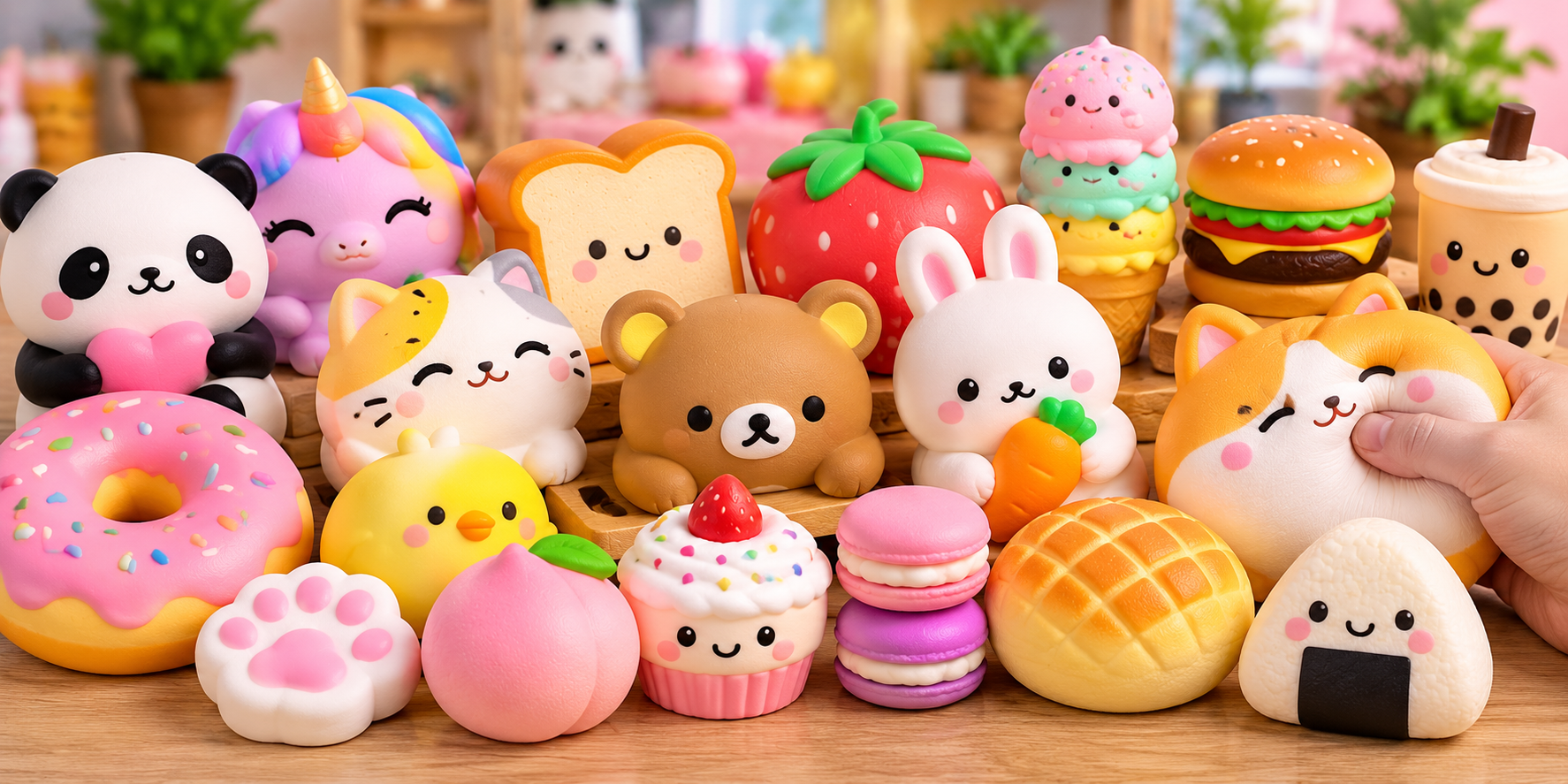
The popularity of squishy toys comes from their combination of tactile satisfaction, attractive designs, affordability across many product categories, and collectible appeal.
1. Satisfying Sensory Experience
One of the main reasons people enjoy squishies is the physical sensation of squeezing a soft object.
When we compress a slow-rising foam squishy, the material temporarily changes shape before gradually expanding. This creates a distinctive tactile experience that differs from squeezing a rubber ball or manipulating modeling clay.
Some individuals find repetitive squeezing relaxing or enjoyable. However, the experience varies between users, and squishies should not be considered a proven treatment for anxiety or other medical conditions.
2. Attractive and Creative Designs
Squishies are available in countless imaginative designs.
A realistic-looking bread squishy may feature textured crust details, while a cartoon animal squishy might have oversized eyes, pastel colors, and an expressive face.
These visual features make squishies appealing as toys, gifts, desk decorations, and collectible accessories.
3. Collectible Appeal
For enthusiasts, collecting squishies can become an enjoyable hobby.
We can organize collections according to themes, sizes, colors, characters, or materials. Some collectors prefer miniature food squishies, while others concentrate on jumbo animal designs or limited-edition releases.
The combination of different textures and appearances adds variety to the collecting experience.
4. Portable Entertainment
Mini squishies and squishy keychains are convenient for travel and everyday use.
Their compact size allows us to carry them in suitable protective cases or compartments, although very small squishies may present choking hazards for young children.
Different Types of Squishies Toys
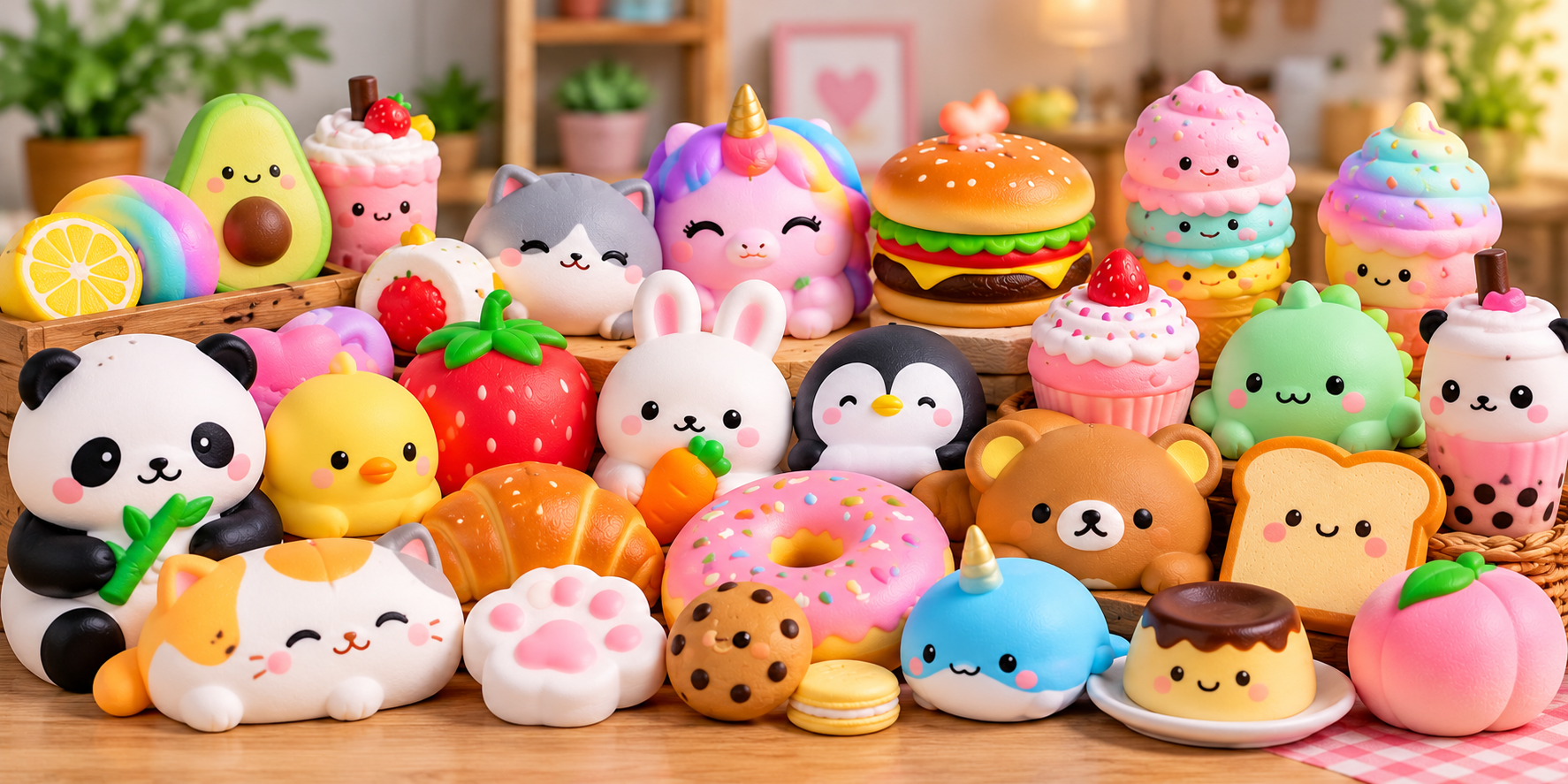
Understanding the different types of squishies helps us select products based on texture, durability, appearance, and intended use.
Slow-Rising Squishies
Slow-rising squishies are among the most recognizable products in this category.
They are commonly manufactured using flexible polyurethane foam engineered to recover its shape gradually after compression.
When squeezed, the foam temporarily retains the impression created by the hand before expanding.
Popular designs include bread loaves, croissants, cakes, animal faces, and oversized fruit.
The recovery speed depends on the foam formulation, product thickness, temperature, and manufacturing process. Not every slow-rising squishy returns to its original shape at the same rate.
Kawaii Squishies
Kawaii squishies emphasize charming designs, cheerful expressions, and playful colors.
Inspired by Japanese cute-character aesthetics, these squishies frequently feature smiling faces, rounded bodies, pastel finishes, and whimsical food or animal shapes.
Popular kawaii squishy designs include smiling strawberries, miniature milk cartons, cartoon kittens, colorful cupcakes, and panda-shaped buns.
We often see kawaii squishies used as decorative collectibles, party favors, and small gifts.
Jumbo Squishies
Jumbo squishies are larger versions of traditional squeezable toys.
Their increased size provides more surface area for squeezing and can create a different sensory experience from miniature products.
Large squishies often feature oversized food items, cartoon animals, and novelty shapes.
Because they contain more material, jumbo squishies may require additional storage space and can be more expensive than smaller versions.
Mini Squishies
Mini squishies are small, lightweight toys designed for compact storage and easy handling.
They are frequently sold individually or in themed multipacks.
Common designs include miniature fruits, tiny animals, sweets, and small cartoon characters.
Although their size makes them convenient for collecting, mini squishies are not automatically suitable for toddlers or young children. Products small enough to fit into a child's mouth may pose a choking risk.
Scented Squishies
Scented squishies combine tactile play with fragrance.
Manufacturers may add scents inspired by fruits, desserts, flowers, or confectionery.
Popular fragrance themes include strawberry, peach, vanilla, chocolate, and citrus.
The strength and longevity of the scent vary considerably. Fragranced products may also be unsuitable for individuals sensitive to certain odors or ingredients.
We recommend checking product descriptions and manufacturer information before purchasing scented squishies.
Silicone and Gel Squishy Toys
Not all squishies are made from slow-rising foam.
Some products use silicone, thermoplastic elastomers, or gel-filled constructions to provide a softer, stretchier, or more elastic sensation.
These toys may spring back immediately rather than rising slowly.
Gel-filled products require particular attention to seam integrity and material safety because damaged outer surfaces may release their contents.
Benefits of Playing With Squishies Toys
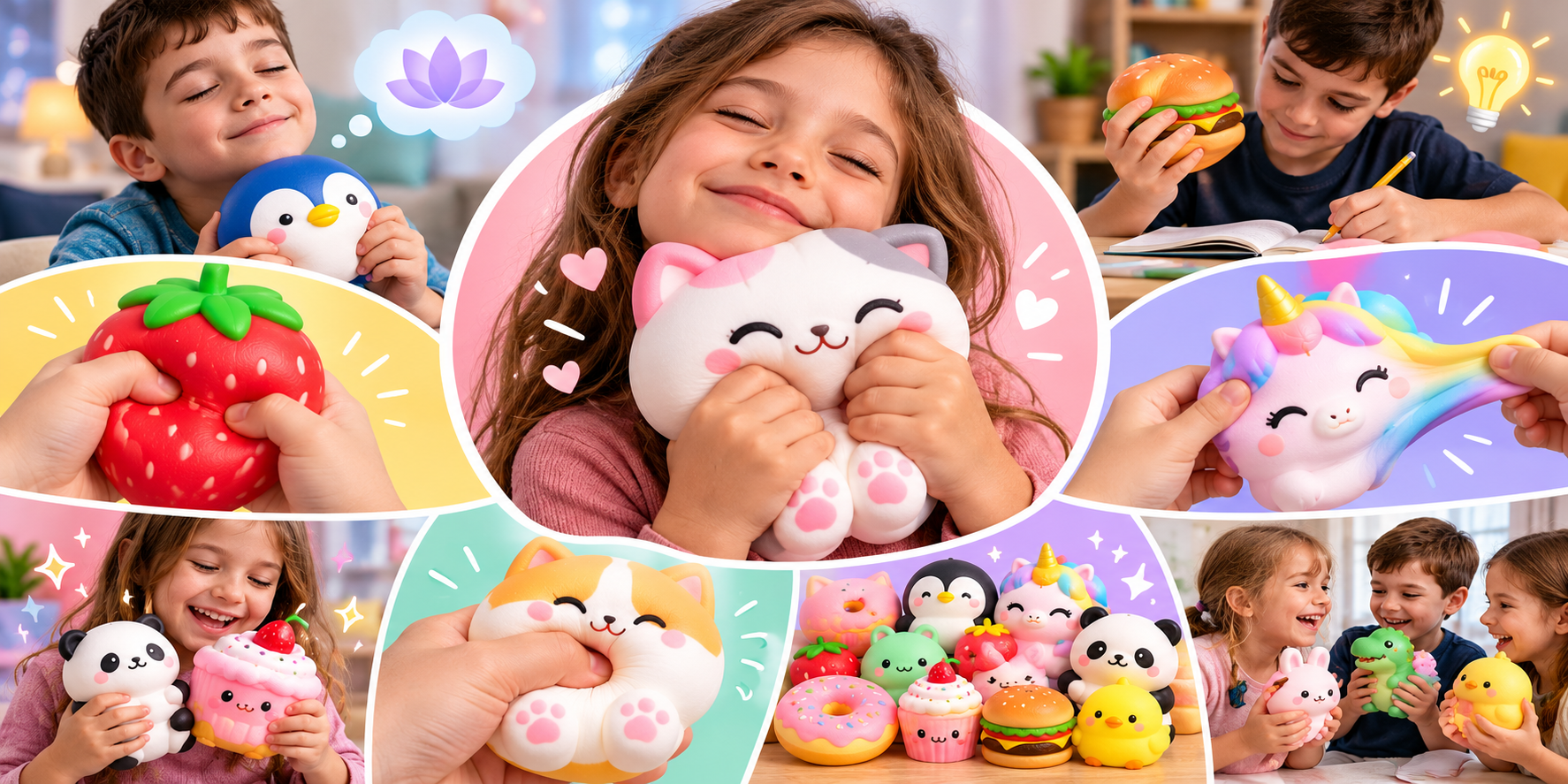
Squishies provide opportunities for entertainment, tactile exploration, and repetitive hand movements.
Sensory Exploration
Sensory play involves interacting with different textures, shapes, and physical sensations.
Squishies can introduce children to concepts such as softness, compression, elasticity, and shape recovery.
By comparing different products, we can explore how materials respond to pressure and movement.
For example, a foam squishy may expand gradually, while a silicone squishy may recover almost immediately.
These differences provide opportunities for simple hands-on learning.
Enjoyable Fidget Activity
Many people enjoy keeping a squishy nearby while reading, studying, or taking breaks.
The repetitive action of squeezing and releasing may provide a pleasant fidgeting activity for some users.
However, the effects on attention and concentration differ between individuals. Squishies should be viewed as optional sensory accessories rather than guaranteed tools for improving focus.
Hand Movement and Coordination
Manipulating an appropriately sized squishy involves finger movements, grip adjustments, and hand coordination.
For children, supervised play may provide opportunities to practice these movements.
Nevertheless, squishies should not replace professional occupational therapy, hand rehabilitation equipment, or prescribed exercises.
Creative and Imaginative Play
Food-shaped and animal-shaped squishies can become accessories for pretend play.
Children may incorporate them into imaginary bakeries, toy restaurants, character collections, or storytelling activities.
These possibilities extend the entertainment value beyond squeezing alone.
How to Choose the Best Squishies Toys
Selecting the right squishy requires more than choosing an attractive design.
We recommend evaluating several practical characteristics before making a purchase.
|
Feature |
What to look for |
|---|---|
|
Material |
Clearly identified foam, silicone, or other suitable material |
|
Texture |
Softness and resistance appropriate for the intended user |
|
Recovery speed |
Slow-rising or quick-rebounding behavior, depending on preference |
|
Size |
Comfortable handling without inappropriate small-part risks |
|
Construction |
Secure seams, intact surfaces, and minimal loose decorations |
|
Fragrance |
Unscented options for fragrance-sensitive users |
|
Safety information |
Appropriate age labeling and applicable product compliance |
|
Maintenance |
Clear manufacturer instructions for cleaning and storage |
Material Quality
Material quality affects the feel, durability, and performance of a squishy toy.
Poorly constructed foam products may tear or permanently deform after repeated compression.
We should look for products with consistent texture, intact surfaces, and reliable manufacturer information.
A strong chemical odor, damaged coating, leaking contents, or crumbling material can be reasons to stop using a product and contact the seller or manufacturer.
Softness and Recovery Time
Different users prefer different levels of softness.
Some enjoy very soft squishies that compress easily, while others prefer firmer products that offer more resistance.
Recovery time is another important characteristic.
If we want the classic slow-rising experience, we should specifically choose products described as slow-rising foam squishies rather than assuming all squeezable toys behave identically.
Age Appropriateness
Age recommendations deserve careful attention.
Small squishies, detachable accessories, beads, and damaged foam fragments can present hazards to young children.
We should always follow the manufacturer's age grading and warnings, particularly for children under three years old.
Design Preferences
Appearance is an important part of the squishy experience.
Animal enthusiasts may prefer pandas, cats, or rabbits, while collectors interested in realistic designs may favor bakery-inspired squishies.
Choosing a theme that matches the recipient's interests can make a squishy more appealing as a gift.
Are Squishies Toys Safe for Children?
Squishies toys can be suitable for children when they are appropriately designed, age-graded, and used according to manufacturer instructions. However, safety depends on the specific product rather than the general category.
We recommend considering several potential hazards.
Choking hazards: Small toys and detachable components should be kept away from children who may place objects in their mouths.
Material deterioration: Foam that tears or crumbles can create loose pieces. Damaged toys should be removed from use.
Chemical exposure: Product safety depends on the materials, additives, coatings, and applicable testing requirements. We should favor reputable manufacturers that provide clear safety information.
Fragrances: Added scents may irritate individuals with fragrance sensitivities.
Gel leakage: Gel-filled squishies should be discarded or handled according to manufacturer instructions if their outer casing becomes damaged.
Mouthing and chewing: Unless a product is specifically designed and certified for oral use, squishies should not be chewed, bitten, or treated as teething toys.
In markets where relevant standards apply, we can look for appropriate evidence of compliance with toy safety requirements, such as ASTM F963 in the United States or applicable EN 71 requirements in Europe. A printed claim alone does not establish that a product has passed every relevant test.
Adult supervision remains important for younger users.
How to Clean Squishies Toys Properly
Regular cleaning helps maintain the appearance and hygiene of squishies, especially when they are handled frequently.
However, the correct cleaning method depends on the material and surface coating.
Cleaning Foam Squishies
Traditional foam squishies may be sensitive to prolonged moisture exposure, rubbing, or cleaning chemicals.
For products whose manufacturers permit surface cleaning, we recommend the following approach:
-
Remove loose dust with a soft, dry cloth.
-
Lightly dampen a clean cloth with water and a small amount of mild soap.
-
Gently wipe the surface without scrubbing.
-
Remove soap residue using a separate lightly dampened cloth.
-
Allow the toy to air-dry completely in a well-ventilated location.
We should avoid soaking foam squishies unless the manufacturer specifically confirms that immersion is safe.
Machine washing, strong detergents, solvents, and excessive heat may damage foam or decorative coatings.
Cleaning Silicone Squishies
Some solid silicone squishies can tolerate more thorough cleaning than foam products.
However, this does not apply to every silicone-based toy, particularly those containing gel fillings, attached decorations, or painted surfaces.
We should follow the product's cleaning instructions and avoid exposing damaged gel-filled toys to water.
Proper Storage
To extend the usable life of squishies, we recommend storing them in a clean, dry area away from direct sunlight and excessive heat.
Foam squishies should not remain tightly compressed for extended periods because prolonged deformation may affect their shape.
Separating delicate painted squishies from sharp objects can also help protect their surfaces.
Popular Squishies Toy Designs
.png)
Squishy designs cover a broad range of themes, but several categories are especially recognizable.
Food Squishies
Food squishies imitate everyday foods and desserts.
Popular examples include:
-
Bread and toast squishies
-
Doughnut squishies
-
Ice cream squishies
-
Cake and cupcake squishies
-
Hamburger squishies
-
Strawberry and peach squishies
Their appeal comes from playful shapes, colorful finishes, and sometimes surprisingly realistic textures.
Animal Squishies
Animal squishies are widely appreciated for their friendly appearance.
Cats, pandas, rabbits, bears, dogs, and other creatures frequently appear in both realistic and cartoon-inspired designs.
Rounded bodies and expressive faces make animal squishies particularly suitable for themed collections.
Fantasy and Character Squishies
Fantasy-themed squishies include unicorns, dragons, magical creatures, and imaginative cartoon characters.
When purchasing products featuring established entertainment characters, we should check whether the merchandise is officially licensed if authenticity matters.
Seasonal Squishies
Seasonal collections can feature pumpkins, snowmen, hearts, festive desserts, and other holiday-inspired shapes.
These designs can work well as party favors, decorative gifts, or themed collectibles.
Squishies Toys vs. Stress Balls vs. Fidget Toys
Although these products are sometimes grouped together, they do not always provide the same tactile experience.
|
Product |
Main characteristic |
Typical experience |
|---|---|---|
|
Slow-rising squishies |
Compressible foam with gradual recovery |
Soft squeezing and watching the shape return |
|
Stress balls |
Often firmer, with elastic or filled construction |
Repeated grip pressure |
|
Pop-it toys |
Flexible surface with pressable bubbles |
Repetitive pressing and popping |
|
Fidget spinners |
Rotating mechanical components |
Spinning and visual movement |
|
Putty and slime |
Moldable or stretchable material |
Kneading, stretching, and shaping |
|
Gel squishies |
Soft, elastic, sometimes filled construction |
Stretching and squeezing |
The best choice depends on whether we prefer squeezing, stretching, pressing, spinning, or manipulating a material.
For those who enjoy gradual shape recovery and decorative designs, slow-rising squishies offer a distinctive experience.
Squishies Toys as Gifts for Different Occasions
Squishies can make enjoyable gifts because they are available in many themes, sizes, and price ranges.
For birthdays, we can select animal or dessert designs that match the recipient's interests.
For party favors, individually packaged mini squishies may be convenient, provided they are appropriate for the age group.
For collectors, distinctive designs, coordinated sets, and officially licensed character products may offer greater appeal than generic assortments.
For desk accessories, a medium-sized squishy can provide a decorative object that is also pleasant to handle.
When buying squishies as gifts, we should consider the recipient's age, fragrance preferences, available storage space, and preferred texture.
How to Start a Squishies Toy Collection
Starting a squishy collection does not require purchasing large quantities of toys.
We recommend beginning with a small selection of different materials and designs to identify personal preferences.
For example, a beginner collection might include a slow-rising bread squishy, a miniature animal squishy, a jumbo foam toy, and a solid silicone squishy.
This variety allows us to compare texture, softness, recovery speed, and construction.
As a collection grows, we can organize it according to themes or product types.
Transparent storage boxes, dedicated display shelves, and clean protective containers can help keep collectibles organized.
We should avoid tightly packing delicate foam squishies because sustained compression can cause deformation.
For valuable or rare collectible items, retaining original packaging and purchase records may help document authenticity and condition.
Common Mistakes to Avoid When Buying Squishies Toys
Several purchasing mistakes can lead to disappointing products or unnecessary safety concerns.
One common mistake is assuming that every squishy is slow-rising. Silicone, rubber, and gel-filled toys may behave very differently from polyurethane foam.
Another is choosing solely based on appearance without checking size, material, or age suitability.
We should also avoid assuming that expensive squishies are automatically safer or more durable. Price alone does not establish product quality.
Unverified claims such as “non-toxic,” “hypoallergenic,” or “child-safe” should be considered carefully. Credible manufacturer information and relevant compliance documentation are more useful than unsupported marketing language.
Finally, purchasing large quantities of scented squishies without considering fragrance sensitivity can result in an unpleasant experience for some users.
Frequently Asked Questions About Squishies Toys
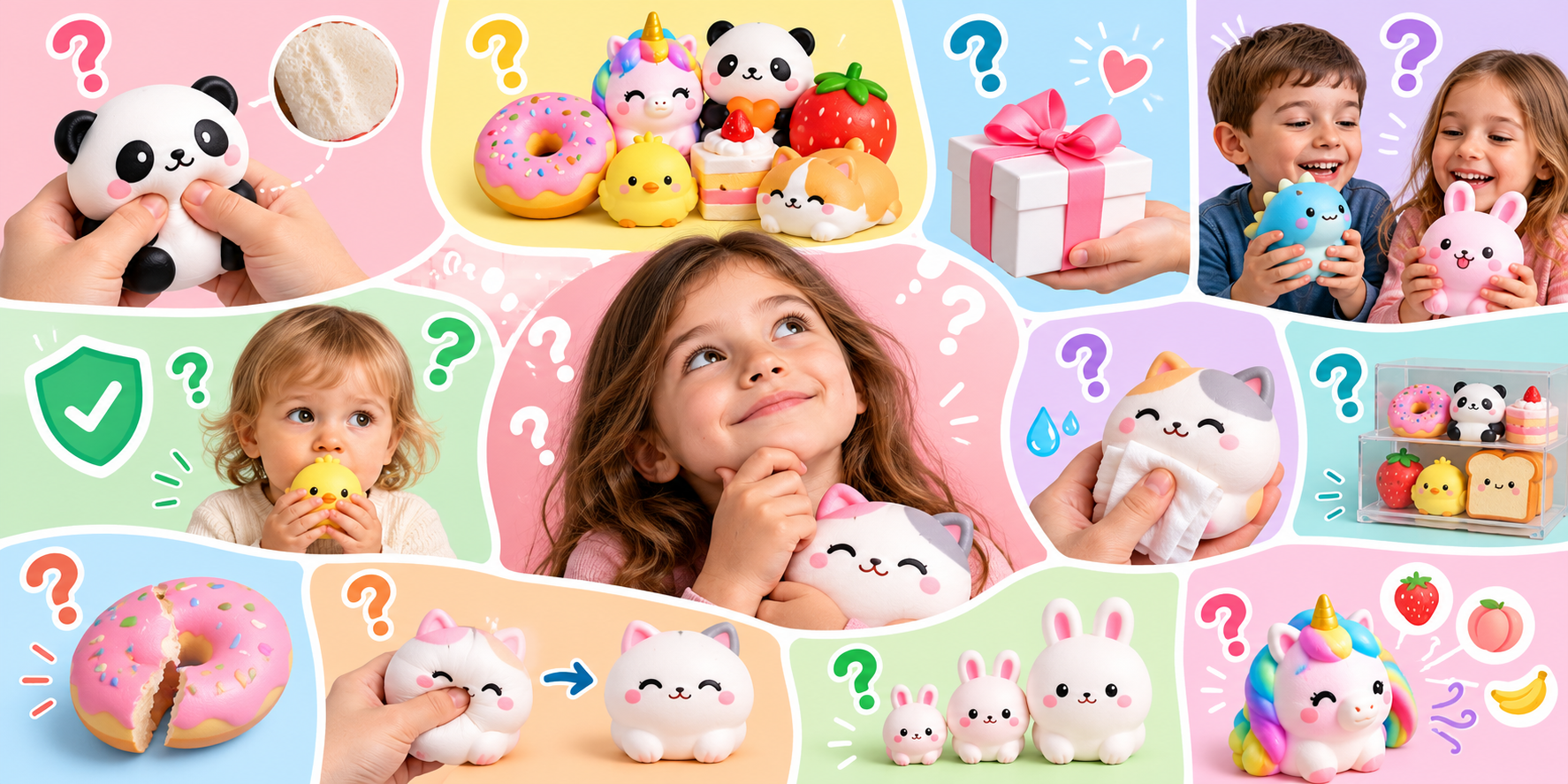
What are squishies toys made of?
Squishies are made from different materials depending on their construction. Traditional slow-rising squishies commonly use polyurethane foam, while other varieties may use silicone, thermoplastic elastomers, or gel-filled materials.
Are squishies toys good for stress relief?
Some people find squeezing squishies enjoyable and calming. However, responses differ between individuals, and there is insufficient basis to claim that squishies reliably treat stress, anxiety, or other health conditions.
Why do some squishies rise slowly?
Slow-rising foam squishies are made from materials designed to recover gradually after compression. Their recovery behavior depends on the foam's physical properties, thickness, and environmental conditions.
Can adults use squishies toys?
Yes. Squishies are enjoyed by adults as collectibles, decorative accessories, and tactile fidget objects. The appropriate product depends on individual preferences and safety considerations.
Are scented squishies safe?
Safety depends on the product's ingredients, manufacturing quality, and intended use. Individuals with fragrance sensitivities may prefer unscented squishies. We recommend checking manufacturer guidance and relevant safety information.
Can squishies be washed?
Some squishies can be cleaned with a lightly dampened cloth, while others require different care. Foam products should generally not be soaked unless their manufacturers specifically allow it. Always follow the cleaning instructions provided with the toy.
How long do squishies toys last?
Their lifespan depends on material quality, frequency of use, storage conditions, and handling. Repeated aggressive stretching, tearing, exposure to heat, and improper cleaning may shorten their usable life.
Are squishies suitable for toddlers?
Not all squishies are suitable for toddlers. Small items, loose decorations, and detachable parts may present choking hazards. We should follow age recommendations and choose products specifically designed for the child's developmental stage.
What is the difference between squishies and mochi squishy toys?
Traditional slow-rising squishies usually use foam that gradually expands after compression. Products marketed as mochi squishies often use soft, elastic, rubber-like materials that rebound more quickly and may be stretchable. Product terminology varies by manufacturer.
Where can we buy squishies toys?
Squishies are sold through toy retailers, gift shops, specialty collectible stores, and online marketplaces. We recommend choosing sellers that provide clear product descriptions, age guidance, material information, and return policies.
Conclusion: Finding the Right Squishies Toys
Squishies toys combine tactile enjoyment, imaginative designs, and collectible appeal in a wide variety of soft, squeezable products. From slow-rising foam bread and kawaii animal characters to jumbo squishies and miniature accessories, each type provides a distinctive experience.
When selecting squishies, we should prioritize appropriate materials, reliable construction, age suitability, preferred texture, and clear safety information. Understanding the differences between foam, silicone, and gel-filled products allows us to make more informed purchasing decisions.
Whether we are building a themed collection, choosing a thoughtful gift, or exploring tactile toys for everyday enjoyment, carefully selected squishies can provide lasting entertainment and creative possibilities.
Here are some related articles you may find interesting: