Back To Blog
Buying wholesale storage boxes from China starts with choosing the right product, comparing complete costs, and checking suppliers before committing to bulk quantities.
This article explains how to evaluate affordable storage boxes for resale, workplace organization, or distribution without treating the lowest advertised price as the whole deal.
The goal is straightforward: buy boxes that meet your requirements at a cost your business can sustain.
How can you buy wholesale storage boxes from China at a cheap price?
To buy storage boxes from China at a competitive price, send the same product specifications to several suppliers, approve samples, and compare delivered costs rather than factory prices alone. Landed cost includes the product price, freight, insurance, tariffs, taxes, and other applicable fees.
A low quotation is only useful when you understand what it includes.
Start with a clear buying purpose. A retailer selling closet organizers needs a different specification from a warehouse purchasing reusable picking bins. Set your priorities before requesting quotes: appearance, usable capacity, handling, shelf fit, or protection during storage.
Avoid asking only, “What is your cheapest storage box?” Instead, describe the application and request alternatives at different quality levels. Ask suppliers to explain exactly what changes between those options so you can decide which savings are acceptable.
Match the storage box to its intended use
Build your shortlist around how people will fill, move, open, and store the box. Ask for internal and external measurements, then test your intended contents rather than relying on a stated capacity alone. Include the lid, handles, and any shelf clearance in your assessment.
Use the following priorities when preparing your specification:
|
Intended use |
Details to specify |
What to check in a sample |
|---|---|---|
|
Closet organization |
Shelf dimensions, appearance, handle style |
Fit, access, finish, and ease of carrying |
|
Small-parts sorting |
Compartment dimensions, divider arrangement |
Whether intended items stay separated |
|
Stockroom storage |
Intended load, stacking arrangement, label area |
Handling and stability under agreed conditions |
|
Under-bed storage |
Maximum external height, opening method |
Clearance and access with contents inside |
|
Retail resale |
Color, packaging, barcode placement |
Presentation and consistency with listing images |
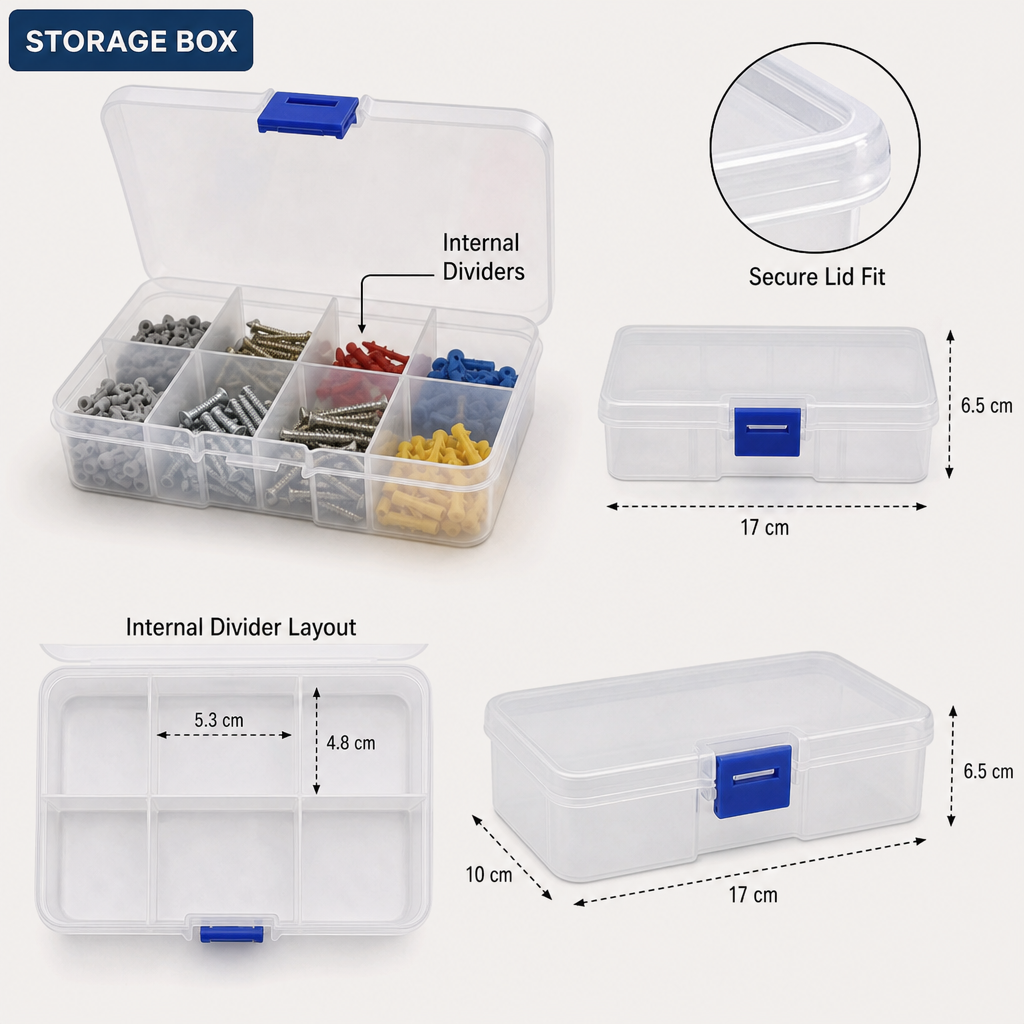
For a storage box organizer with removable dividers, try the smallest items you expect customers to store. Check whether they slip beneath dividers or migrate between compartments. For larger containers, load a sample with representative contents and assess whether the handles remain comfortable.
Write a specification that makes quotations comparable
Before contacting storage box suppliers, create one specification sheet and use it for every inquiry. Ask each supplier to identify any requirement they cannot meet rather than silently quoting a substitute. This gives you a clearer basis for comparison and a record to refine after sampling.
Include these details:
- Dimensions: Internal and external measurements, with acceptable tolerances.
- Material: Proposed material, grade, and any requested documentation.
- Construction: Lid type, handles, hinges, dividers, wheels, or closures.
- Performance: Intended contents, load, stacking arrangement, and use conditions.
- Appearance: Color reference, surface finish, logo placement, and acceptable variation.
- Packaging: Units per carton, protective materials, carton markings, and retail presentation.
- Quantity: Total order, quantity per size or color, and expected reorder pattern.
Avoid subjective descriptions such as “strong,” “premium,” or “heavy duty” unless you also define how acceptance will be judged. Alibaba’s order guidance recommends recording measurable specifications, packaging, inspection requirements, and approved samples in the agreement.
Treat material suggestions as proposals to evaluate. If a supplier recommends a different construction, ask for a sample and a revised quotation before approving it. Do not allow a cost-saving substitution to become an undocumented production change.
How do you evaluate storage box suppliers and manufacturers?
Evaluate storage box manufacturers and suppliers through documented business checks, relevant production information, sample quality, and their willingness to accept clear order requirements. If you use Alibaba, its Verified Supplier program provides third-party assessment reports covering specified business and production information. Read the report itself rather than treating the badge as a guarantee of your order.
Ask whether the company manufactures the quoted product, sources it from another factory, or combines both activities. Then ask who controls production changes, conducts quality checks, and handles complaints. Focus on getting clear responsibility for your specific order.
Request a live discussion or video walkthrough where practical. Use it to ask about the actual product: how lids are checked, how colors are approved, and how finished cartons are identified. Follow up by putting important answers into the written specification.
Compare suppliers using a simple scorecard covering specification match, sample results, communication, packaging, cost, and proposed remedies for defects. Decide which criteria are nonnegotiable before reviewing prices. A supplier that will not confirm a critical requirement should not advance simply because its quotation is lower.
Compare the complete cost of bulk storage containers
Keep factory price and delivered cost in separate columns. FedEx’s landed-cost guidance groups relevant expenses into product, shipping, customs, risk, and overhead, including items such as insurance and processing fees. Use that structure to identify costs missing from a supplier’s quotation.
For your own comparison worksheet, consider this calculation:
Estimated cost per usable unit = total purchasing and delivery expenses ÷ expected usable units.
List sample charges, customization, inspection, packaging, freight, insurance, customs-related charges, and final delivery separately where applicable. Avoid counting a charge twice when a supplier’s shipping quotation already includes it. Mark uncertain figures as estimates instead of presenting them as confirmed costs.
Packaging dimensions deserve particular attention. FedEx, for example, calculates applicable package charges using dimensional weight or actual weight, whichever is greater. Request packed measurements and weights before seeking a shipping estimate; the empty box’s weight is not enough.
Ask suppliers to quote any available nested, flat-packed, or assembled packing options. Then compare freight estimates alongside assembly requirements and sample performance. Choose the arrangement that works for your receiving team and sales channel, not merely the one with the smallest carton.
Use samples to define acceptable quality
Treat sampling as a practical trial, not a quick visual approval. Ask whether the sample represents the proposed production material, construction, color, and packaging. Record differences between the sample and the final specification before proceeding.
Build your checks around the intended application:
Measure usable space. Place representative contents inside and confirm the lid closes properly.
Inspect contact surfaces. Examine edges, handles, hinges, and closure points for unacceptable defects.
Repeat normal handling. Open, close, lift, and move the box as an end user would.
Check the proposed arrangement. Assess stacking or nesting only under conditions agreed with the supplier.
Review presentation. Compare color, labels, printed artwork, and retail packaging with your requirements.
Record the result. Photograph defects and distinguish required corrections from optional improvements.
Keep an approved reference sample and identify it in the purchase documentation. Arrange a production inspection against the written requirements, rather than relying solely on photographs of selected finished goods. Alibaba’s guidance specifically recommends connecting approved samples and inspection standards to the order terms.
If you want to market a storage box container for a specialized purpose, request supporting evidence before adopting the claim. Do not turn an informal supplier description into a promise to your customers without reviewing what it actually covers.
What should you confirm before placing a bulk order?
Before placing a bulk order, confirm the final specification, quantities, price, packaging, payment milestones, shipment deadline, inspection arrangements, and delivery responsibilities in writing. For eligible Alibaba Trade Assurance orders, protection depends on the order terms, payment route, supporting records, and applicable claim deadlines. Review the protection for the particular transaction rather than assuming every purchase has identical coverage.
Resolve minimum order quantities at the variant level. Ask whether the minimum applies to the entire purchase or separately to each size, color, and logo treatment. Request a revised quotation whenever your product mix changes.
For a first purchase, consider limiting the assortment to the variants you can evaluate and sell confidently. Ask about standard colors and existing designs before requesting custom tooling. If customization matters, separate setup charges from recurring unit costs and clarify ownership of approved artwork or tooling in your agreement.
Finish with a written order checklist:
Approved specification and sample reference attached.
Quantity confirmed for every variant.
Packaging and carton details approved.
Payment milestones and inspection timing agreed.
Defect reporting process and proposed remedies documented.
Shipment responsibilities and destination clearly identified.
Plan shipping and import checks before production
Ask a freight provider to quote against the proposed packed shipment, delivery destination, and required service. Request a breakdown showing what is included and excluded. Put the supplier’s delivery responsibilities beside that quotation so gaps are visible before you pay.
For U.S. purchases, confirm import requirements with an appropriate professional or official resource. U.S. Customs and Border Protection states that the importer remains ultimately responsible for compliance, even when using a customs broker. Do not assume the supplier or transport provider has taken over that responsibility.
Avoid using a generic duty percentage for every storage product. CBP notes that determining certain import requirements depends on knowing the product’s Harmonized Tariff Schedule classification. Have the actual material, construction, intended use, and origin reviewed before finalizing your cost estimate.
Build your purchasing schedule backward from the date stock must be available. Allocate time for sample changes, production, inspection, transport, and receiving checks. Ask each party to distinguish estimated dates from firm commitments, and decide what you will do if inspection identifies a problem before shipment.
Build a repeatable buying process
For a China storage solutions sourcing project, organize your records so another team member could understand the purchase without reconstructing email conversations. Save specifications, approvals, quotations, inspection findings, and shipping documents together. Give each product version a clear identifier.
After delivery, inspect the shipment against your order and record discrepancies promptly. Track quantities received, packaging condition, product defects, and issues raised by your warehouse or customers. Use those observations to improve the next specification rather than relying on memory.
Before reordering, reconfirm the material, dimensions, color, packaging, and commercial terms. Ask the supplier to flag proposed changes for approval. For resale, review which sizes and variants actually moved before expanding the range or accepting a larger quantity discount.
Buy for value, not just the lowest quote
The right affordable storage boxes are the ones that satisfy a defined need within an acceptable total budget. Start with a clear specification, compare like-for-like quotations, and use samples to make quality expectations concrete. Then document the purchase carefully and review the delivered result.
Your next step is simple: prepare one specification sheet and send it to a focused supplier shortlist. Request samples and complete quotations before negotiating volume. That gives “cheap price” a useful meaning: a purchase you can evaluate, use, and confidently repeat.
Frequently Asked Questions About Wholesale Storage Boxes from China
What should I consider when buying wholesale storage boxes from China?
Consider product specifications, total landed cost (including shipping, tariffs, and taxes), supplier reliability, and the intended use of the boxes. It's important to compare multiple suppliers and review samples before committing to a bulk order.
How can I ensure the quality of storage boxes from suppliers?
Request samples before placing a bulk order to assess the quality. Define specific requirements in your specification sheet, including dimensions, material, and construction details, and use the sample to check against these criteria.
What is a landed cost, and why is it important?
Landed cost includes the total price of the product plus shipping costs, insurance, tariffs, and other fees. Understanding this cost is crucial to evaluate the actual expenses involved in purchasing and ensure you are not surprised by hidden charges.
How many suppliers should I contact for quotes?
It's recommended to contact several suppliers to gather multiple quotes. This allows you to compare costs, quality, and terms and select the best option that meets your needs.
What should I do if the supplier's sample does not match my requirements?
Document any discrepancies and communicate clearly with the supplier about your expectations. Request revised samples that meet your specifications and ensure they understand any changes required before proceeding with production.