Back To Blog
Car toys for kids range from simple push-along vehicles to buildable racers, remote-controlled cars, and electric ride-ons. This list brings together ten types worth considering, with practical ideas for choosing and playing with each one.
No single toy suits every child, so use these picks as a starting point rather than a universal ranking.
The best place to begin is with the play your child already enjoys: racing, building, collecting, storytelling, or getting behind the wheel.
What are the best car toys for your child?
The best car toys are those that match your child’s interests, abilities, and the manufacturer’s age guidance. Start with the safety label, then consider how the toy will fit into everyday play. The U.S. Consumer Product Safety Commission recommends following packaging guidance and choosing toys suited to each child’s interests and abilities.
Before comparing colors or accessories, narrow your choices with these questions:
How does your child like to play? Choose storytelling vehicles for pretend adventures, building kits for construction, or racers for friendly challenges.
Where will the toy live? Measure the available floor space, shelf space, or outdoor play area before buying.
How much adult help is practical? Consider assembly, charging, setup, and cleanup—not just the first unboxing.
What is already in the toy box? Look for a useful addition rather than another set that needs its own incompatible accessories.
1. Chunky Push-Along Cars
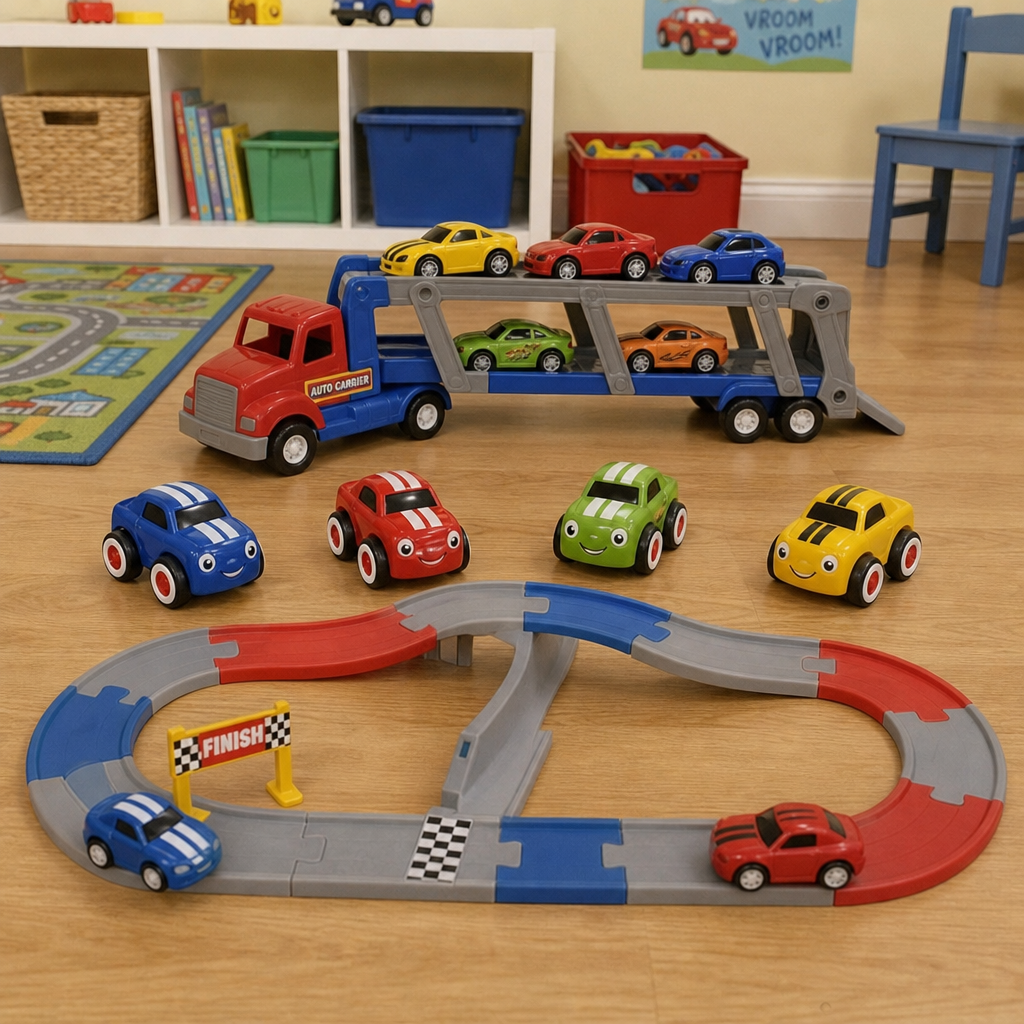
For a child who wants to grab a vehicle and start playing, consider a straightforward push-along car. Look for a shape that is comfortable to hold, wheels that turn freely, and a design without unnecessary fiddly features. Choose the specific product according to its age label rather than assuming a larger-looking toy is suitable for a toddler.
Keep the first play setup simple. Place two suitable cars beside a cardboard garage and invite your child to park them, deliver pretend groceries, or drive home before bedtime. There is no need to introduce a complicated game.
Buying tip: Prioritize easy cleaning and inspect how the wheels and other components are attached. Keep toys with small parts away from children younger than three, including younger siblings who might join the game. (cpsc.gov)
2. Wooden Cars and Car-Carrier Trucks
Choose wooden vehicle toys when you want a hands-on setup centered on loading, unloading, and moving cars around a pretend town. A carrier adds another job to the adventure: the driver must collect the cars before making a delivery.
For a concrete example, Melissa & Doug’s wooden Car Carrier Truck & Cars set includes four cars and a folding ramp with upper and lower levels. Those features provide a useful reference when comparing carrier designs, rather than simply comparing how many pieces come in the box.
Try setting up three destinations and asking your child to deliver a different car to each one. Leave the route and story open so the game remains theirs.
Buying tip: Check the ramp mechanism, overall dimensions, and age guidance. Favor a carrier your child can operate comfortably over an elaborate design that needs constant help.
3. Die-Cast Toy Cars
Consider die-cast toy cars for a child who likes choosing a favorite vehicle, arranging a collection, or creating miniature journeys. Instead of buying a large assortment immediately, start with a few contrasting styles: perhaps a sports car, a pickup, and a familiar-looking family vehicle.
Give the collection a purpose beyond lining up on a shelf. Draw parking spaces on cardboard, create a pretend dealership, or invite your child to choose which vehicle belongs in a story. You can also suggest sorting challenges based on visible details, such as color or body shape.
Buying tip: Decide whether you want everyday play pieces or display-oriented car models. Read the intended-use information and age label carefully, and do not assume that realistic detail makes a model suitable for rough play. For a gift, include a simple storage case rather than extra vehicles that have nowhere to go.
4. Racetrack and Ramp Sets
A racetrack is worth considering for a child who keeps turning books, boxes, and furniture into imaginary roads. Look for a set that suits your available space and offers a manageable first layout.
Mattel’s Hot Wheels Track Builder range includes track-building components, while its instructions warn that some sets are not compatible with every Hot Wheels vehicle. Check the specific set before adding cars.
Begin with one route instead of assembling every possible feature. Invite your child to test a car, adjust the layout, and try again. Treat an unsuccessful run as part of the game rather than something an adult must immediately fix.
Buying tip: Check the assembled footprint, included vehicles, connection system, and storage requirements. A modest track that is easy to rebuild may be a better household fit than a sprawling setup that must stay permanently assembled.
5. Remote Control Cars
Remote control cars are a strong option to explore when your child wants to steer the action rather than follow a fixed track. Before choosing one, read how the controller works and consider whether its layout looks manageable for your child. Make ease of control your first comparison, not advertised speed.
Plan a first challenge: drive forward to a marker, stop, then return to the starting point. Once that feels comfortable, arrange a wide course using suitable soft markers. Keep early goals achievable so practice does not become a frustrating test.
Buying tip: Verify the intended playing surface, battery requirements, charging instructions, and whether controller batteries are included. If you plan to buy two cars for shared play, confirm with the manufacturer that they can operate together. Also decide where the cars and controllers will be stored as a pair.
6. Build-Your-Own Car Kits
For a child who would rather assemble a vehicle than receive it ready-made, explore a car-building kit. LEGO’s vehicle ranges include buildable cars across different themes, providing examples of the variety available within this category. Compare the individual set’s age guidance and construction requirements instead of choosing solely by the finished picture.
Before buying, decide whether the main attraction is following instructions, inventing a design, or displaying the finished model. Those are different experiences, and a kit should fit the one your child actually wants.
Make the first session relaxed. Set out a tray for pieces, agree on a stopping point, and offer help without taking over the build.
Buying tip: Check whether the finished car is intended for active play or display. Review any tools, batteries, or additional materials required before presenting the kit as a ready-to-start gift.
7. Monster Trucks and Off-Road-Style Vehicles
Consider a monster truck for a child whose pretend adventures involve rescue missions, rocky landscapes, and dramatic arrivals. Choose the actual toy for the intended play space; an off-road appearance alone should not be your reason for taking it outdoors.
For indoor play, build an obstacle route from low cardboard shapes and securely positioned cushions. Ask your child to invent a delivery mission or find a route around a pretend road closure. Keep obstacles modest and follow the toy’s instructions rather than encouraging large jumps or furniture launches.
Buying tip: Look at the overall dimensions, weight, wheel construction, and approved surfaces. If you are comparing powered versions, include charging and maintenance in the decision. For a simpler alternative, choose a manually pushed truck and let the landscape—not additional electronics—provide the challenge. Check where it will fit when play is finished, too.
8. Emergency and Community Vehicle Sets
For a child who enjoys inventing characters and situations, consider police cars, fire engines, tow trucks, or other community-themed toy vehicles. Build the choice around a role that interests your child rather than buying the largest mixed collection.
Start with an everyday scenario. A car needs towing to a garage, a delivery must reach a shop, or a road needs closing while pretend repairs take place. Ask, “What happens next?” and let your child decide how the vehicles help.
You can extend the scene with handmade signs and cardboard buildings without purchasing a complete town. Keep the additions easy to pack away so restarting the game is straightforward.
Buying tip: Check whether sound effects can be switched off and whether any accessories require separate storage. If play figures or scenery are included, review their age suitability alongside the vehicles themselves.
9. Parking Garages and Car Playsets
A parking garage is worth considering when your child already has favorite cars but needs somewhere for their adventures to happen. Think of it as a setting rather than simply another vehicle purchase. Compare entryways, ramps, parking spaces, and any moving features against the cars you intend to use.
For a first game, assign each vehicle a parking space and create a small repair area nearby. Add a pretend ticket booth or delivery entrance when your child wants another storyline. Avoid introducing every feature at once if a simpler setup holds their interest.
Buying tip: Measure both the assembled footprint and the storage space. Check how much adult assembly is needed, whether the structure must remain assembled, and how easy it will be to retrieve cars from inside. A playset should be convenient to use on ordinary afternoons, not only on gift day.
10. Electric Ride-On Cars
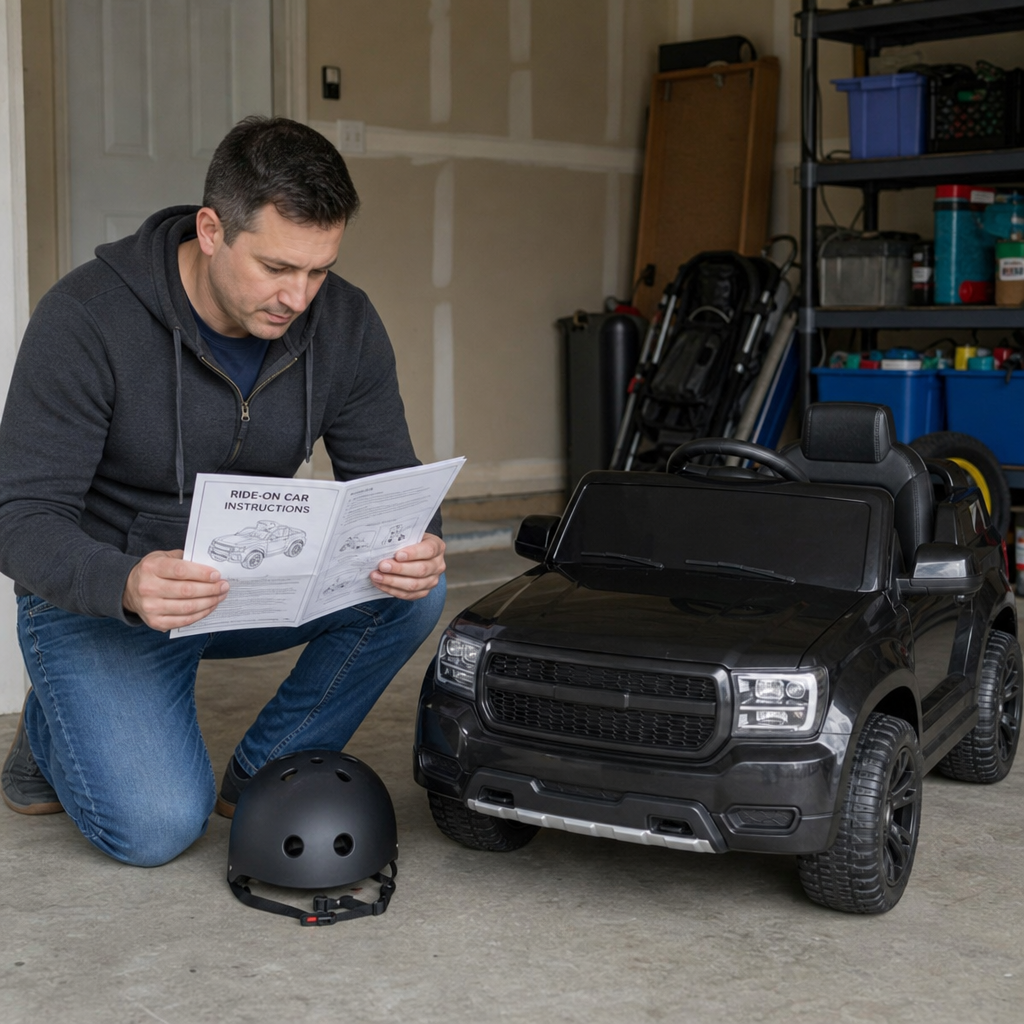
An electric ride-on is worth considering only after checking the specific model’s age guidance, size limits, instructions, and your available riding space. Choose riding toys that match the child’s abilities, and use flat, traffic-free areas away from roads, driveways, stairs, and pools.
If you are searching for an “americas toys for kids 12v electric car,” compare the exact model rather than relying on the search phrase. Request its manual and verify the controls, charging procedure, intended surface, and replacement-parts support. Do not assume that features shown on one listing apply to another.
Buying tip: Plan for supervision, suitable protective equipment, storage, and charging before purchasing. The CPSC recommends helmets and other appropriate safety gear for riding toys.
How can you choose a toy that gets used beyond the first day?
Choose a toy that fits an existing interest and is easy to bring into everyday play. Before buying, picture an ordinary afternoon: where will your child use it, what help will they need, and how will everything be put away? If those answers are awkward, simplify the choice.
Use this final shortlist:
For instant, uncomplicated play: Consider a push-along car or a small selection of age-appropriate vehicles.
For changing stories: Pair a few cars with a carrier, community setting, or garage.
For a focused project: Explore a building kit or a manageable track layout.
For controlled driving: Compare remote-controlled options before committing to a larger ride-on.
For a household with limited storage: Choose one clear play experience rather than several accessory-heavy systems.
Let your child’s preferences guide the final decision, but keep safety guidance and practical limits nonnegotiable. A carefully chosen car toy does not need the most features or the biggest box. It needs to make sense for the child who will play with it.
Frequently Asked Question About Car Toys for Kids
What age is appropriate for car toys?
The appropriate age for car toys varies by the specific product and its features. Always check the manufacturer's age recommendations and safety labels to ensure that the toy is suitable for your child's developmental stage.
Are electric ride-on cars safe for children?
Yes, electric ride-on cars can be safe for children when used under supervision and with appropriate safety gear like helmets. Always follow the manufacturer's guidelines for age limits, weight restrictions, and suitable riding areas.
How can I choose the best car toy for my child?
To choose the best car toy, consider your child's interests, play style, and existing toy collection. Assess the toy's safety features, ease of use, and what additional play opportunities it provides.
What are the benefits of remote control cars?
Remote control cars encourage hand-eye coordination and fine motor skills as children learn to navigate the vehicle. They also provide opportunities for imaginative play and can promote competitive racing games with friends.
How do I maintain and care for die-cast toy cars?
To maintain die-cast toy cars, keep them clean by wiping them with a soft, damp cloth. Store them in a cool, dry place and consider using a display case to prevent dust buildup and damage.