Back To Blog
The future of toy manufacturing is taking shape through digital product development, more deliberate material choices, targeted automation, and safety planning that starts before production.
Together, these approaches offer manufacturers ways to improve how toys are developed and made, although their value depends on the application.
This guide explains the technologies, their trade-offs, and a practical approach to choosing improvements that serve both play and production.
What innovations are changing toy manufacturing?
The most useful innovations connect decisions across the product lifecycle: digital tools support development, material programs address sourcing, automation improves selected factory tasks, and connected-product planning brings privacy into product development.
These are not interchangeable solutions. A manufacturer should evaluate each against a specific problem rather than treat modernization as a single equipment purchase.
For example, a development team might need earlier feedback on a toy’s shape, while a factory needs more reliable label inspection. The first calls for a better prototyping workflow; the second may justify machine vision. Define the problem first, then choose the technology and the evidence needed to judge it.
A useful framework separates innovation into four areas:
Product development: Improve how concepts become testable designs.
Materials: Evaluate sourcing changes without overlooking performance.
Production: Target repetitive work, process variation, and inspection gaps.
Lifecycle responsibility: Plan for maintenance, traceability, privacy, and eventual disposal.
Digital toy design links creativity with production
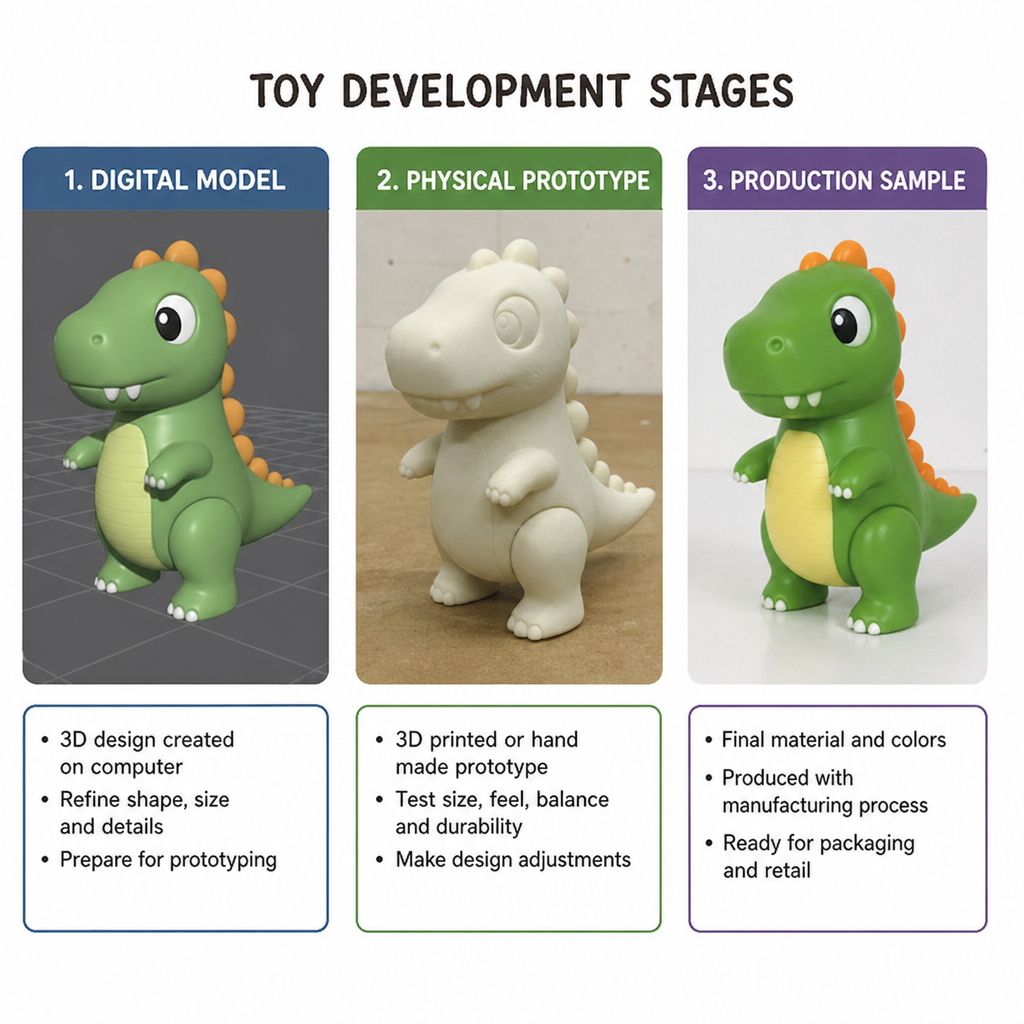
Digital development deserves attention because it can connect product definitions, process planning, and manufacturing data. NIST’s work on additive manufacturing includes artificial intelligence, digital twins, and information models intended to reduce lead times and support correct production from the first part. These are development goals, not a guarantee that any software purchase will produce better toys.
Use prototypes to answer specific questions
A practical toy design workflow should give every prototype a purpose. One version might explore grip and proportions; another might examine how components fit together. Before making either, write down the question it must answer and the conditions under which the team will accept or reject the design.
Consider a stacking toy with a new connector. Ask whether the connection is understandable, whether assembly feels appropriate for the intended user, and whether the proposed geometry can be manufactured consistently. Keep appearance approval separate from decisions about mechanical performance and compliance.
A prototype approval should record what was evaluated, what remains unknown, and which design revision moves forward. This prevents a visually convincing sample from becoming an informal promise that production has not yet demonstrated.
Introduce AI with clear review boundaries
Treat AI-generated concepts and recommendations as proposals requiring review. Ask designers to check play value and originality, engineers to assess production feasibility, and safety specialists to examine foreseeable hazards. Keep a record of the reasoning behind accepted changes rather than relying on an unexplained output.
This review structure gives experimentation boundaries. It also helps teams distinguish an attractive rendering from a design that has been evaluated for actual use.
Material innovation requires more than a greener label
LEGO’s material program illustrates both the opportunity and the complexity of changing feedstocks. The company describes using mass balance, in which suppliers mix renewable and virgin fossil raw materials and attribute certified renewable inputs through an accounting approach. That is different from measuring the renewable content of an individual brick.
For manufacturers evaluating material changes, the practical lesson is to define exactly what a claim means. Do not use recycled content, renewable sourcing, recyclability, and lower environmental impact as interchangeable descriptions. Ask suppliers for evidence supporting the specific statement intended for packaging or marketing.
Build a material qualification plan
Before approving a substitute, create a comparison plan around the toy’s actual requirements. Include dimensions, fit, appearance, durability, cleaning instructions, and applicable chemical testing. Specify acceptance criteria before reviewing results so enthusiasm for a sourcing change does not determine the outcome.
Also ask how the material will be identified and controlled across production batches. Record the approved grade, supplier documentation, processing conditions, and change-notification expectations. These records give purchasing, engineering, and quality teams a shared definition of what has been approved.
For environmental messaging, prefer a narrow, documented statement over an expansive promise. Explain the basis of the claim and avoid implying that a sourcing innovation answers every question about the finished product.
Automation works best around a defined bottleneck
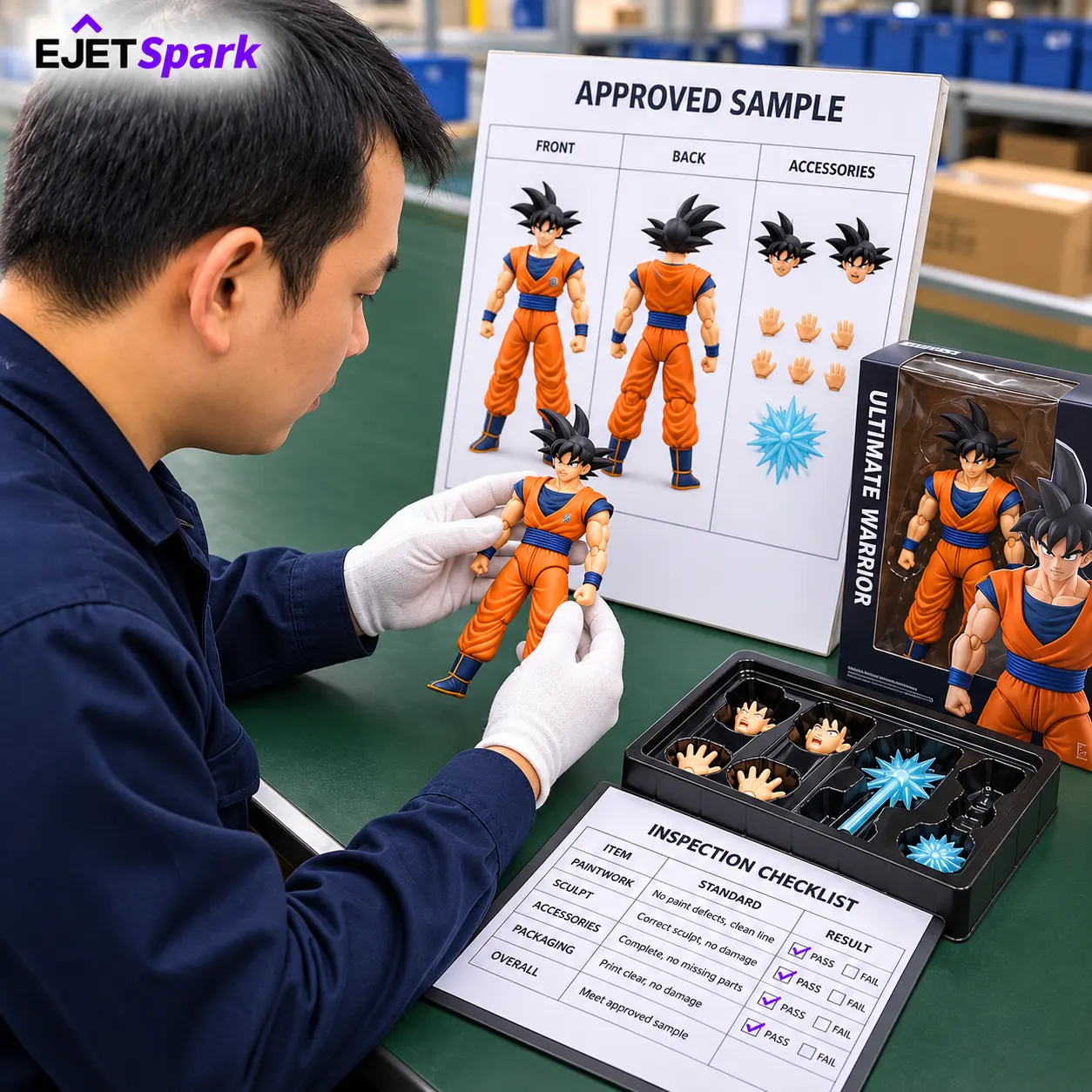
Robotics and automation can support machine loading, material handling, and visual inspection. NIST identifies machine vision applications including checking seals and labels, reading barcodes, and guiding robots. It also recommends assessing operations, building a business case, and measuring results rather than assuming automation is automatically beneficial.
For a toy factory, start by documenting the task as it currently operates. Note the product variations, changeovers, handling requirements, and defects the process must detect. Then compare the proposed automated process against that baseline.
Use a pilot to answer practical questions:
- Can the system handle the full range of approved colors, shapes, and packaging?
- Who adjusts it when a product changes?
- How are rejected items separated and reviewed?
- What happens when equipment stops or an inspection result is uncertain?
- Does the improvement remain worthwhile after setup, maintenance, and training?
Keep the pilot narrow enough that the team can explain why results changed. A successful demonstration on ideal samples should be the beginning of evaluation, not the end.
Digital twins need trustworthy production data
A digital twin connects a physical system with a virtual representation for analysis and monitoring. NIST’s manufacturing research explores digital twins alongside modeling, measurement, and other tools for understanding production systems.
Their relevance to toy manufacturing lies in applying those capabilities to a clearly defined process, not simply creating a detailed factory visualization.
Before considering a twin, establish basic data discipline. Give machines and products consistent identifiers, record process changes, and agree on definitions for downtime and rejected output. Decide who owns the data and who is responsible when records are incomplete.
For an initial project, choose one question: perhaps how a changeover affects output or where a recurring interruption begins. Compare model predictions with observed results. Expand only when the team can explain the differences and use the findings to make a better decision.
How does innovation improve toy safety?
Innovation supports toy safety when it strengthens hazard identification, production controls, and traceability; it does not replace required compliance work. In the United States, children’s toys intended primarily for ages 12 and under generally require applicable third-party testing and a Children’s Product Certificate.
Manufacturers and importers must identify which requirements apply to their products, with specific provisions and exceptions requiring careful review.
Build that review into development rather than reserving it for launch. Ask the responsible team to establish the intended age group, foreseeable use, material requirements, and testing plan before tooling approval. Revisit those decisions when the design or supplier changes.
A practical safety workflow should include:
- Product definition: Document intended users, functions, and foreseeable misuse.
- Design review: Examine connections, accessible components, and other potential hazards.
- Verification planning: Identify applicable requirements with qualified support.
- Production control: Maintain approved specifications and record deviations.
- Release review: Confirm that testing, documentation, labeling, and product configuration align.
Traceability deserves equal attention. CPSC guidance describes tracking-label requirements for children’s products, including identifying information about the manufacturer, production date and locati0n, and batch or run. Plan how those identifiers will connect to factory records before packaging artwork is finalized.
Connected toys bring software into product responsibility
For connected toys, product planning must address information as well as physical components. FTC guidance identifies connected toys as online services that can fall within COPPA when the relevant conditions apply, including child-directed services collecting personal information from children under 13. Connectivity therefore introduces responsibilities beyond the toy’s physical construction.
Before adding an app, microphone, or cloud feature, explain the play benefit in plain language. Then map the information the feature requires, where it goes, and who receives it. Review third-party software as part of that exercise rather than assuming an outside provider has resolved the issue.
Ask the product team to document deletion options, update responsibilities, support expectations, and what remains functional without a connection. Give these decisions the same visibility as materials and assembly specifications. A feature should earn its place through usefulness, not novelty alone.
Pet enrichment offers a useful design comparison
Pet products provide an adjacent example of designing around repeated use and cleaning. Woof describes its LickMat as a silicone product with textured surfaces, suction cups, and a built-in mixing bowl. Its care guidance recommends top-rack dishwasher placement and avoiding the highest heat settings to help maximize product life.
The useful design exercise is to examine the whole routine: preparation, use, cleaning, drying, and storage. Apply that same sequence when reviewing other washable products. Ask whether every feature remains useful once maintenance is included in the assessment.
For sourcing searches such as “american distribution manufacturing woof dog toy lick mat,” separate brand identification, manufacturing origin, and distribution arrangements. Verify each directly rather than treating the combined search phrase as evidence of a business relationship. Keep pet-product evaluation distinct from children’s toy compliance review.
Toy manufacturing jobs need role-specific preparation
Automation can shift human effort toward less repetitive, higher-value activities, according to NIST’s manufacturing guidance. That makes training part of the implementation plan rather than an afterthought. Define who will operate equipment, interpret inspection results, maintain settings, and investigate exceptions before introducing a new system.
For people exploring toy manufacturing jobs, build evidence around the work you want to do. A design portfolio might explain revisions and manufacturing constraints; a production application might emphasize equipment experience, careful documentation, and quality procedures. Use specific examples instead of listing technologies without context.
Someone searching for a “toy manufacturing job in japan” should investigate the actual occupation as well as the industry. Japan’s Ministry of Health, Labour and Welfare describes toy-making work across planning, development, equipment operation, and assembly, with on-the-job learning in production roles.
Evaluate language expectations, locati0n, employment conditions, and authorization requirements against each individual vacancy.
Which innovations should a manufacturer prioritize?
Prioritize the innovation that addresses a documented constraint and can be evaluated through a manageable pilot. Start with a clear objective, establish the current baseline, and decide in advance what would justify expansion. This keeps investment decisions tied to product and operational needs rather than the visibility of a trend.
Use this sequence:
Name the problem: Describe the delay, defect, or unmet user need precisely.
Set a baseline: Record the current process and its limitations.
Choose one intervention: Avoid changing several major variables together.
Define acceptance criteria: Include quality, usability, training, and maintenance.
Review the evidence: Expand, revise, or stop based on results.
Treat toy trends as prompts for investigation, not instructions to follow. The strongest development plan connects a worthwhile play experience with a design the team can produce, verify, and support. Progress should be visible in those outcomes—not merely in the number of new technologies on the factory floor.
Frequently Asked Questions About Toy Manufacturing
What are the key innovations currently shaping toy manufacturing?
Innovations in toy manufacturing include digital product development, material programs, targeted automation, and lifecycle responsibility planning.
How does digital toy design enhance the manufacturing process?
Digital toy design connects product definitions, process planning, and manufacturing data, leading to reduced lead times and improved production accuracy from the very first part.
What role does automation play in toy manufacturing?
Automation streamlines repetitive tasks, improves process variation, and enhances inspection accuracy, enabling manufacturers to allocate human resources to higher-value activities.
How can manufacturers ensure toy safety during production?
Manufacturers should embed safety reviews within the development process, documenting intended users and foreseeable misuse and conducting thorough testing to meet regulatory requirements.
What qualifications should one have for a job in toy manufacturing?
Candidates should focus on role-specific skills, such as design experience for creative roles or equipment operation and quality control knowledge for production positions.