Back To Blog
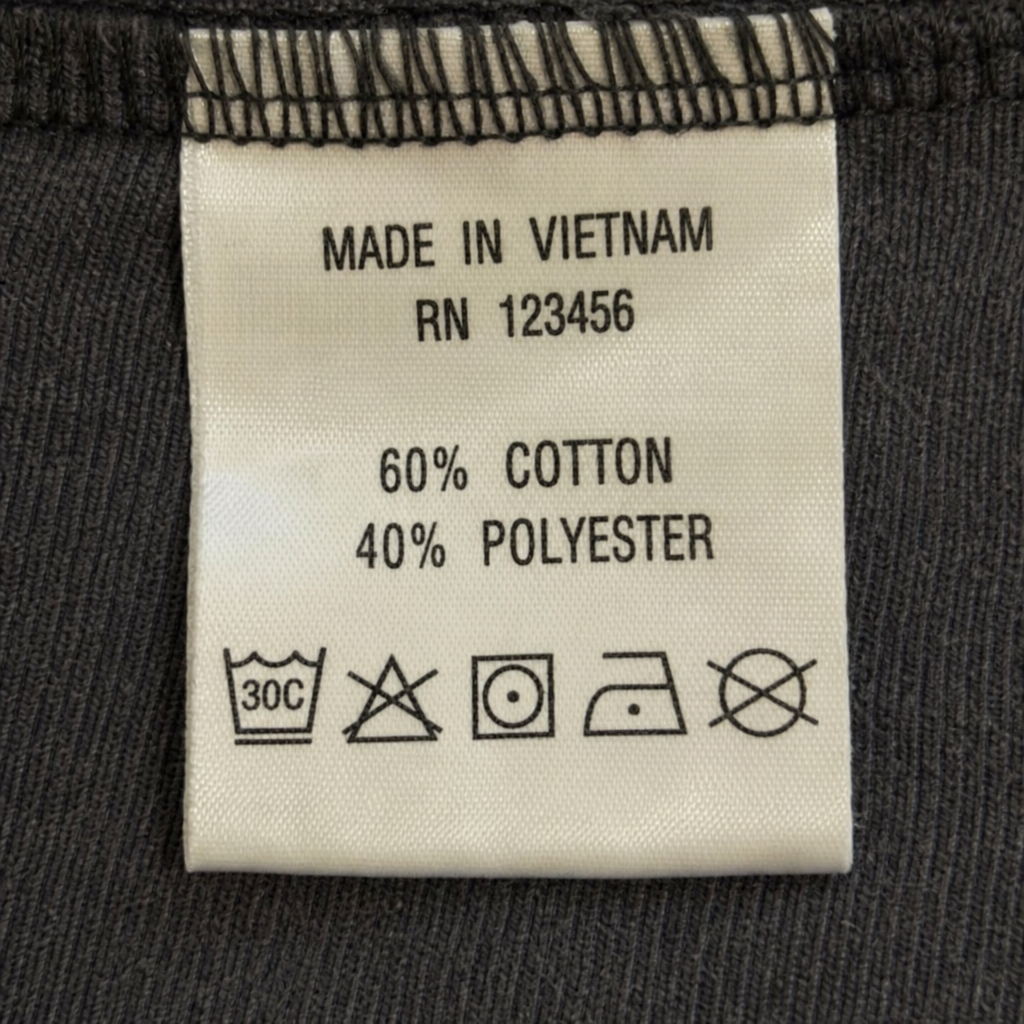
“Made in China” identifies a product’s country of origin; it is not a quality grade, safety certification, or promise about durability.
For U.S. buyers, understanding what “Made in China” means for quality, labels and brands starts with separating origin information from evidence about the product itself.
This article explains how to read those labels, assess clothing and furniture, and recognize the information a responsible brand should provide.
Does Made in China mean bad quality?
No. A country-of-origin label does not establish whether an item is well made or poorly made. U.S. origin-marking requirements identify where goods originate under applicable rules, while product inspections and performance tests examine separate questions about construction, function, and conformity to requirements.
Treating the label as a verdict confuses those different purposes.
If your starting question is “Are things made in China bad quality?”, replace it with a more useful one: “What evidence supports this particular product?” Ask for material descriptions, clear specifications, relevant testing, and written support terms. Those requests give the seller something concrete to answer instead of inviting vague reassurance.
Consider two hypothetical chairs carrying the same origin label. One listing explains its construction, intended use, and performance testing; the other offers only photographs and the word “premium.” You still need to assess both, but the first gives you a stronger basis for investigation. The shared country label does not erase that difference in available evidence.
Read origin, brand, and quality claims separately
A product label can contain several messages that look connected but serve different purposes. A company name identifies a business; a locati0n may form part of its address or branding; an origin statement identifies the product’s origin.
U.S. marking regulations specifically address situations where U.S. place names appear on imported goods, helping prevent confusion about where an article was made.
For many imported products involving multiple countries, origin depends on where a substantial transformation occurred. That is a legal determination, not simply a description of where a parcel shipped from.
Some categories use different or additional rules, so businesses should not assume that final packing or assembly automatically establishes origin.
Keep these distinctions in mind when reading packaging:
|
Label information |
Useful interpretation |
What to investigate separately |
|---|---|---|
|
“Made in China” |
Country-of-origin information |
Materials, workmanship, and performance |
|
Brand name or U.S. address |
Business identity or locati0n information |
The actual manufacturing origin |
|
“Fine quality” or “premium” |
A promotional description |
The specific evidence supporting it |
|
A testing or certification claim |
A claim about defined requirements |
Its issuer, scope, and product coverage |
Read the whole label rather than selecting whichever phrase sounds most reassuring. A domestic business address does not turn an imported product into a domestically manufactured one. Likewise, an origin statement does not substantiate a separate performance claim.
Quality control turns expectations into checks
For brands sourcing overseas, quality control in China should begin with a definition of an acceptable product. “Good stitching” or “strong construction” leaves too much open to interpretation. A more useful purchasing brief specifies the materials, dimensions, functions, appearance requirements, and defects that would cause rejection.
Inspection can occur at different stages rather than only after production finishes. SGS identifies initial production checks, during-production checks, final random inspections, and loading supervision among its inspection services. These checkpoints address different parts of the process; none should be mistaken for a universal guarantee about every unit.
A practical sourcing plan should connect each requirement to an action:
Define the product. Record the agreed materials, measurements, finish, packaging, and labeling requirements before placing the order.
Approve a reference sample. Keep an identified sample and written specifications so later comparisons have a clear reference point.
Plan production checks. Decide what needs checking early, during manufacture, and before shipment rather than leaving inspection undefined.
Arrange relevant testing. Ask which safety or performance requirements apply to the product and destination market.
Document corrective action. Establish who decides whether a failed result requires rework, replacement, further testing, or rejection.
For buyers, the takeaway is to ask how requirements are verified, not merely whether a supplier says it “does quality control.” For brands, request inspection records that identify what was checked and the results. SGS describes inspections against regulatory, standards-based, and buyer-specific requirements, making the agreed inspection scope important.
Furniture made in China: quality beyond the finish
When assessing furniture made in China, quality should be investigated through construction and performance evidence rather than appearance alone. Furniture testing can evaluate stability, structural integrity, durability, material properties, and surface quality.
Those are distinct attributes, which is why a polished photograph cannot answer every question about a chair, cabinet, or table.
Use the product’s intended job to guide your questions. For a desk, ask about working dimensions, permitted loads, assembly, and replacement hardware. For seating, request information about intended use and applicable strength or durability testing. Furniture performance testing covers components and materials as well as finished products.
Before ordering, request:
Specific material descriptions: Ask which parts use the listed materials rather than accepting a broad phrase such as “wood construction.”
Construction details: Request photographs of joints, underside supports, drawer hardware, and attachment points.
Use limitations: Confirm whether the item is intended for residential, commercial, indoor, or outdoor use.
Service information: Read assembly instructions, return conditions, replacement-part availability, and warranty exclusions.
Keep safety separate from cosmetic quality. In the United States, clothing storage units within the scope of the federal rule must meet applicable stability requirements; including an anti-tip kit does not replace required stability testing. CPSC states that covered units must meet the stability tests without the kit installed. Ask the seller about the applicable requirements and follow the product’s anchoring instructions.
Are clothes made in China good quality?
Clothes made in China cannot be graded from the origin label alone. To evaluate a garment, examine its disclosed fiber content, construction, fit, care needs, and any relevant performance evidence.
Textile testing separately addresses characteristics such as strength, abrasion resistance, pilling, dimensional stability, and colorfastness—qualities the country name does not measure.
Start with the practical question of how you will wear and maintain it. For an everyday shirt, ask about measurements and care requirements before focusing on marketing adjectives. For workwear or frequently washed clothing, request information relevant to repeated use rather than assuming that a luxurious feel proves durability.
During an in-person inspection, check for skipped stitches, visibly open seams, uneven hems, poorly secured buttons, and zippers that catch. Compare the garment’s measurements with clothing you already wear comfortably. Treat this as a screening exercise, not proof that the item will perform well after months of use.
For most textile and wool products sold in the United States, federal labeling requirements include fiber content, country of origin, and the identity of the manufacturer or another responsible business. Clothing care instructions are addressed by the FTC’s Care Labeling Rule. Read these disclosures together instead of letting the origin line dominate your assessment.
If a brand claims that clothing resists fading or shrinkage, ask how it supports that claim. Laboratory testing can evaluate color changes, dye transfer, and dimensional stability under specified conditions. The useful question is whether the evidence matches the garment and performance claim you are considering.
Interpreting “Ardco Fine Quality Dallas Made in China”
If you are researching the phrase “ardco fine quality dallas made in china,” begin with photographs of the actual item and every mark on it. Read “Ardco,” “Fine Quality,” “Dallas,” and “Made in China” as separate pieces of information to investigate. Do not assume that the wording alone establishes the object’s age, original factory, authenticity, rarity, or resale value.
The distinction matters because a U.S. place name and a foreign origin statement can appear on the same imported article. U.S. regulations address this combination, including place names used within trademarks or trade names. The presence of “Dallas” therefore should not be read by itself as evidence of U.S. manufacture.
For identification, record the mark exactly, including punctuation, symbols, numbers, and whether it is printed, impressed, or attached as a sticker. Photograph the entire object, its underside, and any damage or repairs. Seek documentation tied to the specific item, such as an original catalog or packaging, before accepting a seller’s attribution. Without that evidence, keep conclusions about its history provisional.
Brands should make quality claims easy to investigate
For a brand, explaining what Made in China means should not become an attempt to talk around the origin label. Instead, give customers information they can use: accurate materials, dimensions, intended uses, care instructions, and clear support terms. Present origin information plainly alongside those details.
Use performance language carefully. Testing programs can substantiate defined attributes, but a claim about one characteristic should not be presented as proof of every aspect of quality. Intertek’s performance programs, for example, distinguish particular attributes and testing requirements rather than treating “high performance” as an unlimited promise.
A useful product page should answer three practical concerns: what the customer is buying, what evidence supports important claims, and what happens if something goes wrong. Provide a route for questions before purchase and clear instructions afterward. This approach makes the buying decision less dependent on either country stereotypes or brand prestige.
How can buyers judge a product before purchasing?
Judge a product by combining its specifications, relevant evidence, seller transparency, and support terms. Use the origin label as one piece of identifying information, not as a substitute for that investigation. For safety concerns, also search official product records: the CPSC’s public database supports searches by brand, company, product, and model.
Before paying, work through this checklist:
Identify the exact item. Save its model number, listing, specifications, and seller details.
Request missing information. Ask a focused question about the material, construction, performance claim, or intended use that matters most.
Check supporting evidence. Look for documentation matching the product, not an unexplained badge or unrelated report.
Investigate safety notices. Search official recalls and compare identifying details carefully; similar-looking products are not necessarily the same model.
Read the remedy. Confirm return costs, deadlines, exclusions, and who handles defects before deciding the price represents good value.
Set your evidence threshold to match the consequences of a poor choice. You may accept uncertainty about a decorative accessory that you would not accept about furniture used daily. If a seller cannot answer a basic, relevant question, consider pausing the purchase rather than filling the gap with assumptions.
The takeaway: evaluate the product, not the stereotype
Made in China means origin information, not a complete account of quality. The better buying habit is to move from the label to specific questions about materials, construction, testing, and support. For shoppers and brands alike, clear evidence is more useful than either automatic suspicion or an unsupported promise of excellence.
Frequently Asked Questions About What Made in China Means for Quality Labels and Brands
Does 'Made in China' guarantee low quality?
No, the label merely indicates the country of origin and does not determine the quality of the product. Quality depends on various factors, including materials and manufacturing processes.
What should I look for when assessing furniture made in China?
Investigate construction details, stability, durability, and specific material descriptions rather than focusing solely on appearance.
Are clothes made in China good quality?
It varies by product; to determine the quality of clothing, examine fiber content, construction, fit, and any relevant performance evidence, rather than just the country label.
What does quality control in China involve?
Quality control includes defining product specifications, conducting inspections at various production stages, and verifying compliance with relevant performance standards.
How can I evaluate a product before purchasing it?
Check specifications, request supporting evidence from the seller, investigate safety records, and read reviews to ensure the product meets your quality expectations.