Back To Blog
A crochet flower kit brings together the materials and instructions needed to turn yarn into decorative flowers. From a single daisy to a bouquet of roses, tulips, and sunflowers, these kits offer a practical starting point for creating handmade gifts and home decorations.
The right kit should do more than provide attractive yarn. It should match our experience level, explain each technique clearly, and include enough material to complete the advertised project. Before choosing a kit, we should examine the flower patterns, yarn specifications, tools, assembly requirements, and tutorial format.
This guide covers how to compare crochet flower kits for beginners, prepare for a first project, and create a finished arrangement with neat petals, secure stems, and balanced proportions.
What Is a Crochet Flower Kit?
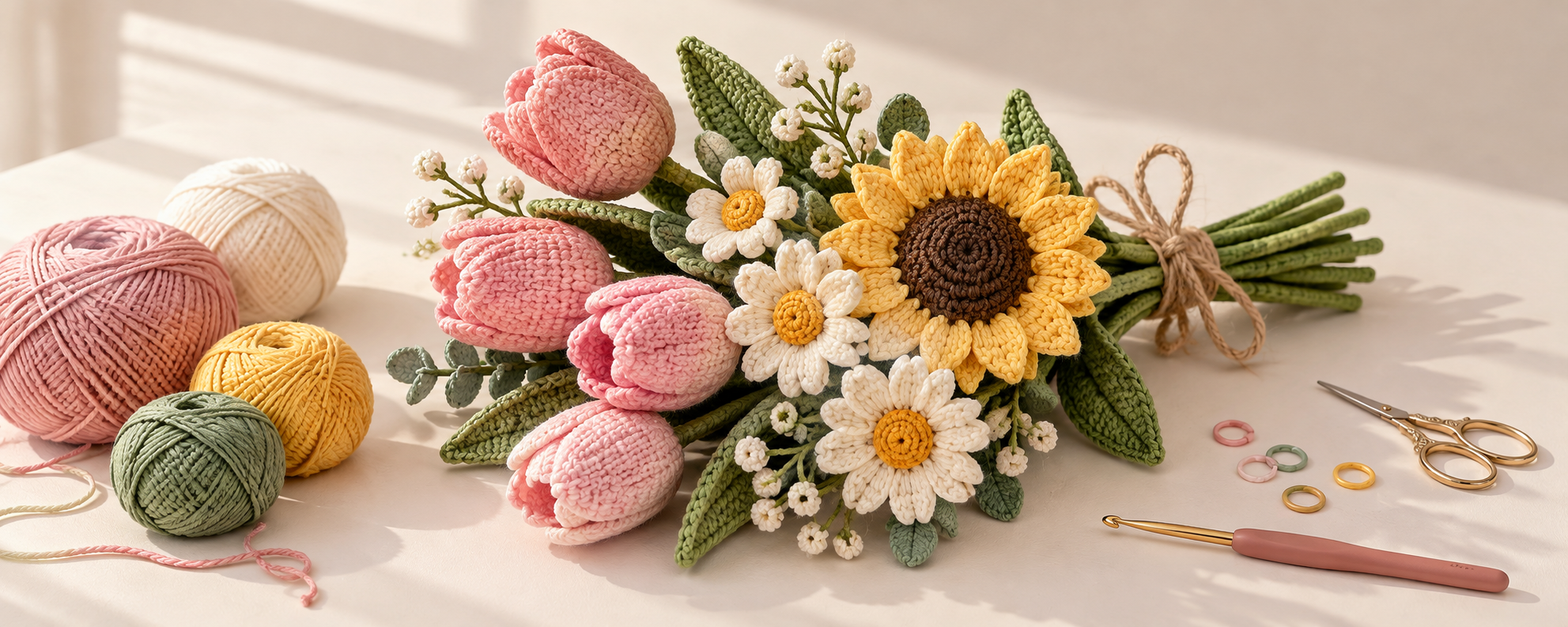
A crochet flower kit is a packaged craft project containing yarn, flower patterns, and selected tools or accessories. We crochet the individual components—such as petals, centers, leaves, and sepals—then assemble them into finished flowers.
However, kit contents differ considerably. A flower accessory kit may focus on small decorative blooms, while a crochet flower bouquet kit may include stems, wire, and wrapping materials.
For example, Annie’s botanical starter kit lists yarn, a hook, an embroidery needle, and a physical instruction book, while Hookok’s daisy kit lists cotton yarn, stems, and other accessories. The contents list matters more than the product name.
We should also distinguish between three products that can appear in similar search results:
- A complete crochet kit: Materials, instructions, and specified tools.
- A materials pack: Yarn and accessories, potentially without a hook or pattern.
- A digital pattern: Instructions only, without physical supplies.
Checking these differences helps prevent ordering a pattern when we expect a ready-to-use craft kit.
What Should a Crochet Flower Kit Include?
A useful kit provides the materials required for its particular design. Not every flower needs stuffing, wire, or adhesive, so we should evaluate completeness against the actual pattern.
| Component | Purpose | What to check |
|---|---|---|
| Yarn | Creates petals, centers, leaves, and stem coverings | Fiber, thickness, colors, and quantity |
| Crochet hook | Forms the stitches | Stated size and compatibility with the pattern |
| Written pattern | Explains the project sequence | Clear terminology, stitch counts, and assembly instructions |
| Video tutorials | Demonstrate techniques | Close-up views and coverage of the actual project |
| Yarn needle | Joins pieces and secures loose ends | Suitable eye size for the supplied yarn |
| Stitch markers | Mark rounds or important stitches | Easy to open and close |
| Stems or floral wire | Support upright flowers | Appropriate length and clear attachment instructions |
| Stuffing | Shapes selected flower heads | Included when required by the pattern |
| Floral tape | Covers and finishes stems | Included if used in the assembly method |
| Wrapping materials | Present a finished bouquet | Listed separately from essential crochet supplies |
Scissors, wire cutters, and adhesive equipment may require separate purchase. If a kit includes glue sticks, we should verify whether a compatible glue gun is needed.
How to Choose a Crochet Flower Kit for Beginners
Look for Instructions That Teach the Starting Steps
A beginner kit should explain how to hold the yarn, make the starting loop, insert the hook, and identify stitches. A pattern that immediately asks us to work several stitches into a magic ring may be difficult if it never demonstrates that technique.
We should look for:
- A clear explanation of basic stitches.
- Photos that show where the hook enters.
- Stitch counts at the end of rows or rounds.
- Instructions for fastening off and weaving in ends.
- A complete flower assembly demonstration.
A “beginner” label is useful only when the teaching supports a complete beginner.
Choose a Manageable First Project
For a first attempt, we recommend evaluating a simple flower before selecting a large mixed bouquet. One flower allows us to practice tension, stitch counting, and finishing without managing several patterns at once.
Flower names alone do not determine difficulty. A flat rose motif can be simpler than a highly detailed daisy with individually wired petals. We should inspect the construction method and required techniques.
Check the Yarn’s Visibility
Smooth yarn with clearly visible stitches makes it easier to identify mistakes. Very dark, fluffy, or loosely constructed yarn can make stitch placement harder to see.
We should also check yarn thickness. Fine yarn may produce delicate petals, but it requires more precise handling. A product photograph can make a small, intricate flower look much larger than it is, so finished dimensions deserve careful attention.
Confirm US or UK Crochet Terminology
US and UK crochet patterns use different names for several equivalent stitches. Following the wrong terminology can change the flower’s size and shape.
| US term | Equivalent UK term |
|---|---|
| Single crochet | Double crochet |
| Half double crochet | Half treble crochet |
| Double crochet | Treble crochet |
| Treble crochet | Double treble crochet |
We should identify the pattern’s terminology before beginning and keep its abbreviation guide nearby.
Popular Types of Crochet Flower Kits
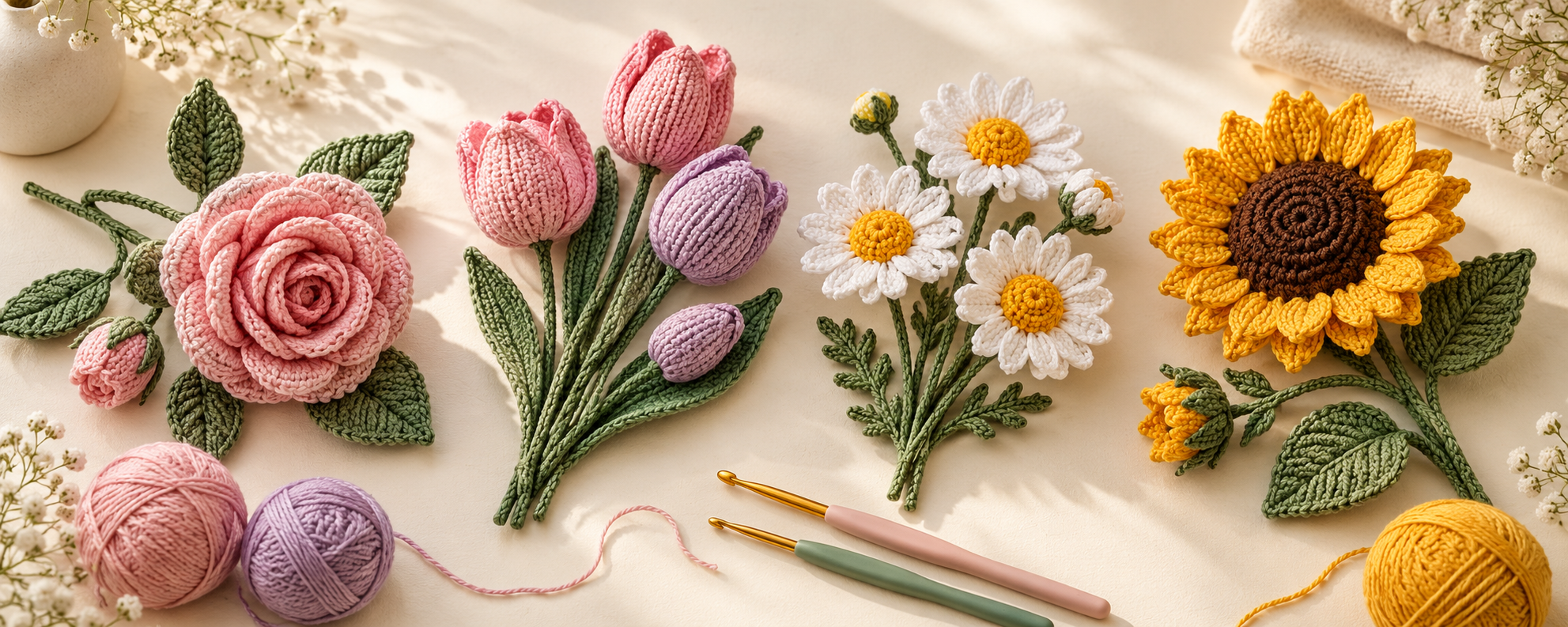
Crochet Daisy Kits
Daisy designs often use a contrasting center surrounded by repeated petals. This repetition can provide useful practice, especially when the pattern uses a small number of stitch types.
Before choosing a daisy kit, we should check whether the petals are worked continuously around the center or made separately. Separate petals introduce additional joining and finishing work.
Crochet Tulip Kits
Tulip projects commonly involve a shaped flower head, stem, and leaf. Some designs use stuffing to support the bloom, while others rely on the structure of the crocheted fabric.
A good tulip tutorial should clearly show how the top closes and how the flower head attaches to the stem.
Crochet Sunflower Kits
Sunflowers combine a prominent center with surrounding petals. They provide opportunities to practice working in rounds, changing colors, and repeating consistent shapes.
We should inspect the back of the flower as carefully as the front. A well-explained backing or sepal helps create a tidy transition between the bloom and stem.
Crochet Rose Kits
Crochet roses may be formed by rolling a crocheted strip or assembling individual petals. These methods create different working experiences.
With a rolled rose, the final appearance depends partly on how we arrange and secure the strip. Individual-petal roses require careful placement to create a balanced bloom. We should select the method that matches our patience and experience.
Mixed Crochet Bouquet Kits
Mixed bouquets offer variety but require more organization. Different flower heads may need separate patterns, colors, and assembly techniques.
We recommend sorting the materials by flower type and completing one sample bloom before making repeated components.
Cotton vs. Acrylic Yarn for Crochet Flowers
Yarn choice influences stitch definition, texture, and the way petals hold their shape.
Cotton yarn often creates clearly defined stitches and a relatively firm fabric. It can suit flowers where visible petal edges and surface detail are important.
Acrylic yarn can create lightweight blooms and offers many color options. Its softness and structure vary between products, so the fiber name alone does not tell us how a finished flower will behave.
We should consider the complete combination of:
- Fiber content.
- Yarn thickness.
- Yarn twist.
- Hook size.
- Stitch pattern.
- Our working tension.
For a first project, following the supplied yarn and hook specifications is usually more predictable than substituting materials immediately.
How to Make Flowers With a Crochet Kit
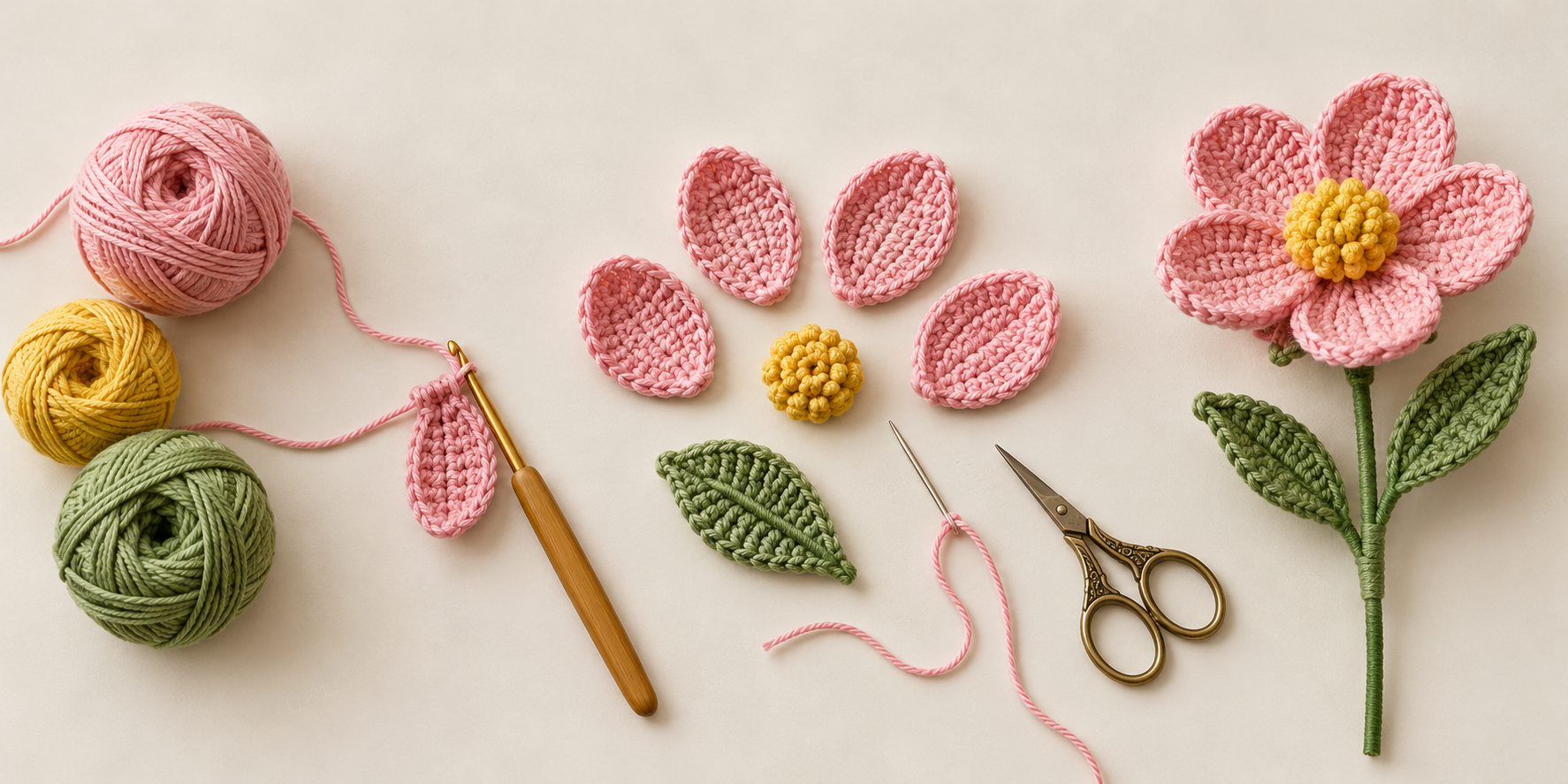
1. Read the Entire Pattern
Before crocheting, we should review the complete project, including assembly. This reveals whether we need to leave long yarn tails for sewing, prepare wire supports, or make several matching pieces.
2. Sort and Label the Materials
We can separate the petal colors, center colors, leaf yarn, and stem supplies. If similar shades appear in the kit, labeling them helps avoid using the wrong yarn.
We should keep the packaging until the project is complete because it may contain material specifications or tutorial access details.
3. Practice the Required Stitches
A small practice piece helps us become comfortable with the hook and yarn. We can focus on making consistent stitches without pulling each loop excessively tight.
The goal is a fabric that matches the project’s needs while allowing the hook to move comfortably.
4. Crochet One Complete Flower Head
Finishing one flower head first allows us to assess the pattern and our tension. If its shape seems incorrect, we can compare stitch counts and construction steps before repeating the same issue across an entire bouquet.
5. Make Leaves and Supporting Pieces
Leaves, sepals, and backing pieces contribute to the finished appearance. We should follow their dimensions and attachment positions carefully rather than treating them as optional decoration.
6. Assemble and Secure the Stem
We should use the attachment method specified in the pattern. Sewing, wrapping, and adhesive serve different purposes and should not be substituted without considering the design.
Where wire is used, we should follow the instructions for covering and securing its ends.
7. Arrange the Bouquet
A balanced arrangement usually benefits from varied flower heights and enough space to see each bloom. We can position larger flowers first, then add smaller flowers and leaves.
Before trimming stems or applying final wrapping, we should view the bouquet from the front, sides, and above.
Common Crochet Flower Problems and How to Fix Them
Petals Look Uneven
Uneven petals can result from inconsistent stitch counts or tension. We should count each repeated section and compare it with the pattern before fastening off.
The Flower Curls Unexpectedly
Some patterns intentionally create curves. If our flower curls differently from the reference, we should check stitch placement, increases, hook size, and tension before attempting to flatten it.
Stuffing Shows Through the Stitches
Visible stuffing may indicate loose stitches or excessive filling. We should first check whether our technique and materials match the pattern, then adjust the filling gradually.
The Flower Head Droops
Drooping can result from a heavy bloom, insufficient stem support, or a loose connection. We should inspect the attachment point and use the support specified for that flower.
Yarn Runs Out Before Completion
Before starting, we should confirm the kit’s intended quantity and avoid cutting unnecessarily long tails. A different hook size or looser tension can also change yarn consumption.
If a shortage occurs, we should record the yarn specifications before seeking a replacement.
Crochet Flower Kit vs. Buying Supplies Separately
A kit offers convenience because the materials are selected for a particular project. Buying supplies separately gives us more control over color, fiber, hook preference, and bouquet size.
| Consideration | Crochet flower kit | Separate supplies |
|---|---|---|
| Preparation | Materials selected around a project | Requires matching a pattern with materials |
| Color choice | Limited to available options | Greater flexibility |
| Instructions | May include project-specific tutorials | Pattern and teaching resources chosen separately |
| Tools | May include tools we already own | We purchase only what we need |
| Customization | Depends on spare materials and pattern | Easier to plan custom quantities |
| First-project convenience | Useful when contents are complete | Requires more preparation |
We should compare the cost of completing the project, including missing tools and materials, rather than comparing package prices alone.
Handmade Gift Ideas Using Crochet Flowers
A completed crochet flower project can become a personal gift without requiring a large bouquet.
We can create:
- A single wrapped flower with a handwritten message.
- A small desk arrangement in a suitable vase.
- A coordinated bouquet using the recipient’s preferred colors.
- Decorative flower appliqués for bags or accessories, where the pattern supports that use.
- A framed floral arrangement with securely attached components.
For a gift with a deadline, we recommend allowing time for practice and assembly. The finishing stage can require as much attention as the crocheting itself.
How to Care for Crochet Flowers
We should keep crochet flowers away from prolonged direct sunlight and conditions that may damage their materials. Dust can be removed gently with a soft brush.
Washing depends on the complete assembled flower, including its yarn, wire, adhesive, stuffing, and decorations. A washable yarn label does not automatically mean the finished bouquet can be soaked.
We should follow the kit’s care instructions and support flower heads during storage to avoid crushing the petals.
Frequently Asked Questions About Crochet Flower Kits
Can We Use a Crochet Flower Kit Without Previous Experience?
Yes, provided the kit teaches the required techniques from the beginning. We should prioritize complete tutorials and a manageable project over the number of flowers advertised.
Does Every Crochet Flower Kit Include a Hook?
No. Some packages contain only materials or patterns. We should verify the contents list and the required hook size before ordering.
How Long Does a Crochet Flower Kit Take to Finish?
Completion time depends on experience, flower size, pattern complexity, and assembly. A realistic estimate should include learning stitches, correcting mistakes, sewing components, and arranging the finished flowers.
Do Crochet Flowers Require Glue?
Some designs use glue during stem assembly; others use sewing or wrapping methods. We should follow the chosen pattern and confirm any equipment requirements before beginning.
Can We Change the Colors in a Kit?
Yes, but replacement yarn should be compatible with the pattern. Changing yarn thickness or structure may affect petal size, shaping, and material requirements.
Are Crochet Flower Kits Suitable for Children?
Suitability depends on the stated age guidance, tools, and assembly process. Needles, wire, small parts, and heated adhesive equipment require appropriate supervision.
What Should We Check Before Buying a Crochet Flower Kit?
We should confirm the finished flower quantity, dimensions, skill requirements, yarn specifications, included tools, tutorial access, and assembly supplies. A kit with clear instructions and suitable materials gives us a stronger foundation for creating neatly finished handmade flowers.