Back To Blog
Buying wholesale collectible toys from China starts with choosing a focused product range, verifying suppliers, approving samples, and confirming compliance before committing to inventory.
This article explains how to compare offers, protect product quality, and calculate a realistic landed cost. It focuses on practical purchasing decisions, with U.S. import considerations for businesses selling to American customers.
How do you buy collectible toys wholesale from China?
Use a staged sourcing process: define your products, shortlist suppliers, verify their identity and selling rights, evaluate samples, confirm import requirements, and place a controlled first order.
Write specifications and acceptance criteria into the purchase agreement, then inspect the goods before shipment. Alibaba’s buyer guidance similarly recommends detailed purchase orders, samples, and production inspections when sourcing through its platform.
Avoid starting with a large catalog and a price negotiation. First decide who will buy your products, which sales channels you will use, and how much inventory you can afford to hold. Those answers should shape your supplier search—not the other way around.
Use these purchasing checkpoints:
Define the assortment: Specify product type, intended audience, materials, packaging, and target cost.
Verify the source: Check business identity, manufacturing arrangements, and brand authorization where relevant.
Approve the product: Review samples and establish measurable quality requirements.
Confirm compliance: Identify testing, labeling, documentation, and customs obligations.
Control the shipment: Agree on payment milestones, inspections, freight responsibilities, and remedies.
Product categories: narrow the assortment before sourcing
Start with a product brief rather than a broad request for “Collectible Toys.” For example, specify whether you want articulated figures, display models, designer-style figures, miniature vehicles, or sealed blind-box assortments. Then describe the dimensions, finish, accessories, and packaging you expect.
For each category, build purchasing requirements around what you need to evaluate:
Articulated figures: Specify joint movement, accessory counts, paint boundaries, and display stability.
Display figures: Define surface finish, assembly alignment, base attachment, and protective packing.
Miniature vehicles: Request checks for wheel movement, loose components, paint finish, and scale consistency.
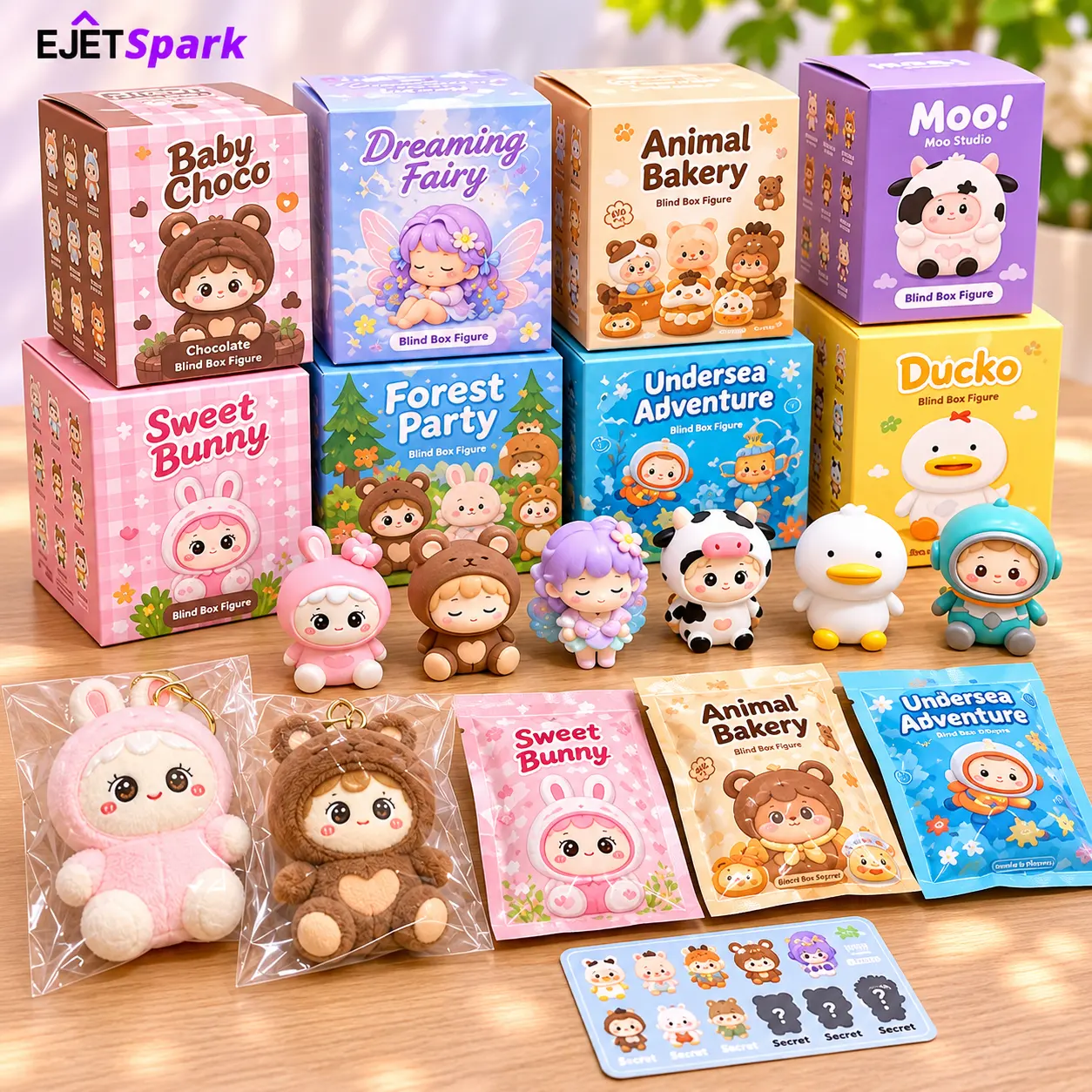
Blind-box products: Confirm case composition, sealing requirements, assortment rules, and whether any distribution claims are supported.
If you plan to sell collectible toys online, decide how you will describe box condition and authenticity. Set standards for dents, scratches, torn seals, and missing inserts before ordering. That gives your supplier and inspection provider something concrete to assess.
Keep the first assortment focused. A smaller selection lets you evaluate demand, customer feedback, and supplier performance before expanding into unrelated categories.
Where should you look for China toy suppliers?
Look for China toy suppliers through B2B marketplaces, manufacturer contacts, authorized distributors, trade events, or a sourcing agent working to a written brief.
Evaluate each candidate against the same requirements rather than assuming one sourcing channel guarantees suitability. If using Alibaba, review its order-protection rules and keep the specifications, communications, and payment within the required platform process.
During your China toy wholesale search, ask every candidate to identify its role. Are you dealing with the manufacturer, a trading company, a distributor, or an agent? Request the production locati0n and clarify who handles quality problems, documentation, and replacement goods.
Do not reject an intermediary automatically. Instead, compare the complete offer: communication, product access, order flexibility, inspection cooperation, and total cost. Ask an agent to disclose fees and any supplier-paid compensation before you appoint them.
For a wholesale toy market visit, prepare an identical inquiry sheet for each vendor. Record product codes, packaging details, minimum quantities, and contact information together. Before traveling, arrange meetings with shortlisted businesses so the visit supports defined purchasing decisions rather than impulse buying.
Verify authenticity and the business behind the offer
Treat business verification and product authorization as separate tasks. Request the supplier’s registered company name, business registration details, operating address, and invoice information. Ask for explanations when the contracting company, factory, and payment beneficiary differ, and resolve discrepancies before paying.
For branded characters or recognizable designs, request evidence showing who owns the rights and how the supplier is authorized to manufacture or distribute the goods.
Confirm whether the authorization covers your destination market and intended sales channel. CBP warns that trademark and copyright distribution restrictions can affect whether goods may enter the United States.
Use independent confirmation where possible rather than relying only on documents forwarded by a salesperson. Ask the rights holder or authorized distributor to verify the relationship when branded stock is central to your business.
Pause the order if a supplier refuses to explain authorization, proposes misleading product descriptions, or requests unexplained payment changes. Do not treat “factory surplus” or “same factory” language as a substitute for evidence. If the ownership or distribution rights remain unclear, choose another product or seek qualified advice.
Compare quotations using the same buying brief
Send each shortlisted supplier one consistent request for quotation. Include product references, materials, dimensions, quantity by design, packaging requirements, destination, and requested delivery window. Ask suppliers to identify exclusions rather than assuming every quote covers the same work.
Your quotation checklist should include:
Minimum order quantity: Clarify whether it applies per order, design, color, or packaging version.
Price tiers: Request comparable prices at quantities you could realistically purchase.
Development charges: Separate samples, tooling, artwork, and packaging setup from unit prices.
Schedule: Distinguish sample approval, production completion, and shipment readiness.
Documentation: Identify which reports and supporting records the supplier will provide.
Commercial terms: Specify the named delivery locati0n, payment milestones, and defect remedies.
For custom designs, document ownership of molds, artwork, and production files. Specify whether substitutions require written approval and what happens if the supplier misses an agreed milestone.
Choose the offer that fits your operating requirements, not simply the lowest quoted unit price. Keep a written record of every clarification so the final purchase order reflects the actual agreement.
Build quality checks around an approved sample
Request samples before placing the production order, and keep an approved reference sample. Attach photographs and written specifications to the order so acceptance does not depend on vague descriptions such as “premium quality.” Alibaba’s sourcing guidance recommends requesting samples and documenting purchase requirements before ordering.
Separate visual expectations from functional requirements. Specify acceptable paint boundaries, accessory fit, packaging condition, and assembly alignment. For movable products, describe the movements or functions the inspector should check.
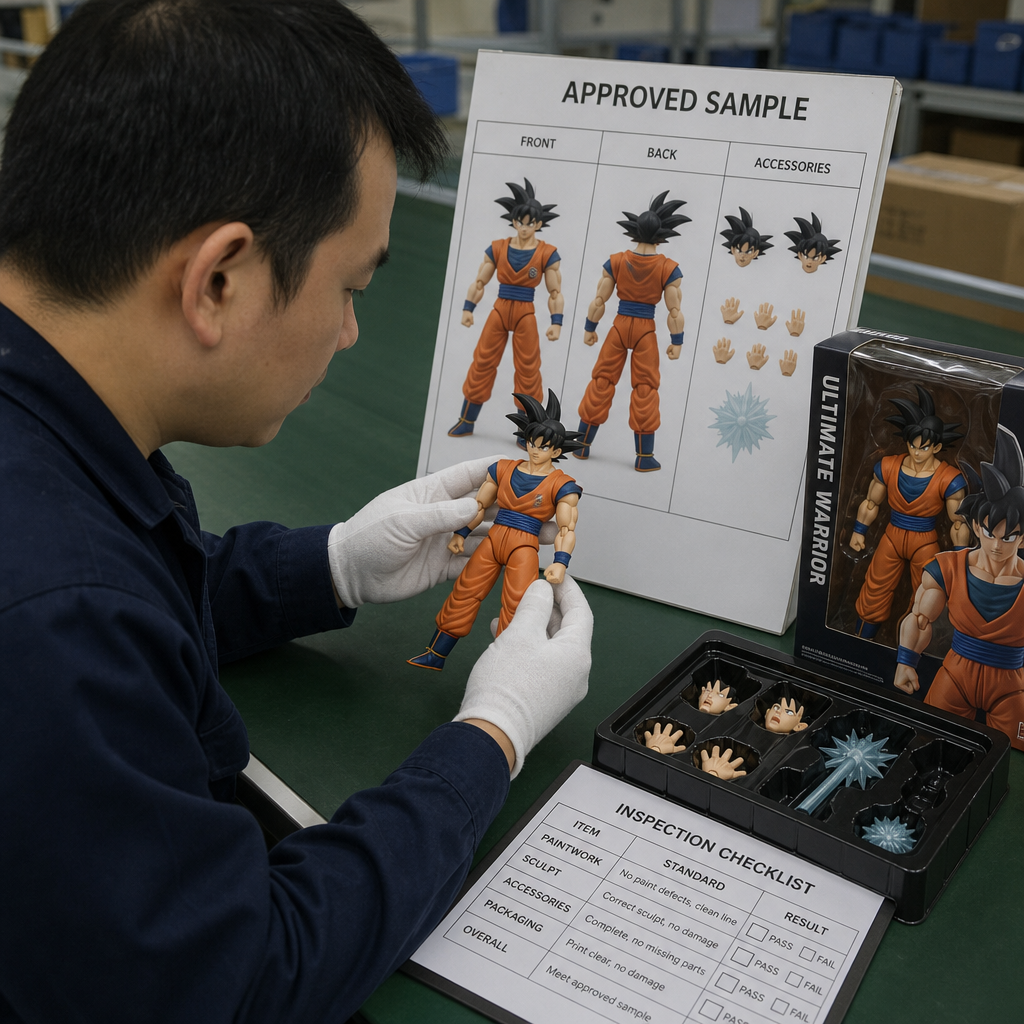
Create an inspection checklist covering:
Correct designs, quantities, colors, and accessories.
Finish, alignment, visible defects, and basic operation.
Retail packaging, inserts, seals, labels, and shipping marks.
Packing method and protection against movement inside cartons.
Photographic evidence of defects and the inspected shipment.
Agree on the inspection scope, sampling approach, acceptance criteria, and reinspection process before production. Alibaba’s inspection service lists quantity, conformity, workmanship, functionality, and contract quality requirements among its inspection areas.
Keep commercial inspection and regulatory testing as separate workstreams. Use inspection to assess the order against your agreed specifications; arrange the applicable safety testing and certification through the appropriate compliance process. U.S. children’s toy requirements include third-party testing obligations that a visual inspection alone does not fulfill.
What import requirements apply to collectible toys?
Import requirements depend on the destination, product characteristics, intended users, and applicable regulations. For U.S. sales, determine whether the item is a children’s product rather than relying solely on the word “collectible” or an age label. CPSC considers intended use, packaging and advertising, consumer recognition, and age-determination guidance when assessing children’s products.
U.S. safety testing and certification
Toys designed or intended primarily for children 12 years old or younger generally require testing by a CPSC-accepted third-party laboratory and a Children’s Product Certificate covering applicable requirements.
CPSC identifies the domestic manufacturer or importer as responsible for determining which requirements apply. Its guidance also distinguishes these certification obligations from the broader under-14 scope of the toy standard.
Have a qualified laboratory or compliance specialist review the exact product, materials, intended age group, packaging, and marketing. Ask them to identify applicable requirements, including relevant lead, phthalate, small-parts, and tracking-label provisions. Do not assume one report covers every variation in your assortment.
CPSC’s general import eFiling requirements took effect on July 8, 2026, for imported products subject to its certification requirements. Coordinate the required certificate data with your broker before shipment; separate timing applies to goods entered from foreign trade zones.
Customs documentation and classification
Ask your customs broker to confirm classification, applicable duties, origin marking, and entry documentation for the specific goods. CBP recommends providing detailed information about composition, intended use, origin, and transaction value when seeking classification assistance. Country-of-origin marking is also a separate import consideration.
Prepare a document checklist with your broker before approving shipment. Include the commercial invoice, packing details, transport records, and applicable compliance information they request. Use accurate product descriptions and resolve inconsistencies between the order, invoice, and shipment records.
Calculate landed cost before committing cash
Build a landed-cost worksheet instead of comparing supplier prices alone. Request written estimates from the supplier, freight provider, broker, laboratory, and inspection provider for their respective services. Have your broker confirm the tariff treatment for your goods rather than applying a rate from an unrelated product.
Use this planning formula:
Landed inventory cost = goods + development and packaging + testing and inspection + freight and insurance + duties and clearance + delivery to your storage location.
Divide that total by the units you realistically expect to sell. Then assess selling expenses separately: marketplace fees, fulfillment, payment processing, advertising, returns, and overhead. This keeps inventory cost distinct from the broader question of profitability.
Create a conservative scenario alongside your expected case. Test what happens if freight costs rise, some boxes arrive unsaleable, or stock sells more slowly than planned. Use the result to set a purchasing limit that leaves room for operating expenses and corrective action.
Protect the first order and earn the right to reorder
Keep the first order small enough to evaluate without threatening your cash reserves. Negotiate payment milestones around defined events, such as sample approval, production completion, and inspection acceptance. Document when payment becomes due and how rejected goods will be corrected.
If using Alibaba Trade Assurance, check the current agreement and eligibility conditions before paying. Its guidance connects protection to the shipping and quality terms recorded in the order and specifies payment through designated channels. Do not assume informal promises provide the same protection as documented order terms.
After delivery, reconcile quantities and inspect incoming inventory before listing it. Record defects, packaging damage, missing accessories, and customer feedback by product and batch. Use that evidence to update specifications and decide whether to reorder, renegotiate, or change suppliers.
Build a repeatable sourcing process
Effective toy sourcing in China should leave you with more than inventory: you need a verified counterparty, clear specifications, approved samples, and a usable documentation trail. Keep those records together so future orders follow the same controls.
Start focused, confirm compliance early, and expand only after the first shipment supports your quality and margin expectations. That is a more disciplined route to buying wholesale collectible toys than chasing the largest discount.
Frequently Asked Questions About Buying Collectible Toys Wholesale From China
What are the key steps in sourcing collectible toys from China?
The key steps include defining your product assortment, verifying suppliers, approving samples, confirming compliance with regulations, and controlling the shipment process.
How can I ensure the quality of the collectible toys I order?
You can ensure quality by approving samples before placing orders, creating detailed purchase specifications, and conducting thorough inspections upon receipt of goods.
What are the import requirements for collectible toys in the U.S.?
Import requirements vary but generally include safety testing and certification for children's products, compliance documentation, and customs requirements that must be met before goods can be sold in the U.S.
How do I calculate the landed cost of imported collectible toys?
Landed cost includes the total expenses involved in getting the product to you, including the price of goods, development and packaging costs, testing, inspection, freight, insurance, duties, and any other related fees.
Where can I find reliable toy suppliers in China?
Reliable suppliers can be found through B2B marketplaces, authorized distributors, trade events, or sourcing agents. It's crucial to evaluate each candidate based on a consistent set of criteria to ensure quality and authenticity.