Back To Blog
ou can buy bulk plush toys from China through wholesale marketplaces such as Alibaba.com and Made-in-China.com, or source through the domestic marketplace 1688 with suitable purchasing and export support.
These channels offer different ways to find suppliers, compare products, and arrange orders—not interchangeable guarantees of quality.
This article explains where to start, what to request, and how to evaluate samples, pricing, safety documentation, and shipping before committing.
Where can you buy plush toys in bulk from China?
Start with Alibaba.com for supplier discovery and supported online transactions, or Made-in-China.com for supplier searches backed by accessible audit reports. Consider 1688 if you can arrange the language, payment, domestic delivery, and export support your purchase requires. The right channel depends on how much sourcing work you want to manage yourself.
Alibaba.com: a practical starting point for supplier comparisons
Alibaba.com has dedicated plush supplier listings, making it a useful place to build an initial shortlist. Its Trade Assurance service supports eligible online orders with payment protection and dispute assistance for covered issues. Review the applicable terms before ordering, and record product requirements in the order rather than relying on informal promises.
Search beyond a broad phrase such as “wholesale plush toys.” Try descriptions that match your project: embroidered animal plush, custom mascot, miniature stuffed animal, or plush keychain. Then send promising suppliers the same specification sheet so you can compare their responses fairly.
Treat marketplace discovery and supplier approval as separate tasks. Before shortlisting a seller, request its legal business name, production locati0n, relevant product examples, sample process, and proposed documentation. A polished storefront should prompt further investigation, not replace it.
Made-in-China.com: a useful channel for reviewing supplier audits
Made-in-China.com provides an Audited Supplier program with reports available online. The platform identifies inspection organizations including SGS, Bureau Veritas, TÜV Rheinland, and CTI, and describes checks covering business information, manufacturing, and quality-control capabilities. Read the report itself instead of stopping at the badge.
Use those details to ask focused questions. If a company presents itself as a factory, ask which plush manufacturing operations happen at the audited locati0n and which are subcontracted. Check that the company named in your quotation matches the business you investigated.
1688: an option when you have purchasing and export support
1688 is designed primarily for the Chinese domestic market. WorldFirst notes that international buyers can encounter payment challenges and suppliers without export or cross-border support. Before placing an order, establish who will handle payment, receipt in China, inspection, international transportation, and export paperwork.
Do not assume a lower displayed price means a lower final cost. Ask for a complete quotation that separates goods, domestic transportation, service fees, inspection, and international delivery. Compare that total with an export-oriented supplier’s offer before choosing a purchasing route.
Match the sourcing route to your order
Rather than opening accounts everywhere, define the purchasing problem first. Do you need existing bulk stuffed animals for an event, a repeatable retail assortment, or an original character developed from artwork? Use that answer to decide what capabilities you need to verify.
For a straightforward stock order, prioritize clear inventory confirmation and an exact assortment. For custom work, ask for evidence of sampling, pattern development, artwork handling, and production approval procedures. For a mixed order, establish who will consolidate goods and check quantities.
Use this shortlist framework when contacting suppliers:
|
Your purchasing goal |
What to request first |
What to resolve before ordering |
|---|---|---|
|
Existing designs |
Available styles, quantities, and current sample photos |
Exact assortment and substitution rules |
|
Branded stock plush |
Logo-placement options and a decorated sample |
Artwork approval and branding charges |
|
Original character |
Similar completed work and a sampling proposal |
Revision process and ownership terms |
|
Mixed-supplier purchase |
Consolidation and inspection proposal |
Fees, responsibilities, and shipment coordination |
If you hire a sourcing agent, request a written scope of work. Specify whether the fee covers supplier discovery, negotiation, purchasing, inspection coordination, or shipment management. Also ask how supplier commissions, replacements, and disputes will be handled.
Choose plush styles before requesting quotes
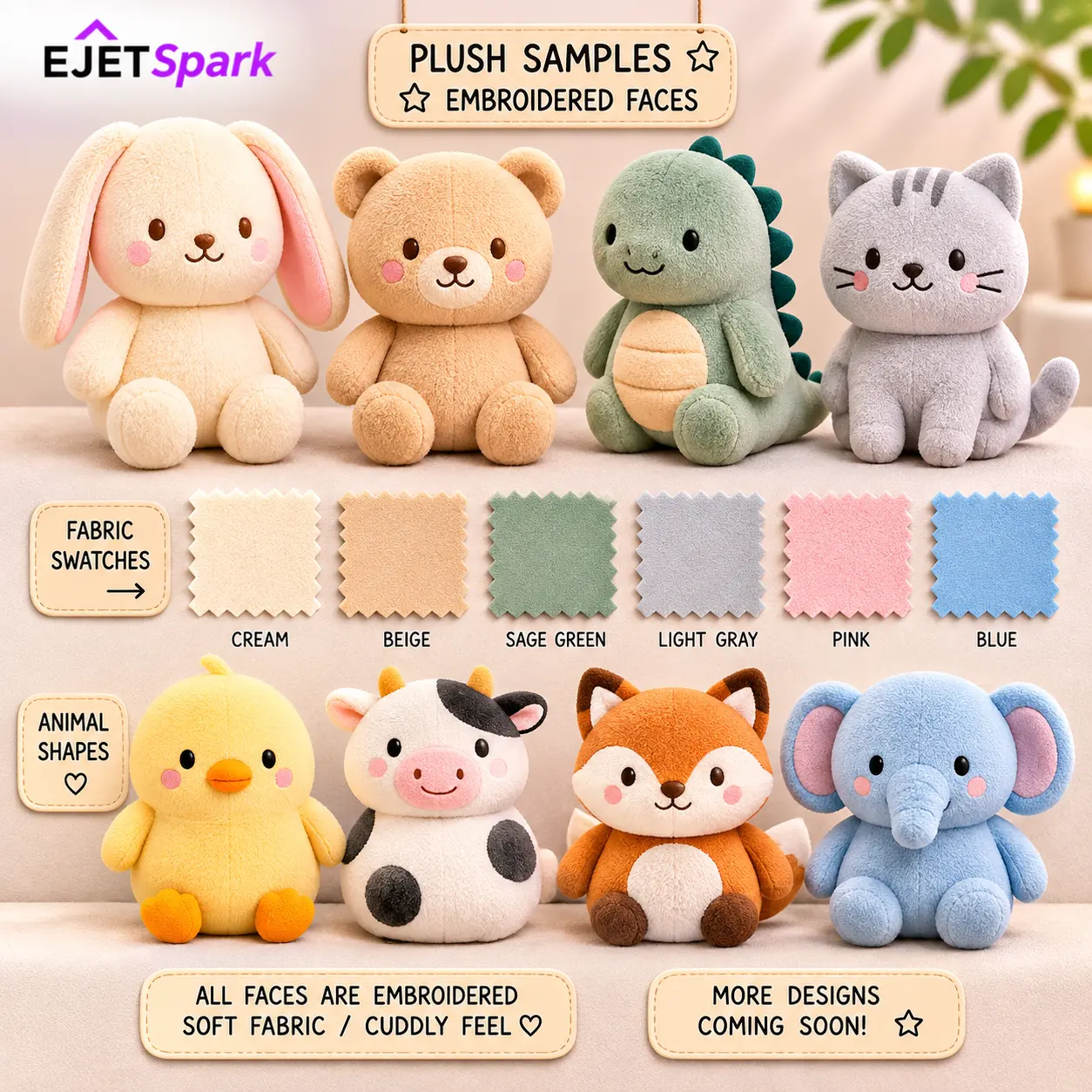
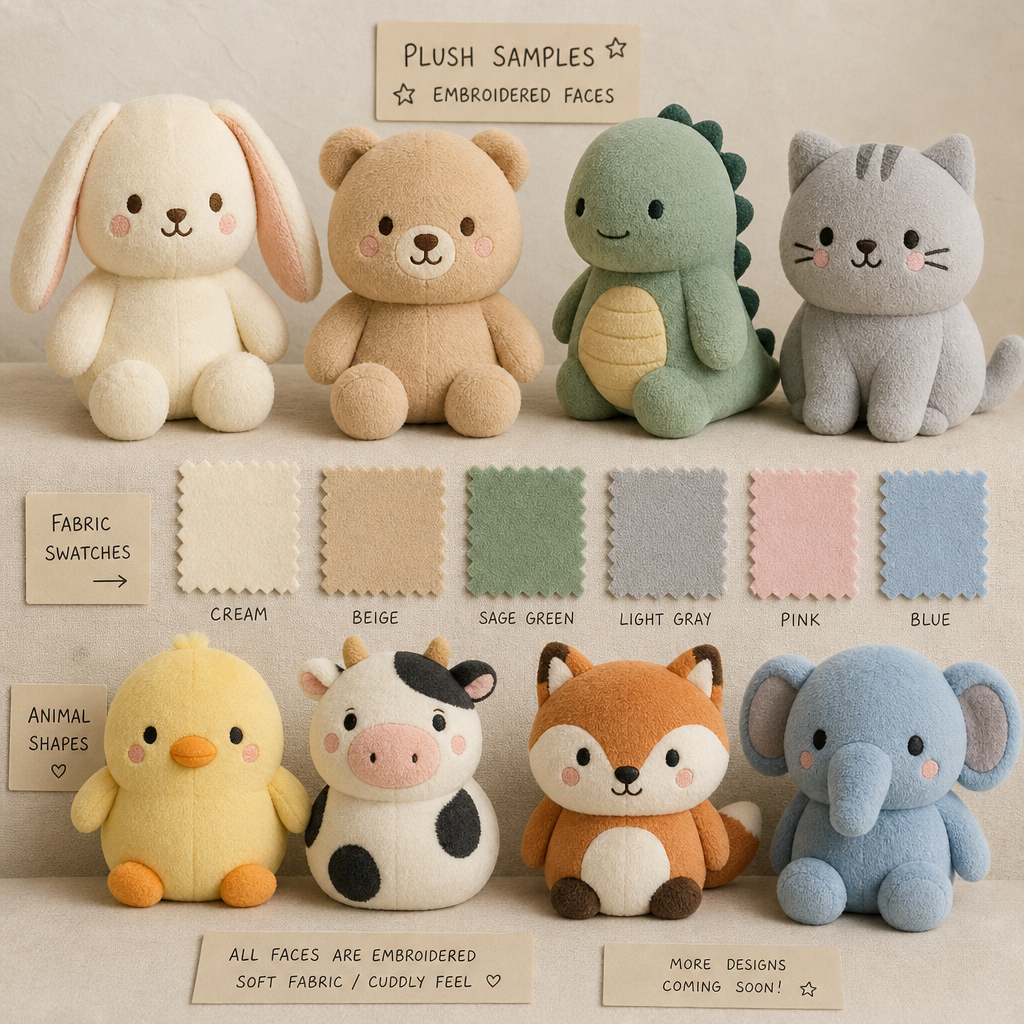
Define your product clearly enough that different suppliers can quote the same thing. “Soft teddy bear” leaves too much open: size, fabric, filling, facial details, accessories, and packaging all need decisions. You do not need a finished engineering document, but you do need more than a reference photograph.
Start with the intended audience and sales setting. For a gift shop, specify the appearance and presentation you want shoppers to see. For an event giveaway, identify branding placement, distribution method, and the required arrival date. Keep intended age and use explicit when discussing safety requirements with a laboratory.
Build a product brief around these details:
Dimensions: State how height or length should be measured, including whether ears or accessories count.
Fabric: Request a physical swatch or sample rather than approving softness from photographs.
Filling and shape: Describe the firmness, silhouette, and feel you want the sample to demonstrate.
Face and decoration: Identify embroidery, printed details, attached components, and logo placement.
Assortment: List each animal, color, or character separately, with quantities for each.
Packaging: Describe individual wrapping, retail presentation, barcode placement, and carton labeling.
For a first purchase, consider requesting fewer variations so you have fewer samples and specifications to approve. Ask the supplier to quote additional colors or accessories separately. That gives you a clearer basis for deciding which details justify their cost.
What MOQ and pricing should you expect?
Expect a supplier-specific quotation rather than a universal MOQ or unit price. Ask each supplier to identify its minimum order quantity for the exact design, color mix, branding, and packaging you require. For budgeting, use a confirmed written offer—not an attractive listing price—as your working figure.
Most importantly, clarify what the MOQ applies to. Ask whether it covers the whole order, each design, each color, or each packaging variation. Have the supplier write the breakdown into the quotation so you do not discover a different minimum after approving samples.
Ask for quantity breaks without overcommitting
Request pricing for your intended order and a larger alternative. Then compare the additional inventory commitment with your actual sales or distribution plan. A lower unit quote is not a reason, by itself, to buy stock you have no clear use for.
If the minimum exceeds your budget, ask about existing designs, available materials, simplified decoration, or fewer variations. Request revised quotations for those alternatives rather than assuming they will be cheaper. Keep the approved quality requirements unchanged unless you deliberately choose a different specification.
Compare landed cost, not just the toy price
Shipping quotations can include more than transportation alone. DHL identifies origin, destination, weight, dimensions, service level, surcharges, duties, and taxes as factors affecting final shipping cost. Obtain shipment details before comparing delivery offers.
For your purchasing worksheet, request separate figures for:
Product manufacturing and any customization.
Sample development and sample delivery.
Packaging, labels, and printed materials.
Applicable laboratory testing and inspection.
Domestic handling and international freight.
Customs brokerage, duties, taxes, and final delivery.
Use total landed cost divided by expected sellable units as your internal comparison measure. Keep assumptions visible, including any allowance you choose for damage or rejected goods. Searching for cheap plush toys is reasonable; approving an incomplete cost picture is not.
Verify suppliers before paying a production deposit
Review supplier identity, production capability, and product documentation as separate checks. Made-in-China.com’s audit information can help establish business and manufacturing details, while SGS provides tools for checking certain issued documents and supplier audit information. Neither task should be skipped simply because a seller answers quickly.
Request the legal company name, address, business documentation, and named contact responsible for your order. Ask the supplier to explain any differences among the contracting business, manufacturing site, and payment beneficiary. Resolve unclear relationships before transferring funds.
For production capability, ask for a live video discussion focused on your project. Request explanations of cutting, embroidery, sewing, stuffing, finishing, and packing responsibilities. Ask which operations are subcontracted and how the supplier will control changes to your approved materials.
Use document checks deliberately:
Compare the business name across quotations, contracts, reports, and invoices.
Read audit findings and scope rather than relying on the cover page.
Verify relevant SGS documents through the issuer’s available tools.
Ask the issuing laboratory to clarify uncertainties about a test report.
Keep copies of the records used to approve the supplier.
SGS specifically offers verification resources for documents, certifications, and audited suppliers, including searches using supplier names or report numbers. Use the appropriate verification channel for the document in front of you.
Treat unexplained payment changes, refusal to provide samples, and pressure to approve incomplete specifications as reasons to pause. Ask for clarification in writing. If the response does not resolve your concern, continue your supplier search rather than negotiating around uncertainty.
Approve physical samples and define inspection criteria
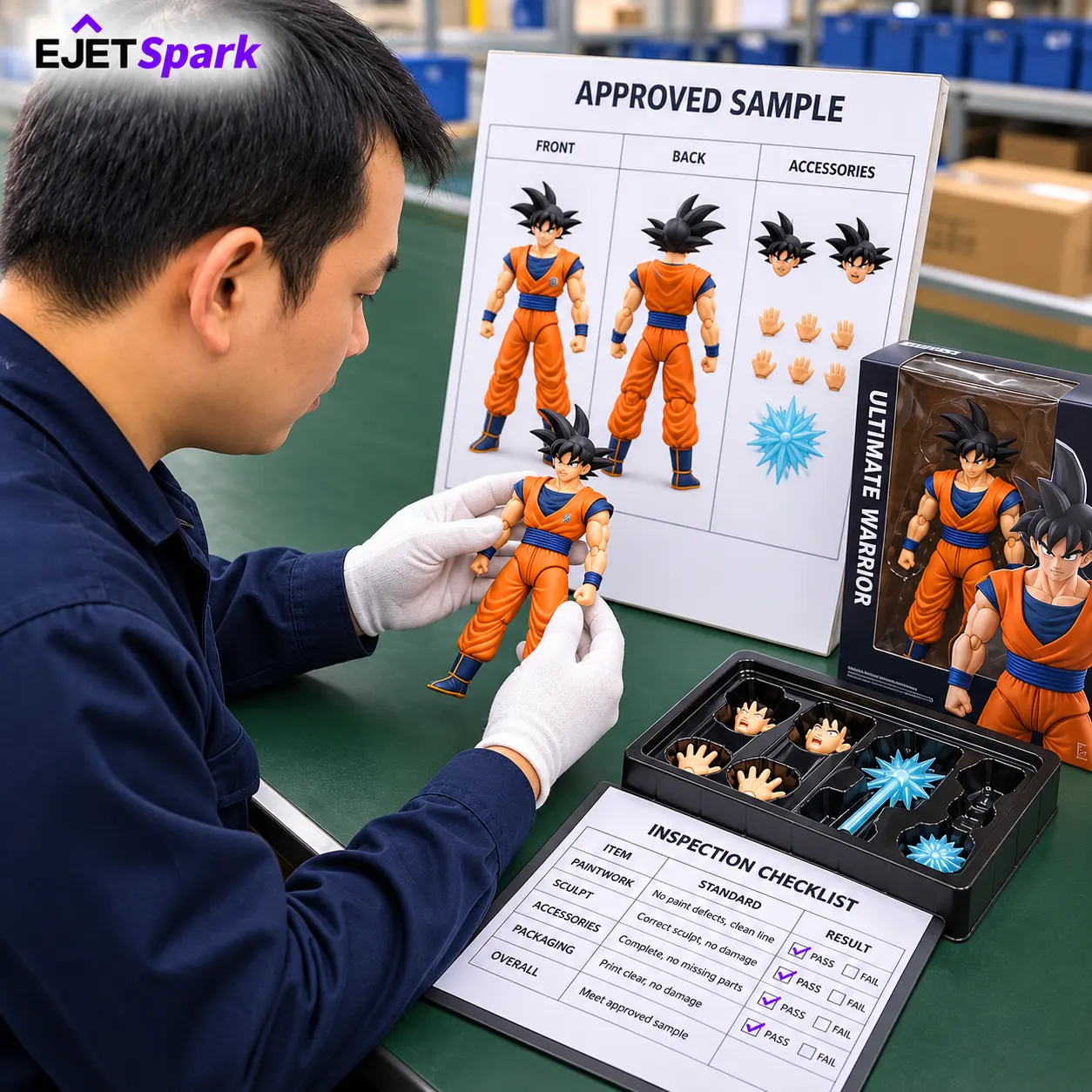
Before ordering bulk plush toys, set up a sample approval process. Request a sample that represents the materials, construction, decoration, and packaging you intend to purchase. If the first sample needs changes, document each revision and approve the corrected version before production.
Compare the sample with your written brief in good lighting. Photograph it from consistent angles and record measurements using an agreed method. Keep the approved reference securely so it remains available during production and inspection.
Your commercial quality checklist can include:
Appearance: Facial alignment, symmetry, color, embroidery placement, and overall shape.
Construction: Visible stitching, closed seams, loose threads, and accessible filling.
Feel: Fabric texture, filling distribution, and consistency with the approved reference.
Measurements: Agreed dimensions and any specified weight requirements.
Presentation: Labels, spelling, barcodes, individual packaging, and assortment accuracy.
These are purchasing checks, not substitutes for required safety testing. CPSC’s toy guidance identifies specific safety requirements and testing obligations, including requirements relevant to stuffed toys. Arrange the applicable laboratory work separately from appearance inspection.
Agree with your supplier and inspector on acceptance criteria before production begins. Describe what must be corrected, how reinspection will work, and who will pay associated costs. Avoid subjective instructions such as “premium quality” unless you also provide an approved reference and measurable requirements.
For production checks, ask the inspector to select units from the shipment rather than reviewing only supplier-selected examples. Request a report showing the sampling approach, findings, photographs, and disposition of identified problems. Retain the report with your purchase records.
What safety testing is needed for U.S. sales?
For toys intended primarily for children aged 12 or younger, CPSC generally requires testing by a CPSC-accepted third-party laboratory and certification in a Children’s Product Certificate, or CPC. For imported children’s toys, the importer is responsible for identifying applicable requirements and issuing the certificate. Confirm the requirements for your exact product before production. (
CPSC identifies ASTM F963, incorporated through 16 CFR part 1250, as the mandatory toy safety standard, with applicable provisions determined by the product. Its guidance also directs businesses to requirements concerning lead, phthalates, small parts, and tracking labels. Do not reduce compliance planning to requesting a generic “toy certificate.”
Give the laboratory your intended age range, product drawings, materials, components, labels, and packaging details. Ask it to identify the applicable test scope and explain what samples it needs. CPSC’s requirements chart includes provisions specifically addressing stuffing materials and stuffed or beanbag-type toys.
When reviewing an existing report, check the product identity, photographs, materials, tested requirements, laboratory, and manufacturing information against your proposed order. Ask the laboratory whether the report supports your intended certification and whether changes require additional evaluation. Do not assume a report for a similar animal covers your design.
Also investigate requirements outside the basic federal toy framework for every market where you will sell. CPSC provides business guidance, while CBP advises importers to understand commodity-specific and other-agency requirements before importing. Use qualified compliance support where your product or distribution plan creates uncertainty.
Keep testing, labels, and certification in your sourcing budget from the beginning. Ask for the compliance plan before approving a deposit, not when the finished shipment is ready. That makes the required documentation part of the purchasing decision rather than an unresolved final task.
Plan shipping around carton size and delivery responsibilities
Obtain packed carton dimensions, gross weight, carton count, and units per carton before accepting a freight quotation. DHL explains that large, lightweight packages may be charged using dimensional weight when it exceeds actual weight. For plush orders, compare quotations using the proposed packed shipment rather than product weight alone.
If a supplier proposes compressed packaging, ask to evaluate a sample packed that way. Examine its condition after unpacking and agree on acceptable presentation. Do not authorize a packing change solely on a promised freight saving without checking the result yourself.
Ask your forwarder to compare suitable shipping options against your required delivery date. Request a written list of included and excluded charges, the delivery endpoint, and who handles customs clearance. DHL’s shipping guidance distinguishes package and freight quotation options and notes that service, destination, dimensions, and additional charges affect cost.
For U.S. imports, confirm classification, customs value, origin information, and applicable duties with your customs broker before shipment. CBP emphasizes the importer’s responsibility to exercise reasonable care and understand import requirements. Do not substitute a supplier’s general assurance for shipment-specific advice.
Finally, build a schedule with separate milestones for sample approval, production, testing, inspection, shipment, clearance, and delivery. Ask each service provider to confirm its own milestone. Keep your launch commitment tied to the complete schedule, not just the factory’s production estimate.
Send one clear request for quotation
When comparing plush toys online, use one consistent request for quotation, or RFQ. Give every shortlisted supplier the same design references, quantities, intended market, packaging requirements, and destination. Ask suppliers to identify assumptions and exclusions instead of silently filling gaps.
You can adapt this message:
We are sourcing wholesale plush toys for [intended use and market]. Please quote the attached design or referenced stock item using the specifications below. State any assumptions, exclusions, and proposed alternatives separately.
Product: [design, dimensions, fabric, filling, decoration, and packaging].
Quantity: [total units and breakdown by design or color]. Please confirm MOQ for each variation.
Samples: Confirm development charges, revision terms, delivery costs, and the approval process.
Compliance: Describe relevant product documentation and how you will support the agreed testing and labeling plan.
Production: Identify the manufacturing locati0n, subcontracted work, and proposed schedule after approval.
Shipping: Provide carton dimensions, weights, carton quantities, delivery terms, and quotation exclusions.
Commercial terms: Confirm payment milestones, inspection access, quotation validity, and the process for resolving nonconforming goods.
Compare responses in a worksheet rather than across scattered messages. Highlight missing answers and ask each supplier to close those gaps. If you are searching for plush toys wholesale, this written comparison is more useful than collecting the greatest number of quotations.
Before payment, check that the final order reflects the approved sample, specifications, quantities, documentation, delivery terms, and corrective-action agreement. For Alibaba.com purchases using Trade Assurance, review the service terms and ensure the relevant order details are recorded through the supported process.
Make the first order a controlled purchasing decision
The best starting point is a channel you can manage and a supplier you can verify. Choose your shortlist, request comparable quotations, and approve a physical sample before committing to production. Resolve testing, inspection, and delivery responsibilities while you still have the option to walk away.
For your first purchase, prioritize clarity over the largest discount. Keep the assortment manageable, document every approval, and review the delivered goods before planning a reorder. That gives you a practical basis for buying wholesale plush toys with greater confidence.
Frequently Asked Questions About Buying Plush Toys in Bulk from China
What is the minimum order quantity (MOQ) for bulk plush toys?
The MOQ varies by supplier and can depend on the design, color, and packaging. Always clarify the MOQ directly with each supplier before placing an order.
How can I ensure the quality of plush toys before I buy in bulk?
You can request samples from suppliers to evaluate the quality, fabric, and construction. Make sure to compare samples against your specifications and conduct quality checks before mass production.
Are there specific safety requirements for plush toys sold in the U.S.?
Yes, plush toys intended for children aged 12 or younger must adhere to CPSC regulations and pass safety tests from CPSC-accepted third-party laboratories to obtain a Children’s Product Certificate (CPC).
How can I find reliable suppliers for bulk plush toys?
Platforms like Alibaba.com and Made-in-China.com offer verified suppliers. Look for those with good reviews, Audited Supplier badges, and positive business histories. Always conduct your background checks before entering into any agreements.
What costs should I expect beyond the price of the plush toys?
In addition to the toy prices, you should account for shipping, customs duties, packaging, inspection fees, and any laboratory testing required for safety compliance to get a complete picture of your total landed costs.