Back To Blog
 Why Squishy Toys Are Still Booming in 2026:And What Retailers Should Do About It
If you think squishy toys are a faded internet trend, the numbers might surprise you.
In the first half of 2026, U.S. sales of squishy toys reached $297 million, roughly quadrupling year-over-year, with unit sales jumping nearly 200% — according to Circana retail data reported by CNBC. This is no fleeting viral hype. Instead, it marks an evolution of the category: from “kids’ playthings” to everyday stress-relief items for an era of rising anxiety.
Market Data: Squishy Toys Are No Longer a Niche Category
Squishy toys are part of a wider family—stress-relief and fidget toys—that is no longer a niche category. As related market context (not a squishy-only figure), analyst forecasts expect the global stress-relief toy market to grow from roughly $6.26 billion in 2026 to about $8.96 billion by 2032.
Industry data shows the global stress relief toy market will reach $6.26 billion in 2026 and surpass $8.96 billion by 2032, while the global fidget toy market is expected to grow from $9.57 billion in 2026 to $17.65 billion in 2034. B2B demand keeps rising, with Alibaba’s squeeze toy buyer count up 24.49% year-on-year to 8,818. The products have achieved extensive channel penetration, dominating children’s category orders in hardware stores (73%), convenience stores (67%), pharmacies (65%) and grocery stores (63%).
As a common checkout item in diverse retail scenarios, they have evolved from a temporary trend into a formal mainstream category.
Why Squeeze Toys Stay Popular — Five Core Reasons
Despite the fast iteration of toy trends and the short lifecycle of most viral novelty products, squeeze fidget toys have maintained consistent market popularity instead of fading away. Its long-lasting market vitality is supported by five core competitive advantages.
Demand now spans children and adults — from a kids’ toy to a desktop stress-relief tool.
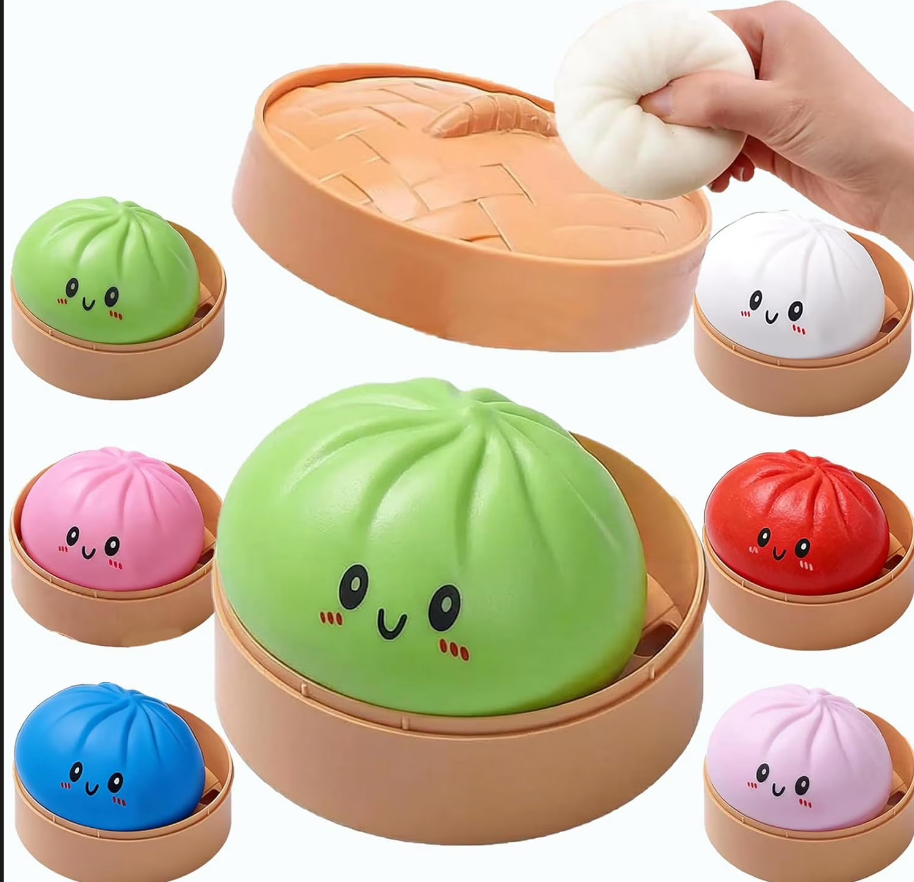
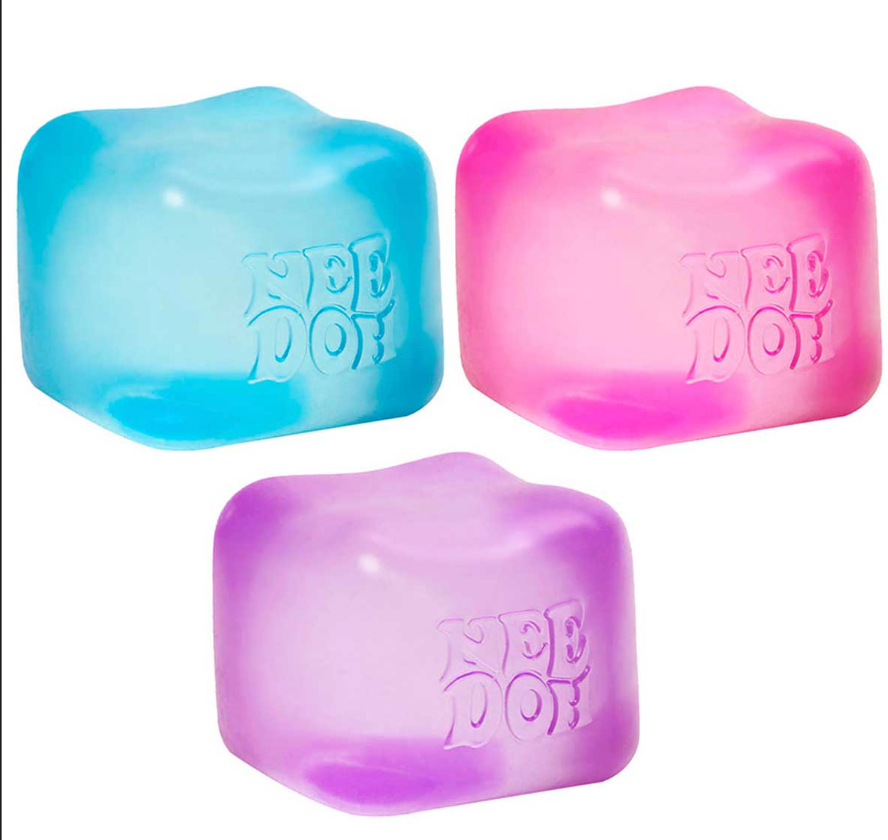
Amid widespread social anxiety, the predictable tactile stimulation of squeeze toys can offer gentle “micro-healing” and help relieve daily stress — Vogue Turkey has called them “a desktop toy for the anxious era.” Demand now comes from both kids and adults: in CNBC’s reporting on NeeDoh, a leading U.S. squishy brand, about 60% of sample buyers purchased for children and 18.2% bought for themselves — a reminder that no single consumer group defines the category. South Korea’s “malangyi” craze reportedly lifted some retailers’ month-on-month growth by up to 200%.
 |
 |
 |
Social media continuously fuels its popularity.
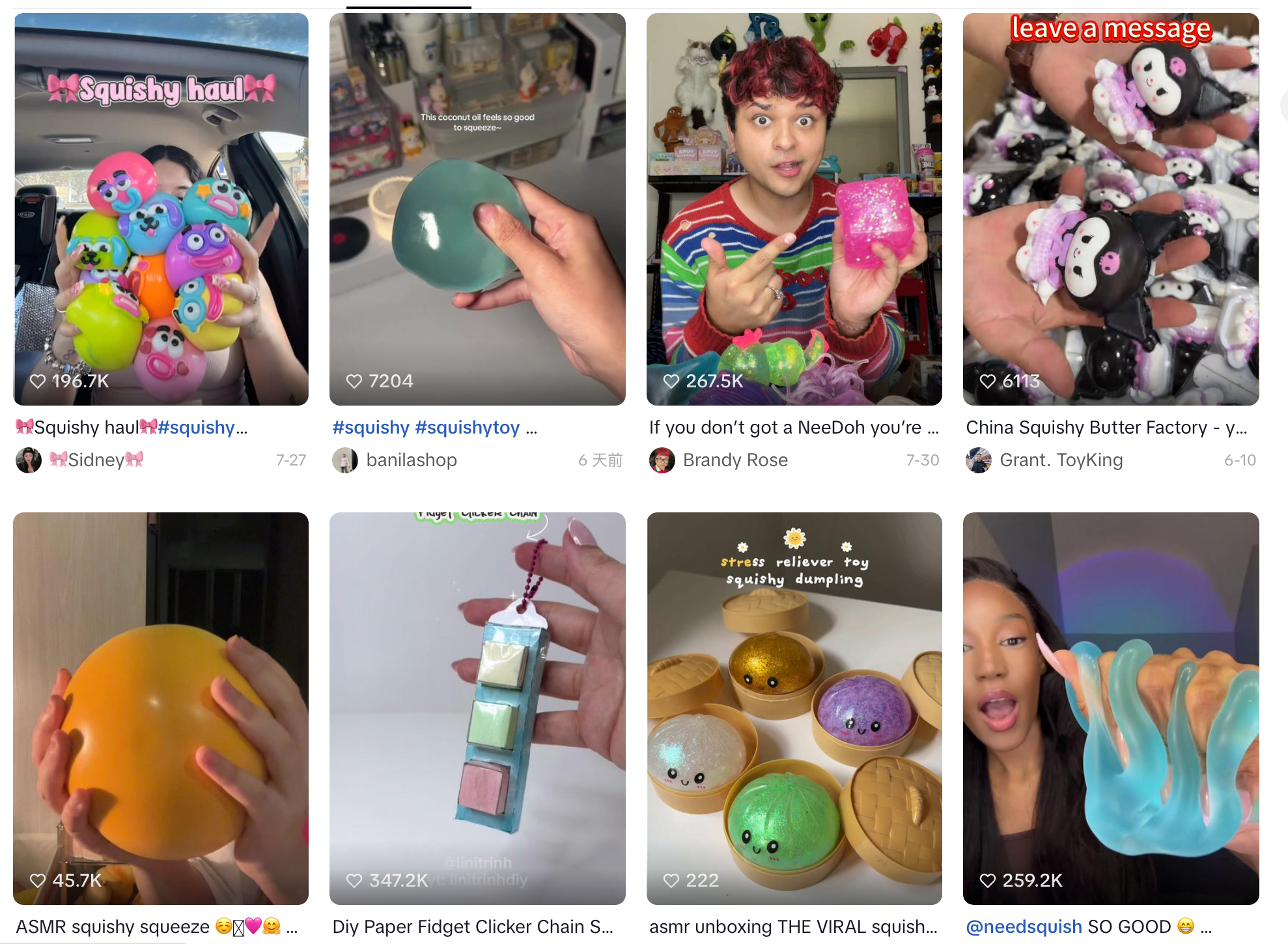
Squeeze toys fit perfectly with TikTok’s content ecosystem. Their slow-rebound visual effect improves video completion rates, and the 7-second loopable content with no language barrier enables global viral dissemination. In 2026, the viral spread of Nice Cube cleared six months of inventory in just six weeks. The coconut oil stress ball topic accumulated 24.6 million views in 30 days, with a single video driving 1,425 unit sales. Constantly updated designs and new materials create continuous micro‑trends, eliminating the drawback of one‑time viral popularity. You can see from the screenshots below that these squishy videos have generated great traffic, which shows this product is highly popular.
Upgraded product quality retains existing users.
Early squeeze toys were mostly foam, which could have unpleasant odors, break easily and raise safety questions — positioning them as disposable novelty items. A typical safety incident took place recently: a young boy mistakenly placed a squishy inside a microwave oven, resulting in facial skin burns. This incident has prompted the public to re‑examine product safety concerns within the squishy category. Many modern products use premium silicone. Whether a specific item is genuinely low‑odor, durable and safe depends on the model, the age grade marked on its packaging and the test documentation behind it. As reusable, washable items, they have become repeat‑purchase staples, improving customer retention.

Collectible attributes and blind bag mechanisms drive stable repurchases.
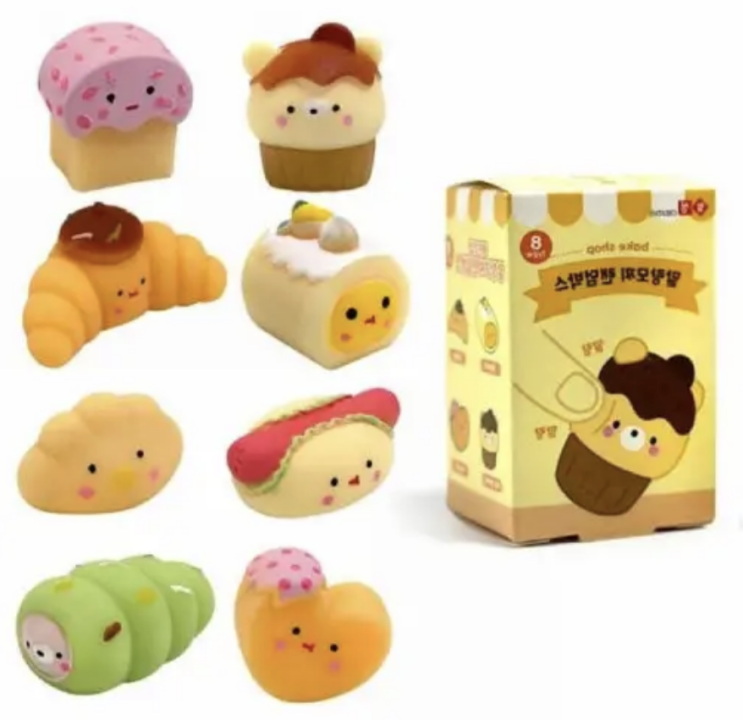
Mini blind bags, serialized products and limited‑edition styles stimulate consumers’ collecting mentality. Priced at $3–5 per unit, the extremely low consumption threshold encourages bulk purchases. Meanwhile, IP co‑branding and exclusive editions increase product premium value, forming a sustainable repurchase cycle.
Affordable pricing helps the category hold up in downturns
Retailing at roughly $5–15, squeeze toys are low‑cost “small happiness” purchases that tend to hold up — and can even gain traction — during economic downturns. With wholesale prices commonly ranging from $0.20 to $6, retailers often price at 3–5 times their landed cost. That pricing multiple equals a gross margin of roughly 67%–80% before freight, duties, shrinkage and selling costs, so profitability should be checked after all‑in costs, not at the invoice level.
Purchasing Advice for Retailers
To achieve long‑term sales of squeeze toys, retailers should adopt standardized purchasing strategies to reduce risks and improve conversion rates.
- Avoid ultra‑low‑cost products
$0.30 foam‑based toys usually suffer from poor quality, including cracks and unpleasant odors, which lead to high return rates, negative reviews and hidden operational losses.
- Adopt mixed batch ordering
While most factories require a minimum of 500 pieces per single design, retailers can negotiate flexible terms, such as 50 pieces per item across 10 different styles. Test 5 to 10 styles with small orders before scaling up to reduce inventory pressure.
- Always request physical samples
Key tactile features including softness, rebound performance and smell cannot be judged from pictures; compare samples from 3 to 5 suppliers before confirming orders.
- Strictly comply with regional certification standards
Products sold in the U.S. require CPC and ASTM F963 certification,It is a myth that squishy toys are completely banned across the EU. Non‑compliant batches with excessive benzene have been recalled, while fully‑tested squishy items meeting EN71 and REACH rules can still be sold legally.
- Optimize immersive in‑store display experience
Implement open and touchable in‑store display with trial products and “Touch Me” signage, as immersive tactile experience significantly boosts customer purchase willingness.
Tips: Sample Inspection Checklist
Use this checklist when evaluating physical samples:
• Seams and edges: no cracks, no sharp burrs.
• Colorfastness: no color transfer when rubbed dry or wet.
• Fill and leaks: no liquid leakage or exposed filler after squeezing.
• Rebound: slow‑rise matches the claim and stays stable after repeated presses.
• Odor: low‑odor formula; no strong chemical smell.
• Packaging: age grading, warnings and manufacturer/importer info present.
• Test files: model‑specific test reports and conformity documents.
Conclusion
Squeeze toys are not a fleeting viral fad, but a mature consumer category with long‑term growth potential. Its sustainable development is firmly underpinned by five core advantages: a growing adult consumer base, continuous social media exposure, upgraded product quality, collectible‑driven repurchase mechanisms, and affordable, recession‑resistant pricing.
Want to know more about sourcing these products? Reach out to us.
For upcoming Q4 product sourcing, EJET Spark offers over 200 squeeze toy designs with flexible mixed batch support starting at 50 pieces per style and a 7–15 day sampling turnaround. Buyers preparing new seasonal selections are welcome to contact us for the latest best‑selling product list.
Here are some related articles you may find interesting: