Back To Blog
Buying wholesale cute glass cups means choosing designs that suit your customers while checking everyday usability, supplier terms, and the full cost of each order. T
his guide explores decorative styles worth considering, the specifications to verify, and a practical process for buying bulk glass cups.
Whether you stock a gift shop, run a café, or curate an online store, start with one principle: choose cups people will enjoy using, not just photographing.
Which cute glass cup trends belong in your assortment?
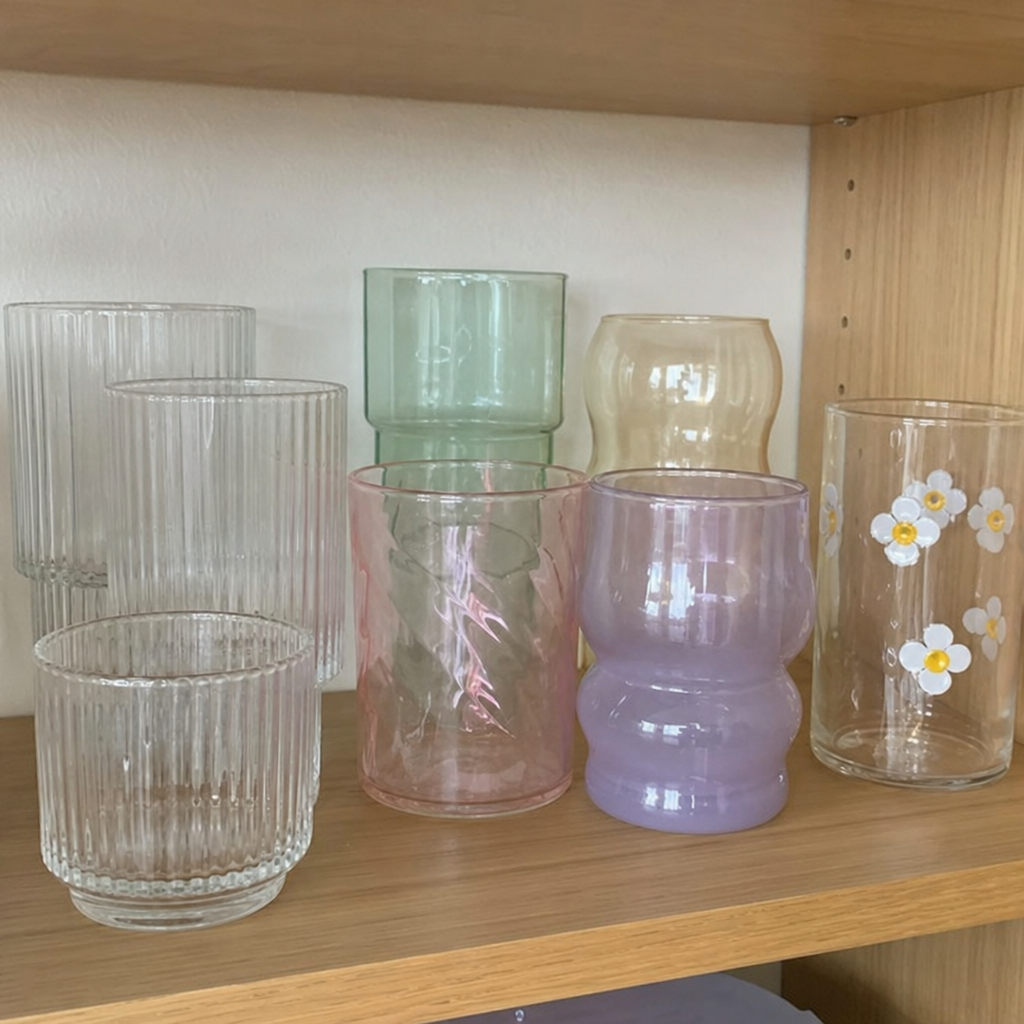
Consider textured clear glass, coordinated colors, and playful decorative details as starting points for your assortment—not guaranteed bestsellers.
Supplier collections provide examples of these directions: Libbey’s product guide includes ribbed glassware, while Bloomingville’s range includes multicolored drinking glasses and rose-colored stemware.
Use those examples for inspiration, then validate demand with your own customers.
Texture with an everyday purpose
For a versatile starting point, consider clear ribbed or fluted designs alongside your existing tableware. Compare samples filled with the drinks you actually serve or photograph; the texture should complement the presentation rather than obscure it. Check grip, rim comfort, and cleaning access before giving a textured cup a permanent place in your collection.
Keep the first selection focused. Try one silhouette in a short and tall version rather than several unrelated shapes. That gives customers a coordinated choice and lets you compare which size earns repeat orders.
Coordinated colors and playful details
Build a color story rather than collecting every available shade. For example, you might test a warm palette for a gift display or choose one accent color that matches your café interior. Ask for samples before committing, and judge the tint under your own lighting.
Distinctive decoration deserves a closer usability check. Bloomingville’s Misa glass, for example, has a hand-decorated flower inside, but its care instructions prohibit ice cubes and stirring to protect the decoration.
That makes it a useful reminder that unique glass cups may need different merchandising and usage guidance from ordinary tumblers.
Trend selection without overcommitting
Use novelty as a controlled experiment. Give a new shape or motif a clear role in the assortment, such as a small gift collection, rather than allowing it to replace every dependable option. Review actual sales and customer feedback before expanding into additional colors.
A useful test is to finish this sentence: “Our customer would choose this cup because…” If the only answer is that it looks trendy, keep looking for a stronger reason to buy.
Match the glass to the way customers will use it
Before comparing suppliers, write a short product brief. Define the intended drink, approximate serving size, preferred shape, cleaning method, and whether accessories are needed. This makes it easier to reject attractive products that do not fit the job.
For a café, test the complete drink presentation: beverage, ice, garnish, lid, and straw where relevant. For a retailer, consider whether customers will buy a single cup, a coordinated pair, or a boxed set. For events, check the proposed cup against the actual table layout and service plan.
Use these specifications to make comparisons concrete:
|
Specification |
What to request |
What to test |
|---|---|---|
|
Capacity |
Stated volume and usable serving volume |
Room for the drink, ice, and garnish |
|
Dimensions |
Height, rim diameter, and base diameter |
Shelf, tray, and packaging fit |
|
Weight |
Weight of one empty cup |
Comfort when filled and carried |
|
Decoration |
Method, placement, and care instructions |
Appearance and cleaning access |
|
Accessories |
Exact lid and straw compatibility |
Fit, removal, and washing |
|
Storage |
Written stacking guidance |
Whether the intended arrangement works |
Treat material and performance claims as product-specific. Duralex publishes temperature, cleaning, and damage precautions for its own tempered glassware; those instructions should not be transferred to an unrelated supplier’s cup. Request the manufacturer’s written guidance for the exact item you plan to purchase.
For decorative glass cups, ask specifically about food-contact suitability and the finished decoration, not just the undecorated glass blank. Request documentation relevant to the item and intended use. If the supplier cannot clearly explain what its documents cover, pause the order rather than filling the gap with assumptions.
How do you evaluate a wholesale glassware supplier?
Evaluate a wholesale glassware supplier by comparing product documentation, physical samples, ordering requirements, delivery commitments, and damage-resolution terms. Ask each candidate the same questions and record the answers in one comparison sheet. Choose based on the complete offer rather than the lowest listed unit price.
Clarify ordering terminology early. Faire distinguishes a product’s minimum order quantity from the overall order minimum, and its case-size guidance explains that different color options can require separate case quantities. Check the rules on your actual quote before assuming you can mix designs freely.
Your supplier comparison should cover:
Product identity: Confirm the item code, dimensions, color, finish, and included components.
Minimums: Ask about opening orders, reorders, case quantities, and mixed-color options.
Samples: Establish availability, charges, shipping, and whether samples represent normal production.
Stock status: Request confirmation of available inventory and any production still required.
Delivery: Separate production time, dispatch timing, and estimated transit time.
Damage claims: Get the reporting deadline, required evidence, and available remedies in writing.
Continuity: Ask whether the design is ongoing, seasonal, or subject to discontinuation.
For customized cups, request a written proof showing artwork size, placement, and color references. Confirm whether approval covers a digital mockup or a physical production sample. Keep that approval with the purchase order so both sides can refer to the same specification.
Notice how the supplier handles uncertainty. A clear answer such as “we need to confirm that with production” is more useful than an unsupported promise. Before ordering, resolve any unanswered question that could change whether you can use or resell the product.
Inspect samples before ordering bulk glass cups
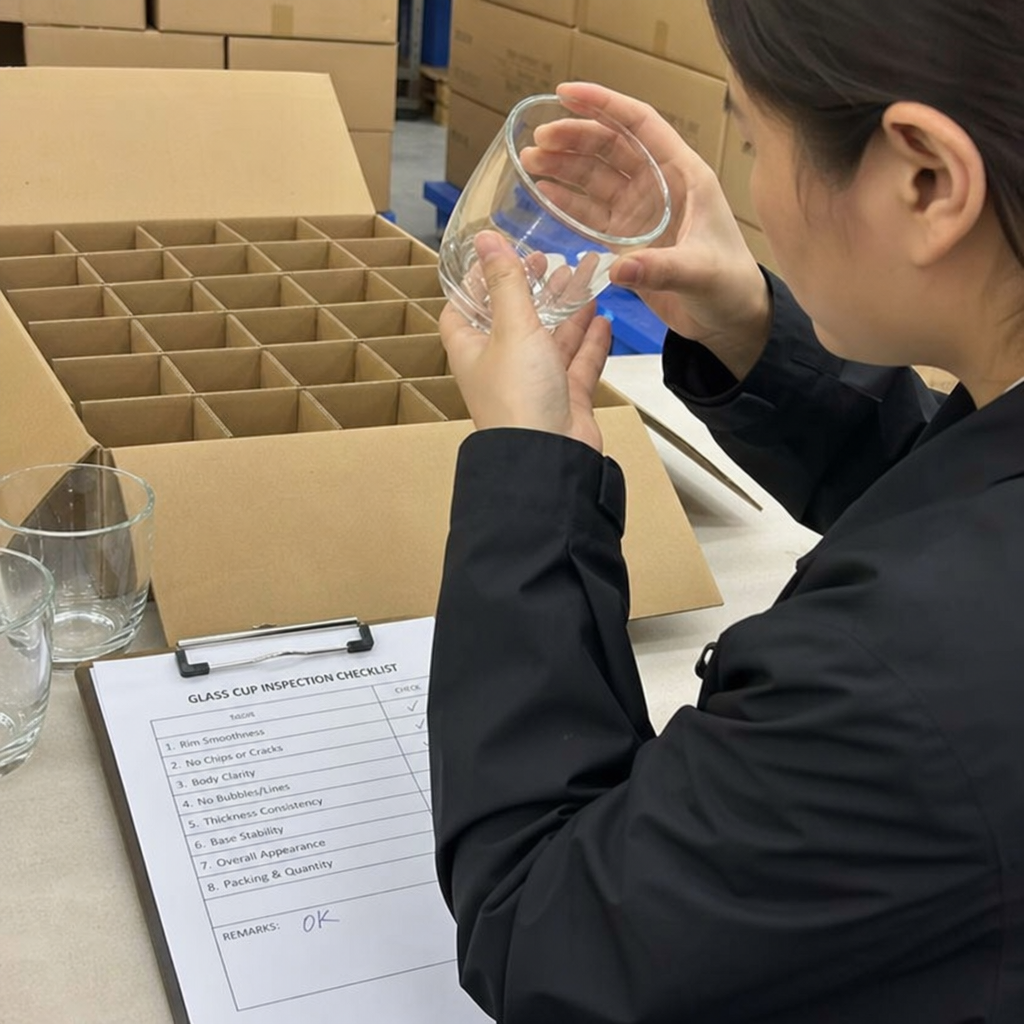
Use samples to answer practical questions that product photos leave open. Arrange them beside your current stock, fill them as intended, and handle them during an ordinary service or packing routine. Record observations so the final decision does not depend on memory.
Check the rim, base, handle if present, and every decorated area. Look for chips, cracks, sharp edges, unstable bases, and decoration that differs from the approved description. Where handmade variation is expected, agree on acceptable differences before placing the larger order.
Test only within the manufacturer’s instructions. If dishwasher use is permitted, follow the stated conditions; if it is hand-wash only, assess whether that requirement suits your operation. Never improvise a hot-water or temperature-change test to establish a safety claim.
Separate attractive variation from functional defects in your notes. Slight differences in shape may be part of a handmade product’s specification, as Bloomingville notes for its Misa glass, but that does not replace inspection for damage. Duralex likewise instructs users not to use chipped or damaged products.
Compare the full cost, not just the cup price
Build an order-cost worksheet before deciding which quote offers better value. Include the goods, delivery, protective packaging, inspection expenses, and any other charges confirmed for that purchase. Keep uncertain costs visible instead of treating them as zero.
For an internal comparison, use:
Estimated cost per sellable cup = total expected order cost ÷ expected sellable cups
Label every assumption. If you include an allowance for damaged stock, distinguish it from a supplier’s documented replacement policy. Update the worksheet after receipt with actual costs and quantities so your next decision rests on experience rather than guesswork.
For resale, compare the proposed selling price against that cost and your own fulfillment expenses. Account for the packaging, handling, and sales-channel charges that apply to your business. Do not treat the difference between the wholesale price and retail price as money available to spend.
For café use, compare operational fit alongside purchase cost. Ask staff to assess washing, storage, serving, and replacement ordering during the sample review. A cheaper option should still meet the requirements you set at the start.
Build a focused collection customers can understand
Give each cup a reason to be in the range. You might organize the collection around an everyday clear tumbler, a coordinated color option, and a small decorative gift selection. This is an assortment-planning approach, not a formula that every business needs to follow.
For trendy glass cups, start with a defined trial quantity and a review date. Track units sold, customer questions, returns, and requests for matching pieces. Use those observations to decide whether to reorder, expand, or stop buying the design.
Keep product descriptions useful. State the capacity, dimensions, number of pieces, included accessories, and manufacturer-approved care instructions. Show the cup empty and in use, and make clear whether lids, straws, or gift boxes are included.
If you sell sets, explain exactly what the customer receives. Avoid images that suggest a matching accessory is included when it is sold separately. For a handmade range, describe the supplier-confirmed variation without using “unique” as a substitute for basic specifications.
Before replenishing, check which individual options are moving. If one shade sells while another remains untouched, reorder selectively where supplier terms allow. Keep notes by item and color so an overall collection total does not hide an uneven result.
Use a final pre-order checklist
Before approving a purchase, bring the product, commercial, and delivery details into one record. Attach the quote, sample notes, written specifications, and any customization approval. Make sure the person receiving the shipment can access the same information.
Confirm the assortment: Check quantities by item, size, color, and case.
Recheck intended use: Match every product to its approved beverage and cleaning conditions.
Approve the sample: Record the accepted finish and any agreed variation limits.
Verify documentation: Confirm that supporting information matches the ordered item.
Confirm packaging: Specify individual protection, outer cartons, and retail presentation where needed.
Check delivery details: Verify the address, receiving arrangements, and supplier-confirmed schedule.
Save claim instructions: Record deadlines, contact details, and photo requirements.
Plan receiving: Assign someone to count units and inspect the shipment promptly.
After delivery, compare the goods with the purchase record before putting them into service or listing them for sale. Photograph discrepancies and follow the agreed claims process. Retain the receiving notes for future supplier reviews.
Buy for lasting appeal, then test the next trend
The strongest starting point is a small, deliberate selection of cute glass cups backed by clear specifications and a dependable ordering process.
Choose designs for a defined customer and use, inspect samples, and compare the complete purchase cost. Then let your own results guide the next order—adding personality without letting novelty make every buying decision.
Frequently Asked Questions About Wholesale Cute Glass Cups
What types of cute glass cups are trending right now?
Currently, textured clear glass cups, coordinated color designs, and playful decorative elements are gaining popularity. Retailers are finding success with ribbed or fluted glasses that serve a practical purpose, while unique designs with hand-painted features are also in demand.
How do I choose the right supplier for wholesale glass cups?
When evaluating suppliers, consider factors such as product quality, minimum order quantities, delivery times, and damage-resolution policies. Request physical samples and compare documentation to ensure they meet your business standards.
What factors should I consider before ordering bulk glass cups?
It's essential to assess capacity, dimensions, weight, decoration, and compatibility with accessories. Understanding how customers will use the cups and ensuring they fit within your product range is crucial before making a purchase.
How can I ensure that the glass cups are food-safe?
Always request documentation that confirms the cups’ food-contact safety and the care instructions for decorative elements. If a supplier cannot provide clear information, it’s advisable to pause the order until you have verified details.
What should I include in my product descriptions for glass cups?
Your product descriptions should detail the capacity, dimensions, number of pieces, included accessories, and manufacturer-approved care instructions. Additionally, use clear images that show the cups in use to help customers visualize their potential purchase.